AI Agents Redefine the Workforce Landscape
Main Take
AWS is pushing the boundaries of agentic AI with its Nova Forge platform and frontier agents. This shift signals a major reconfiguration of enterprise AI, focusing on autonomy and integration of proprietary data. The broader trend reveals a competitive landscape where hyperscalers race to dominate AI infrastructure and services.
The Story So Far
AWS is at the forefront of a transformative wave in AI, emphasizing the rise of agentic AI systems capable of performing complex tasks autonomously. This shift is marked by the launch of the Nova Forge platform at re:Invent 2025, which allows enterprises to create custom AI models using their own data. The introduction of frontier agents—autonomous AI teammates designed to handle coding, security, and operations—highlights AWS's commitment to integrating AI deeply into enterprise workflows.
The journey to this point has been rapid. AWS's announcements at re:Invent included the Nova 2 family of foundation models and EC2 Trn3 UltraServers, optimized for large-scale AI tasks. These developments are not just incremental; they represent a strategic pivot toward providing a comprehensive stack for building agentic AI systems. Analysts suggest that AWS's focus on end-to-end enterprise model lifecycle management positions it uniquely against competitors like Microsoft Azure and Google Cloud, who are also racing to capture the AI market.
What's at stake is significant. Companies that can harness these advanced AI capabilities stand to gain substantial operational efficiencies and competitive advantages. However, the challenge remains in consumer adoption and the integration of these systems into existing workflows. As AWS and others push forward, the implications for the workforce are profound, with potential shifts in job roles and responsibilities.
Looking ahead, watch for further innovations from AWS and its competitors as they refine their offerings and expand their AI capabilities. The race is on to not only develop powerful AI tools but to ensure they are seamlessly integrated into the fabric of enterprise operations.
Who Should Care
Expect increased investment in AI infrastructure as companies seek competitive advantages.
Watch for new methodologies in training proprietary models from enterprise data.
Prepare for a shift towards more autonomous AI tools in development workflows.
Related Articles (9)
AWS weekly roundup highlights agentic AI push and new multimodal Bedrock capabilities after re:Invent
AWS published its December 8 weekly roundup synthesizing key announcements from re:Invent 2025, emphasizing AI agents as a new inflection point and promoting the Kiro Autonomous Agent as Amazon’s standard internal AI development environment. The post also spotlights multimodal retrieval for Amazon Bedrock Knowledge Bases and a preview of AWS Interconnect – Multicloud, framing these launches as foundational infrastructure for building production‑scale agentic AI systems.

AWS’s Nova Forge platform pitches custom frontier‑scale models built on enterprise data
Commentary in South Africa’s Sunday Times highlights Amazon Web Services’ new Amazon Nova Forge platform, unveiled at re:Invent, which lets enterprises integrate their own data into the training of high‑end models to create proprietary AI systems. Analysts quoted in the piece say Forge, along with AWS’s new Frontier Agents and Transform tools, could reposition AWS in the AI race by focusing on end‑to‑end enterprise model lifecycle and migration off legacy systems rather than chasing headline public models.

AWS re:Invent 2025 showcases new infrastructure for agentic AI workloads
At AWS re:Invent 2025, Amazon Web Services highlighted a slate of new services aimed at "agentic" AI — autonomous AI agents that can carry out multi‑step tasks — including Amazon S3 Vectors for vector search over enterprise data, new EC2 Trn3 UltraServers optimized for large‑scale model training and inference, and M9g instances powered by the latest Graviton5 CPUs. The announcements underscore AWS’s push to provide a full stack for building and scaling AI agents, from specialized hardware to data infrastructure, as hyperscalers compete to own the generative and agentic AI platform layer.
Automated Christmas: AI brings new ways to shop for holiday gifts
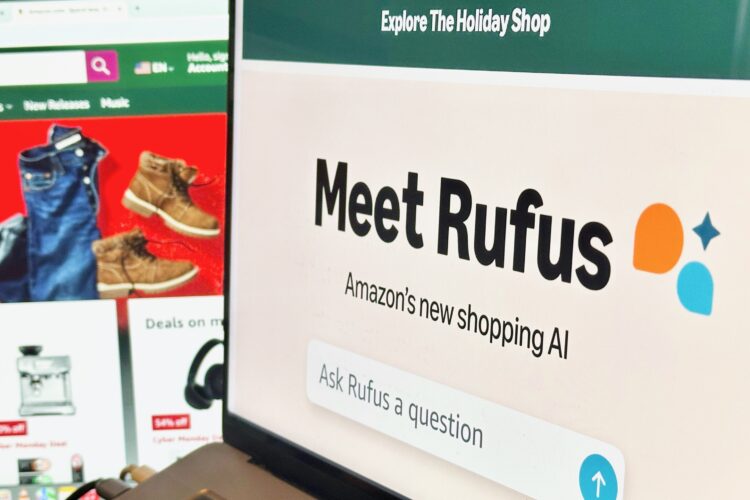
An Associated Press report highlights how major retailers and tech companies are rolling out AI-powered shopping tools for the 2025 holiday season, from OpenAI’s ChatGPT shopping guides and Amazon’s Rufus assistant to Google’s AI-enhanced search and new price-tracking features. These systems promise more personalized recommendations and automated buying workflows, signaling a broader shift toward agentic, commerce-focused AI even as analysts note that consumer adoption and behavior change will take time.
Amazon showcases Nova generative AI with custom perfume lab and new SageMaker capabilities at AWS re:Invent
At AWS re:Invent in Las Vegas, Amazon highlighted new SageMaker AI features for faster customization of AI models while drawing crowds to an experiential ‘Eau de AI’ perfume lab powered by its Nova generative AI system. Attendees could verbally describe preferences and have Nova design bespoke fragrances from 30 base scents, illustrating Amazon’s push to demonstrate AI’s creative and commercial applications as it competes with rival cloud providers.

AWS unveils new Nova 2 AI models, Trainium3 UltraServers and frontier agents at re:Invent 2025
Amazon Web Services announced a major expansion of its AI portfolio at re:Invent 2025, introducing the multimodal Nova 2 Omni model family, new Nova Forge tooling to let customers build custom models, and EC2 Trn3 UltraServers based on its next‑generation Trainium3 chip. AWS also previewed Trainium4 and launched new Bedrock AgentCore capabilities, including policy controls, evaluation tools and memory, plus a new class of autonomous 'frontier agents' and on‑prem 'AWS AI Factories' combining Nvidia and Trainium hardware. These moves aim to deepen AWS’s position in enterprise AI infrastructure and managed model services against rivals such as Microsoft Azure and Google Cloud.

AWS debuts Nova Forge, a service for building proprietary frontier‑grade LLMs on enterprise data
Amazon Web Services announced Nova Forge, a new service that lets enterprises blend their proprietary data with AWS‑curated corpora at different checkpoints in a frontier model’s training process, producing custom LLMs that internalize business logic rather than relying solely on RAG or fine‑tuning. The subscription‑priced service is positioned as an "AI factory" play that tightly couples Trainium hardware, SageMaker, and Bedrock, offering a path to high‑precision domain models for regulated sectors like finance, healthcare, industrial control, and large‑scale code assistants.

AWS expands Nova 2 AI models, Trainium3 UltraServers and 'frontier agents' at re:Invent 2025
Amazon Web Services used its re:Invent 2025 conference to unveil a Nova 2 family of foundation models (Lite, Pro, Sonic and Omni), new Trainium3 UltraServers built on a 3 nm AI chip, and a class of long‑running 'frontier agents' that act as virtual developers, security engineers and DevOps staff. The company also broadened Amazon Bedrock with 18 additional open‑weight models from partners such as Mistral AI, Google, MiniMax, NVIDIA and OpenAI, and introduced AI governance tools like Bedrock AgentCore Policy, Evaluations and Memory plus on‑prem 'AWS AI Factories' that bundle NVIDIA GPUs, Trainium and Bedrock/SageMaker for sovereign, high‑performance AI infrastructure.([notimerica.com](https://www.notimerica.com/ciencia-tecnologia/noticia-portaltic-aws-presenta-modelos-ia-nova-servidores-trainium3-ultraservers-frontier-agents-20251203125319.html))

AWS unveils frontier AI agents that act as autonomous software team-mates
Amazon Web Services introduced a new class of "frontier agents"—Kiro autonomous agent, AWS Security Agent and AWS DevOps Agent—designed to work as autonomous teammates that can run for hours or days handling coding, security and operations tasks with minimal human oversight. The agents integrate with common developer and ops tools (GitHub, Jira, Slack, CloudWatch, Datadog, etc.) and are pitched as a step-change from task-level copilots toward fully agentic systems embedded across the software lifecycle. ([aboutamazon.com](https://www.aboutamazon.com/news/aws/amazon-ai-frontier-agents-autonomous-kiro))
Discussion
Key Players
Advances AGI Timeline
This trend may accelerate progress toward AGI
AWS is pushing the boundaries of agentic AI with its Nova Forge platform and frontier agents. This shift signals a major reconfiguration of enterprise AI, focusing on autonomy and integration of proprietary data. The broader trend reveals a competitive landscape where hyperscalers race to dominate AI infrastructure and services.
Timeline
7 eventsAWS highlights agentic AI push and multimodal Bedrock capabilities
Announcement emphasizes AWS's focus on agentic AI and new capabilities, reflecting strategic priorities.
AWS’s Nova Forge platform pitches custom frontier-scale models
Introduction of Nova Forge platform allows enterprises to create proprietary AI systems, enhancing AWS's market position.
AWS re:Invent showcases new infrastructure for agentic AI workloads
Announcement of new services for agentic AI workloads indicates AWS's strategic direction in AI development.
Amazon showcases Nova generative AI with custom perfume lab
Demonstration of Nova generative AI capabilities at a public event, showcasing practical applications.
AWS debuts Nova Forge for building proprietary frontier-grade LLMs
Launch of Nova Forge allows enterprises to create custom LLMs, enhancing AWS's AI offerings.