This trend is no longer active
This trend was archived on Jul 16, 2026 as it is no longer seeing new developments.
Big Tech's AI Debt Dilemma: SpaceX's Bond Crisis
Main Take
China's aggressive AI strategy aims to position the country as a leader in scientific research by 2028. However, the global financial landscape is becoming increasingly precarious, with warnings from the Bank for International Settlements about the risks of an AI-driven investment boom. This juxtaposition highlights a tension between ambitious technological progress and the potential for economic instability.
The Story So Far
The AI landscape is undergoing a seismic shift as Big Tech ramps up spending on AI infrastructure, projected to reach $750 billion in 2026. Companies like Amazon, Alphabet, Microsoft, and Meta are leading this charge, significantly increasing their investments from the previous year. However, this aggressive expansion is heavily reliant on debt financing, with firms like SpaceX planning to raise at least $20 billion through bond offerings. This strategy has raised alarms among investors, particularly as the Federal Reserve signals further interest rate hikes under new leadership.
The repercussions were swift. Following SpaceX's announcement, its shares plummeted, resulting in a staggering $600 billion loss in market value over just three trading sessions. The fallout extended beyond SpaceX, dragging down the Nasdaq and other major tech stocks as investors reassessed the sustainability of such capital-intensive AI initiatives. Concerns about an AI bubble have resurfaced, with analysts warning that the combination of high debt levels and rising rates could lead to a market correction.
This evolving narrative highlights the precarious balance between innovation and financial stability in the tech sector. The stakes are high: companies risk losing investor confidence and market value if they cannot demonstrate a clear path to profitability amid soaring debts. As the situation unfolds, all eyes will be on how these tech giants navigate their ambitious AI plans in an increasingly challenging economic environment.
Who Should Care
Investors should brace for potential market corrections as AI valuations face scrutiny.
Researchers may find new opportunities in China's AI-driven scientific initiatives.
Engineers should prepare for increased demand in AI infrastructure development.

Related Articles (10)
Beijing unveils 2026–2028 AI plan to build 'AI scientists'
Beijing issued a three‑year "Implementation Plan for Accelerating AI‑Empowered Scientific Research (2026–2028)", detailing 18 tasks across autonomous labs, scientific AI agents and high‑value research scenarios. The city aims to build a leading "scientific intelligence" hub by 2028 with AI‑driven labs, large scientific models and high‑quality science data infrastructure.
China elevates AI to core national strategy in post‑market policy note
On June 30, 2026, a commentary on Eastmoney reported that China’s State Council had held a special executive meeting on June 29 focused on AI development, framing AI as a key national strategic sector. The article highlights directives to accelerate breakthroughs in AI chips and other “chokepoint” technologies, build ultra‑large compute clusters, and expand “AI+” applications across industries.

China’s State Council doubles down on AI with safety focus
On June 29, 2026, Chinese Premier Li Qiang chaired a State Council executive meeting that heard a report on AI development and adopted measures to accelerate AI innovation and infrastructure. The meeting also called for strengthening AI safety governance, ethics, and international cooperation. ([news.cn](https://www.news.cn/politics/leaders/20260629/86e9fb4d9aeb446682c45df08838eed6/c.html))
BIS warns AI investment boom and debt are raising global risks
On June 28, 2026, the Bank for International Settlements used its Annual Economic Report to warn that an AI-driven investment boom, record public debt and lingering financial fragilities are creating new global risks. Reuters-linked coverage and regional outlets highlight BIS concerns that markets may be overestimating AI’s long-term productivity gains.
BIS, SCMP and others flag AI boom as macro risk, not just tech story
Global coverage on June 28, 2026 amplified the BIS’s warning that an AI‑fuelled investment boom, high public debt and financial vulnerabilities together raise systemic risks. Outlets from Moneycontrol to the South China Morning Post stressed that AI exuberance could end in a sharp correction if productivity gains disappoint.

BIS warns AI boom could amplify future financial instability risks
On June 28, 2026, BIS General Manager Pablo Hernández de Cos told the Bank for International Settlements’ Annual General Meeting that optimism around artificial intelligence helped keep global growth resilient in 2025. He warned, however, that an abrupt end to the AI investment boom, combined with high public debt and stretched asset valuations, is now a key vulnerability for the world economy.([bis.org](https://www.bis.org/speeches/sp260628.htm))
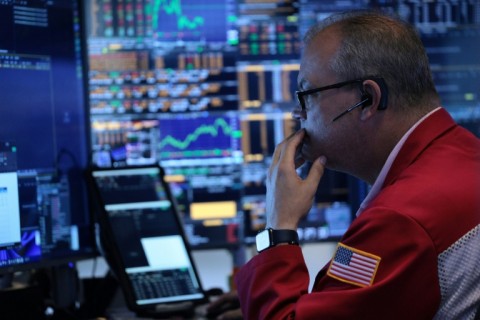
AI bubble fears spread as eNCA highlights Wall Street jitters
On June 27, 2026 at 08:30 a.m. SAST, South African broadcaster eNCA ran an AFP-sourced piece warning that recent volatility in US tech stocks has revived fears of an AI-driven market bubble. The article cites mounting debt for AI buildouts, sharp drops in Oracle and other names, and fresh concerns after SpaceX announced a $25 billion bond issue tied to its space and AI expansion.
EA-driven SpaceX bond plan for AI infrastructure erases $600bn in value
SpaceX shares lost about US$600 billion in market value over three sessions after the company announced plans to raise at least US$20 billion via bonds. The planned debt issue is aimed at financing artificial intelligence infrastructure inherited from xAI, prompting investor concern over capital intensity.
AI stock rout hits SpaceX and Nasdaq as rate fears squeeze valuations
On June 23, 2026, Nasdaq 100 futures fell about 2–3% and AI‑linked stocks slid after a 16% plunge in SpaceX and sharp drops in Alphabet, Meta, Microsoft and Amazon. Investors are reassessing heavily leveraged AI spending plans as markets price in further US rate hikes under new Fed chair Kevin Warsh.([brecorder.com](https://www.brecorder.com/news/40426945))
AI capex boom pushes Big Tech deeper into global debt markets
On June 21, 2026, Business Insider reported that Amazon, Alphabet, Microsoft and Meta are projected to spend about $750 billion on AI infrastructure this year, over 80% more than in 2025. The article notes that hyperscalers and firms like Nvidia, Oracle and SpaceX are increasingly funding the AI buildout with large bond offerings, tying AI progress more tightly to global interest-rate conditions.
Discussion
Timeline
3 eventsBeijing unveils 2026–2028 AI plan
The three-year plan outlines specific tasks for AI development, indicating a strategic commitment to advancing AI research.
China's State Council adopts AI safety measures
The meeting led to significant regulatory measures aimed at accelerating AI innovation and safety governance.
SpaceX plans to raise $20 billion via bonds for AI infrastructure
This is a specific funding plan aimed at financing AI infrastructure, indicating a significant financial move.