South Korea's $950B AI Infrastructure Surge
Main Take
South Korea is doubling down on AI with a $950 billion investment plan. This includes a partnership with Nvidia to build a massive AI factory, highlighting the country's ambition to lead in AI technology.
The pattern reveals a fierce competition among tech giants to secure their place in the AI landscape. As companies like SK Group and Samsung ramp up investments, they are betting on AI's transformative potential, despite market volatility and investor skepticism.
Watch for further developments in AI infrastructure projects and partnerships, especially as the first AI factory is set to launch in 2027.
The Story So Far
South Korea is making headlines with a bold $950 billion investment in AI infrastructure, aiming to position itself as a global leader in the AI sector. The recent partnership between SK Group and Nvidia to build a $500 billion AI factory marks a significant step in this direction, reflecting the country's aggressive strategy to capitalize on the AI boom.
The journey began with President Lee Jae Myung's declaration of the AI era as a 'truly new opportunity' for South Korea. This sentiment was echoed in a series of agreements between major Korean firms and US tech giants, including Nvidia and OpenAI. Notably, SK Hynix reported a staggering $43.7 billion profit in Q2 2026, driven by demand for high bandwidth memory from AI data centers. However, despite these promising figures, the company faced a 13 percent drop in stock value due to missed expectations and concerns over the sustainability of AI spending.
The market's reaction has been mixed. A recent selloff in Asian chip stocks, including a more than 8 percent drop in the KOSPI index, highlights investor anxiety over the massive funding requirements of the AI boom. Companies like Samsung Electronics and SK Hynix experienced significant stock declines amid fears of rising competition from China and uncertainties surrounding Nvidia's financing guarantees.
What's at stake is clear: South Korea's ambition to dominate the AI landscape could reshape the global tech industry. The success of these investments will depend on the ability to deliver on promises while navigating market challenges. As the first AI factory is set to go online in 2027, all eyes will be on how these developments unfold and their impact on the broader AI ecosystem.
Who Should Care
Expect increased volatility as AI funding needs grow.
New partnerships may accelerate breakthroughs in AI technologies.
Opportunities abound in developing and deploying AI infrastructure.

Related Articles (7)
Samsung Electronics warns AI chip shortage to worsen by 2028
Samsung Electronics reported a more than 250-fold jump in semiconductor profit for Q2 2026, driven by AI memory demand. Executives said on July 30 that AI chip shortages are likely to intensify through 2027 and 2028, even as the company races to expand high-bandwidth memory supply.
SK Hynix profit jump misses AI hype as stock sinks 13 percent
South Korea’s SK Hynix reported a more than sixfold jump in quarterly operating profit on July 29, 2026 but still missed lofty market expectations tied to AI demand. Shares fell around 13 percent as Reuters reported delays in some advanced chip shipments and mounting investor worries over the sustainability of hyperscalers’ AI infrastructure spending.
AI funding fears spark heavy selloff in Asian chip stocks
On July 28, 2026, Reuters reported a sharp selloff in Asian markets led by chipmakers as investors grew nervous about the massive funding needs of the AI boom. South Korea’s KOSPI plunged more than 8 percent, triggering a circuit breaker, while Samsung Electronics and SK Hynix fell up to about 11 percent amid worries over Nvidia’s potential $250 billion OpenAI financing guarantee and rising Chinese competition.
Nvidia and SK Group unveil $500B AI factory and HBM pact
On July 26, 2026, Chinese outlet IT之家 reported that South Korea’s SK Group and Nvidia have agreed a more than 500 billion dollar AI partnership, including a 2 gigawatt AI factory in Korea using Nvidia’s Vera Rubin platform. The first AI factory is slated to go online in 2027, alongside a long‑term HBM memory collaboration with SK hynix.
SK hynix AI chip boom points to record 43.7B profit
On July 26, 2026, Yonhap reported that SK hynix is forecast to post a record operating profit of 64.1 trillion won (about 43.7 billion dollars) in Q2 2026. Analysts attribute the surge to high bandwidth memory and SSD demand from global AI data centers and tech companies.
Korea president Lee links AI era to 950B tech deals
At 07:02 KST on July 26, 2026, Yonhap reported that President Lee Jae Myung told Korean expatriates in San Francisco that the AI era is a “truly new opportunity” for South Korea. He highlighted recently announced business agreements between Nvidia, OpenAI, Anthropic and Korean firms such as Samsung Electronics and SK hynix, which a presidential official valued at about 950 billion dollars.
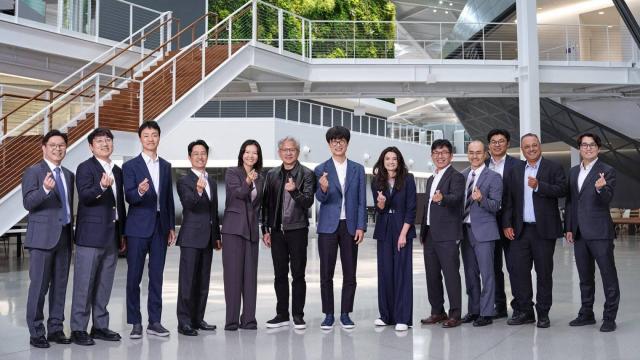
Samsung and SK sign $950B AI chip and data center deals
On July 25, 2026, South Korea’s presidential Blue House detailed about $950 billion in AI chip and infrastructure cooperation over five years between Korean conglomerates and US tech firms. SK Group will pursue around $750 billion in advanced memory supply deals, while Samsung Electronics signed a memorandum of understanding with Broadcom worth up to $200 billion, alongside large AI data center and physical AI projects with Nvidia, Anthropic, NAVER, SK Telecom, Brookfield and Hyundai Motor Group.
Discussion
Key Players
Advances AGI Timeline
This trend may accelerate progress toward AGI
South Korea is doubling down on AI with a $950 billion investment plan. This includes a partnership with Nvidia to build a massive AI factory, highlighting the country's ambition to lead in AI technology.
Timeline
3 eventsNvidia and SK Group unveil $500B AI factory and HBM pact
This partnership involves a major investment in AI infrastructure, indicating a significant development in the AI manufacturing sector.
SK hynix forecasted to post record profit of $43.7B
Achieving a record operating profit of $43.7 billion highlights the financial impact of the AI boom on SK hynix.
Samsung and SK sign $950B AI chip and data center deals
This partnership involves a significant financial commitment and collaboration between major tech firms, indicating a substantial shift in the AI infrastructure landscape.