Nations Forge Alliances in AI Infrastructure
Main Take
Saudi Arabia is emerging as a leader in AI infrastructure, driven by significant investments like G42’s new data center in Dammam. South Korea is also positioning itself as a top AI player with a comprehensive talent strategy and partnerships with major firms like SoftBank. This competition reveals a broader trend of nations racing to secure AI capabilities and talent, aiming for technological sovereignty and economic growth.
The Story So Far
The global race for AI supremacy is heating up, with nations like Saudi Arabia and South Korea making bold moves to establish themselves as leaders in AI infrastructure. Saudi Arabia's recent announcement of a 200MW AI-ready data center in Dammam by G42's Khazna Data Centers highlights the kingdom's commitment to expanding its AI capabilities. This project is part of a larger strategy to meet the growing demand for computing power in the Gulf region, positioning Saudi Arabia as a significant player in the AI landscape.
Meanwhile, South Korea is not sitting idle. The government has unveiled an ambitious AI talent strategy aimed at transforming the nation into one of the world's top three AI powers. This includes reforms in education, new AI-focused university programs, and initiatives to attract foreign researchers. The recent meetings between South Korean President Lee Jae Myung and SoftBank's Masayoshi Son underscore the importance of international partnerships in achieving these goals. South Korea's participation in SoftBank's $500 billion Stargate AI infrastructure project further solidifies its commitment to becoming a global AI hub.
These developments are part of a broader trend where countries are investing heavily in AI to secure their technological futures. The UAE leads in AI adoption, with nearly 60% of its population using AI tools, while Saudi Arabia ranks third globally in frontier AI models and job growth, driven by the Saudi Data and AI Authority (SDAIA). The competition is not just about building infrastructure but also about attracting talent and fostering innovation.
What’s at stake is significant: nations that lead in AI will likely dominate future economic landscapes. As countries like Saudi Arabia and South Korea ramp up their efforts, the global balance of power in technology may shift. Watch for more aggressive investments and international collaborations in the coming months as these nations strive for AI leadership.
Who Should Care
Expect increased funding opportunities in AI infrastructure projects.
AI talent shortages may lead to more competitive research environments.
Watch for demand spikes in AI-related skills and training programs.

Related Articles (8)
G42’s Khazna to build 200MW AI-ready data center in Saudi Arabia’s Dammam
UAE-based tech group G42’s data infrastructure arm Khazna Data Centers announced it has acquired a 225,000-square-meter plot in Dammam, Saudi Arabia, where it plans to develop an AI-ready data center with capacity up to 200 megawatts. The project is part of G42’s regional expansion in high-density AI infrastructure, supporting growing demand for compute in the Gulf.

New Chinese AI advances unveiled at Greater Bay Area Science Forum
At the 2025 Greater Bay Area Science Forum’s AI sub‑forum in Guangzhou, Chinese institutions released several new domestic AI achievements, including a 2025 AI Frontier Technology Trend Report highlighting agents, communication protocols and embodied intelligence. The event showcased advances in foundational research, platform building and applied AI, signalling continued state‑backed momentum for AI innovation in the Guangdong–Hong Kong–Macao Greater Bay Area.

Riyadh Air and IBM unveil the world’s first AI‑native airline
IBM and Riyadh Air announced that the new Saudi carrier will operate as an "AI‑native" airline from day one, with AI agents orchestrating operations, crew enablement, customer care and enterprise performance management. Built on IBM’s watsonx and consulting platform, the system coordinates 59 workstreams and 60+ partners to replace traditional legacy airline IT, aiming to boost efficiency and personalize both employee and passenger experiences.
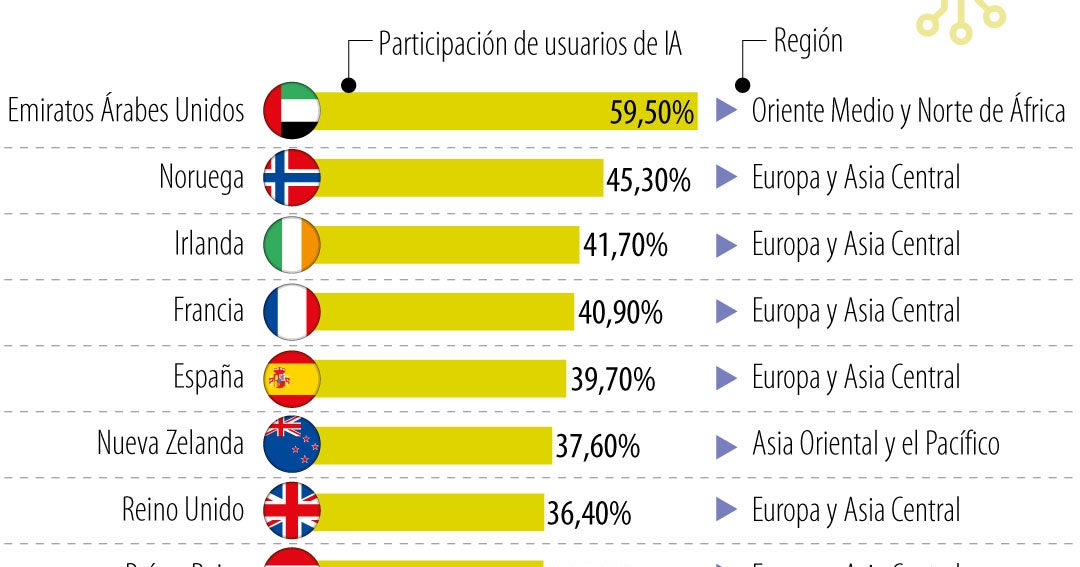
UAE tops global AI adoption as one in seven workers worldwide uses AI, Microsoft study finds
A new Microsoft-backed report highlighted by Colombia’s La República finds that the United Arab Emirates leads the world in AI adoption, with nearly 60% of its population using AI tools, followed by Norway, Ireland and France. Globally, AI adoption among working-age adults has tripled since 2022 to around 15%, but usage remains highly uneven and concentrated in a handful of countries and cities such as San Francisco, New York, London and Beijing.

South Korea unveils comprehensive AI talent strategy combining university reforms and global recruitment
South Korea’s government has outlined a sweeping AI talent strategy aimed at making the country one of the world’s top three AI powers, including strengthening math and science education from school level, expanding AI-focused university programs, and creating dedicated AI visas and easier residency paths for foreign researchers. The plan also includes setting up AI colleges at major science and technology institutes, upgrading “software-centered universities” into “AI-centered universities,” and partnering with ARM to found an “ARM Academy” expected to train around 1,400 top-tier semiconductor design specialists.([epochtimes.com](https://www.epochtimes.com/gb/25/12/6/n14649798.htm))

Korea’s President Lee and SoftBank’s Masayoshi Son discuss AI cooperation and artificial super intelligence
South Korean President Lee Jae Myung met SoftBank chairman Masayoshi Son in Seoul to discuss cooperation on artificial intelligence, semiconductors and large‑scale infrastructure, as Korea pursues its goal of becoming a top‑three AI power. Son warned of the coming era of 'artificial super intelligence' thousands of times more capable than the human brain, while the meeting also referenced SoftBank’s role in the US$500 billion Stargate AI infrastructure project and Korea’s planned ₩30 trillion (about US$22 billion) participation via the UAE segment.
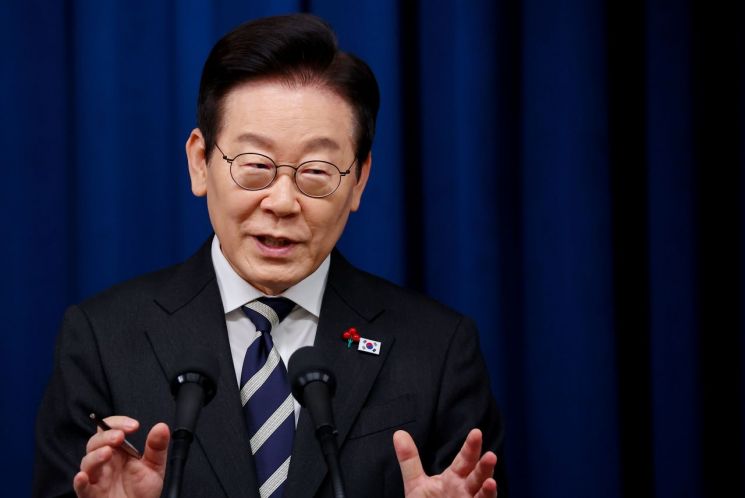
South Korean president to meet SoftBank’s Masayoshi Son on AI and semiconductor cooperation
South Korean President Lee Jae‑myung will meet SoftBank Group chairman Masayoshi Son on December 5 to discuss cooperation in artificial intelligence, semiconductors and related infrastructure investment, according to the presidential office. The talks are expected to touch on SoftBank’s massive 'Stargate' AI infrastructure project with OpenAI and Oracle and on positioning South Korea as a top‑tier AI and chip hub, with key ministers and senior aides also attending.

Saudi Arabia ranks third globally in frontier AI models and AI job growth, driven by SDAIA-led strategy
An analysis of the 2025 Stanford AI Index highlights Saudi Arabia’s rise to third globally in frontier AI language models and AI job growth, behind only the U.S., China, India and Brazil in respective categories. The article credits the Saudi Data and AI Authority (SDAIA), indigenous Arabic LLMs such as ALLaM, large-scale talent programs like SAMAE, and extensive regulatory and data-governance reforms as pillars of the kingdom’s ambition to become a top‑10 AI nation under Vision 2030.
Discussion
Advances AGI Timeline
This trend may accelerate progress toward AGI
Saudi Arabia is emerging as a leader in AI infrastructure, driven by significant investments like G42’s new data center in Dammam. South Korea is also positioning itself as a top AI player with a comprehensive talent strategy and partnerships with major firms like SoftBank. This competition reveals a broader trend of nations racing to secure AI capabilities and talent, aiming for technological sovereignty and economic growth.
Timeline
4 eventsG42’s Khazna to build 200MW AI-ready data center in Saudi Arabia
The acquisition of land and announcement of a significant AI-ready data center marks a strategic expansion in the region.
New Chinese AI advances unveiled at Greater Bay Area Science Forum
The release of a report highlighting new AI achievements indicates significant progress in China's AI capabilities.
Riyadh Air and IBM unveil the world’s first AI-native airline
The launch of an AI-native airline represents a major innovation in the aviation industry, leveraging AI for operations.
South Korea unveils comprehensive AI talent strategy
The announcement of a national strategy to enhance AI talent is a significant step towards establishing South Korea as a leader in AI.