AI Hardware Ecosystem Expands Beyond Vehicles
Main Take
LG's AI Cabin Platform will run generative AI on-device, enhancing in-car experiences with real-time monitoring and personalized alerts. This shift highlights a broader trend where companies are moving AI capabilities from the cloud to local devices, reducing latency and improving privacy. Expect fierce competition as more brands, like Li Auto and Warby Parker, diversify into AI hardware, signaling a growing ecosystem beyond traditional applications.
The Story So Far
The AI hardware landscape is rapidly evolving, with major players like LG Electronics, Li Auto, and Warby Parker making significant strides. LG is set to unveil its AI Cabin Platform at CES 2026, which will leverage Qualcomm's Snapdragon Cockpit Elite to run generative AI models directly in vehicles. This platform aims to deliver real-time driver monitoring and personalized infotainment, marking a pivotal shift towards AI-defined vehicles. By processing AI tasks on-device, LG enhances user experience while addressing privacy concerns associated with cloud computing.
Meanwhile, Li Auto has launched Livis, its first standalone AI smart glasses, featuring the Mind GPT assistant. This move signifies Li Auto's ambition to create an AI hardware ecosystem that extends beyond vehicles. Priced competitively, Livis targets tech enthusiasts and existing customers, positioning the company as a serious contender in the AI wearables market. In parallel, Warby Parker is collaborating with Google to develop lightweight AI-enabled smart glasses, set to launch in 2026. These glasses will utilize Google's advanced AI capabilities to offer multimodal assistance, intensifying competition with existing products like Meta's Ray-Ban smart glasses and Apple's Vision Pro.
The stakes are high as these companies vie for dominance in the emerging AI hardware market. Success hinges on delivering innovative, user-friendly products that integrate seamlessly into daily life. As competition intensifies, expect to see more collaborations and product launches aimed at capturing consumer interest.
Looking ahead, keep an eye on how these developments shape the AI hardware ecosystem. The push for on-device processing will likely lead to advancements in AI capabilities, privacy features, and overall user experience.
Who Should Care
Invest in companies developing AI hardware as competition heats up.
Focus on the implications of on-device AI for privacy and performance.
Explore new architectures for efficient on-device AI processing.

Related Articles (4)
LG to showcase generative AI-powered 'AI Cabin Platform' for vehicles at CES 2026
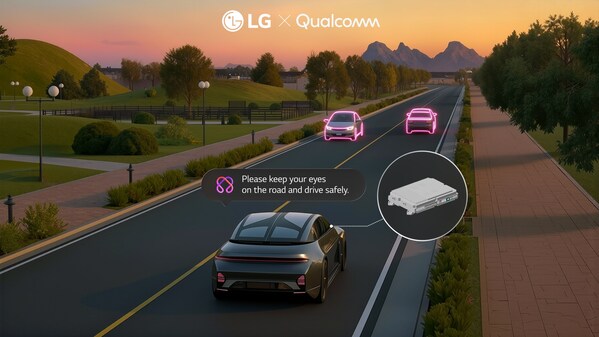
LG Electronics announced it will debut an AI Cabin Platform at CES 2026, an in-vehicle system that uses generative AI models—including vision-language and large language models—running on Qualcomm’s Snapdragon Cockpit Elite hardware to provide on-device, context-aware assistance and personalized infotainment. By keeping AI processing inside the car, LG aims to enable real-time driver monitoring, proactive safety alerts and dynamic UI generation while reducing latency and improving privacy versus cloud-based approaches, highlighting growing competition in AI-defined vehicle platforms. ([lgnewsroom.com](https://www.lgnewsroom.com/2025/12/lg-to-showcase-next-generation-mobility-technology-powered-by-generative-ai-at-ces-2026/?utm_source=openai))
LG unveils generative AI ‘AI Cabin Platform’ for next‑generation in‑vehicle experiences at CES 2026
LG Electronics announced it will showcase a new AI Cabin Platform at CES 2026, a high‑performance in‑vehicle computing system that runs generative AI models such as large language models, vision‑language models and image generators directly on Qualcomm’s Snapdragon Cockpit Elite hardware. By processing AI workloads entirely on‑device, the platform can analyze driving conditions and driver state in real time, deliver personalized safety alerts and dynamically generate context‑aware infotainment interfaces, positioning LG as a key player in the emerging 'AI‑defined vehicle' era.
Warby Parker and Google to launch AI-powered smart glasses in 2026
Eyewear retailer Warby Parker is collaborating with Google to develop lightweight AI-enabled smart glasses, with the first products expected in 2026. The devices will use Google's Android XR platform and Gemini AI model to provide multimodal assistance through everyday eyewear, intensifying competition with Meta's Ray-Ban smart glasses and Apple's Vision Pro in the emerging AI wearables market.

Li Auto launches Livis AI glasses as its first standalone AI hardware
Chinese EV maker Li Auto has launched Livis, a 36-gram AI smart glasses product that brings its in-house Mind GPT assistant “Li Xiang Tongxue” out of the car and into daily life, marking the company’s first independent AI hardware device. Priced from 1,699–1,999 yuan after subsidies, the glasses were developed with Zeiss and target existing Li Auto owners and tech enthusiasts, signaling Li Auto’s ambition to build an AI hardware ecosystem beyond vehicles. ([21jingji.com](https://www.21jingji.com/article/20251205/herald/47cc981dd1250b503161aa918d676d05.html))
Discussion
Key Players
Advances AGI Timeline
This trend may accelerate progress toward AGI
LG's AI Cabin Platform will run generative AI on-device, enhancing in-car experiences with real-time monitoring and personalized alerts. This shift highlights a broader trend where companies are moving AI capabilities from the cloud to local devices, reducing latency and improving privacy. Expect fierce competition as more brands, like Li Auto and Warby Parker, diversify into AI hardware, signaling a growing ecosystem beyond traditional applications.
Timeline
4 eventsLG to showcase AI Cabin Platform at CES 2026
LG's debut of a generative AI-powered platform for vehicles represents a significant advancement in in-vehicle technology.
LG unveils AI Cabin Platform for next-gen in-vehicle experiences
The announcement of LG's AI Cabin Platform highlights a notable innovation in automotive technology using generative AI.
Warby Parker partners with Google for AI-powered smart glasses
The collaboration between Warby Parker and Google to develop AI-enabled smart glasses is a significant move in the eyewear and tech industries.
Li Auto launches Livis AI glasses as standalone AI hardware
Li Auto's launch of its first standalone AI hardware, the Livis AI glasses, marks a major step in the company's expansion into consumer electronics.