This trend is no longer active
This trend was archived on Jan 1, 2026 as it is no longer seeing new developments.
Enterprise AI Platforms Transform Traditional Industries
Main Take
OpenAI and Google are locked in a fierce battle for AI dominance as they ramp up model releases and partnerships. This arms race underscores a growing divide between firms that can effectively implement AI and those still caught in trial phases. Companies must adopt robust strategies and infrastructure to stay competitive in this rapidly evolving landscape, or they will face obsolescence.
Who Should Care
Expect heightened investment in AI infrastructure as firms seek to solidify their positions.
The urgency for practical applications is driving innovation in AI frameworks.
Skills in AI implementation are now critical; expect demand for talent to spike.

Related Articles (67)
BCG warns AI‑driven cyber attacks outpace defensive adoption
Boston Consulting Group released a report on December 18, 2025 finding that about 60% of surveyed companies believe they faced AI‑enabled cyberattacks in the past year, while only 7% are currently using AI in their defenses. The firm urges boards and CISOs to fund AI‑based security tools and align leadership to close this widening gap. ([wvnews.com](https://www.wvnews.com/news/around_the_web/partners/pr_newswire/subject/surveys_polls_and_research/ai-driven-cyber-threats-are-outpacing-defense-capabilities/article_efe5cdaf-ec65-5c3b-be6a-cff60eea09a9.html))

Enterprise AI faces 2026 reckoning to scale or stall
In an opinion piece for CIO, consultant Michael Bertha argues that after two years of pilots and proofs‑of‑concept, 2026 will separate organizations that can scale AI from those stuck in perpetual experimentation. He describes a growing "expectation versus execution" gap: boards have read the same reports promising double‑digit productivity gains, but many CIOs lack the operating model and capacity to deliver them. The article sketches a playbook that starts by turning IT itself into a productivity showcase—using tools like GitHub Copilot to measurably cut development time—then federating AI delivery via domain‑specific centers of excellence rather than a single, overloaded central team. Bertha stresses that the winning model is a hub‑and‑spoke structure where a central AI group provides platforms and guardrails while business units own outcomes and funding. For enterprises staring at mounting AI spend with limited ROI, the message is blunt: 2026 is the year you either architect for scale or risk losing credibility with both leadership and frontline teams.
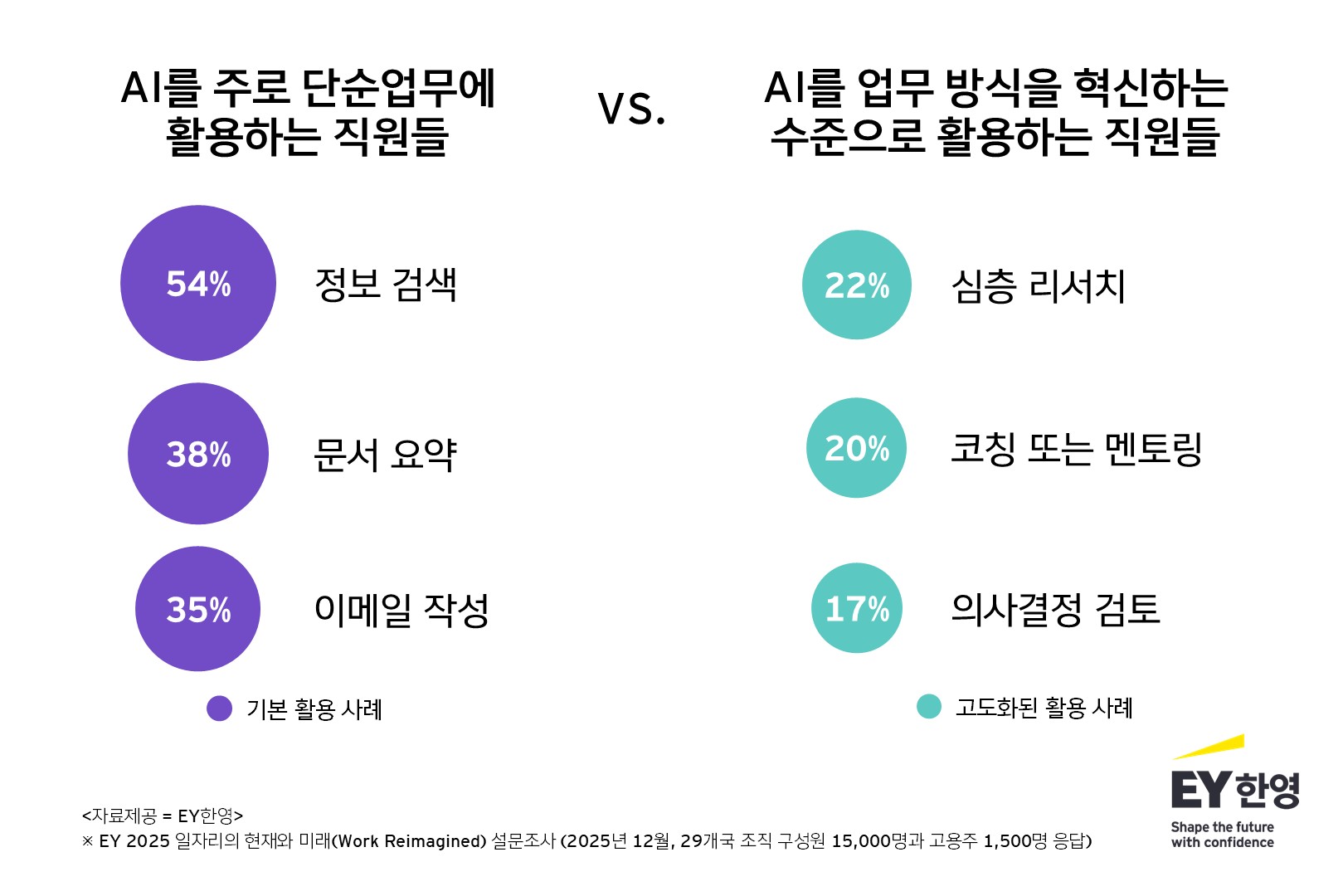
EY Korea survey reveals AI productivity gains hinge on talent strategy
A new EY Korea report argues that the real differentiator in AI performance isn’t model choice but people strategy, finding up to a 40% productivity gap between companies with robust talent approaches and those without. In a global survey of 15,000 employees and 1,500 employers across 29 countries, 88% of workers said they already use AI in daily tasks, but only 5% are using it in ways that truly transform how work is done; most usage is still limited to search and summarization. The study highlights a sharp skills and culture gap: just 12% of employees feel they receive sufficient AI training, and 37% worry that over‑reliance on AI could erode their expertise, suggesting that many firms are rolling out tools faster than they’re evolving incentives, learning and job design. EY’s takeaway is that companies treating AI purely as a cost-cutting lever risk commoditized outcomes, while those investing in training, experimentation time and new performance metrics are more likely to convert AI into durable competitive advantage rather than a short-lived efficiency play.([ey.com](https://www.ey.com/ko_kr/newsroom/2025/12/ey-korea-news-release-2025-12-16))

OpenAI, Anthropic and Google’s 2025 AI arms race dissected
Shanghai-based outlet The Paper published a sprawling year‑end analysis of the "AI big three"—OpenAI, Anthropic and Google—framing 2025 as a bruising arms race of model launches, valuations and ecosystem plays. The piece credits OpenAI’s GPT‑5.2, with its huge context window and agentic capabilities, as a late‑year comeback that helped it reclaim a perceived technical edge after Google’s Gemini 3 briefly dominated benchmarks and mindshare. Anthropic’s Claude 4.5 is portrayed as the workhorse of long-running autonomous tasks and enterprise workflows, buoyed by a massive funding round that pushed its valuation into the top tier of private companies, while Google’s Gemini 3 is cast as the champion of native multimodality and aggressive product integration across Search, Android and Workspace. The article also zooms out to highlight how Microsoft, Meta, Apple, Mistral and Elon Musk’s xAI shifted strategies—Microsoft hedging beyond OpenAI by embracing Claude, Meta doubling down on open models, Apple quietly baking on-device AI into its platforms, and European champion Mistral riding a blockbuster raise. It reads less like simple hype and more like a sober Chinese-language scorecard on how power, capital and technical direction are consolidating in the global model race heading into 2026.
Use of AI among Italian companies doubles, but adoption still lags in smaller firms
A new report from Italy’s national statistics agency ISTAT finds that 16.4% of Italian firms with at least 10 employees used some form of artificial intelligence in 2025, up sharply from 8.2% in 2024 and 5.0% in 2023. Adoption is heavily skewed toward larger enterprises: more than half of companies with 250+ employees now deploy AI, compared with about 15.7% of smaller firms. The most common use cases are text data extraction, generative AI for language and images, and speech‑to‑text tools, indicating that practical, workflow‑oriented applications are beating out moonshot projects. Companies that haven’t adopted AI cite a lack of skills, unclear regulation, data‑protection worries and high costs as key obstacles, and a notable minority still say AI is of “no use” to them. The findings highlight a growing digital divide inside Europe’s SME‑heavy economies: while national champions race ahead with AI, the long tail of smaller businesses risks being left behind without targeted support and upskilling.

AI in companies: adoption is booming, but strategy is lagging
Ecuadorian outlet KCH Comunicación reports that nearly half of companies globally now run at least one generative AI project—large enterprises often juggle half a dozen—yet only about 37% have a coherent AI strategy. The piece argues that many organizations are experimenting tactically with chatbots, copilots and automation without tying them to clear business metrics or governance, effectively flipping the usual sequence of "strategy first, technology later." It highlights a skills gap: even AI specialists typically have less than three years of hands‑on GenAI experience, which helps explain why firms are still discovering best practices on the fly. The author warns that incumbents who treat AI as a side experiment risk being outpaced by leaner, AI‑native competitors that bake agents into core operations from day one, and calls for AI strategies to be integrated as deeply as past industrial and digital transformations.([kchcomunicacion.com](https://kchcomunicacion.com/2025/12/15/ia-en-empresas-adopcion-dispara-pero-hay-estrategia-real/))
AI already affects 2 in 10 jobs in Spain, with women more exposed
Spanish outlet 65ymás summarizes new research from the VRAIN Institute at the Universitat Politècnica de València showing that between 18% and 22% of jobs in Spain are highly exposed to transformation by artificial intelligence, depending on the province. Madrid and Barcelona top the list with exposure above 21.5%, driven by concentrations of services, education, healthcare, and information‑sector roles that are easier to augment or reshape with AI, while more agricultural and traditional manufacturing regions see lower impacts. The study also finds a pronounced gender gap: women’s jobs are 1.3 to over 3 percentage points more exposed to AI than men’s, because women are over‑represented in service and care professions that sit squarely in AI’s crosshairs. Researchers argue that these structural patterns, rather than short‑term cycles, will determine who benefits and who is displaced, and urge policymakers to target retraining and social protections with a clear eye on geography and gender.

Militant groups are experimenting with AI, boosting propaganda and cyber risks
An Associated Press report, carried by outlets including The Independent and Halifax’s CityNews, warns that extremist organizations such as the Islamic State group are beginning to use generative AI for recruitment, deepfake propaganda and cyber operations, even if their most ambitious plans remain ‘aspirational’ for now. Analysts say AI image and video tools let small, under‑resourced groups pump out emotionally charged fake content at scale, which can be amplified by social‑media algorithms to radicalize supporters and obscure real‑world atrocities. The story also flags worries that AI could help militants develop biological or chemical weapons by lowering technical barriers, a risk now explicitly mentioned in US homeland security threat assessments. US lawmakers are debating legislation to require annual reviews of AI‑enabled extremist threats and to make it easier for AI companies to share data on abuse patterns, underscoring how AI safety is increasingly merging with counter‑terrorism and cyber‑defense policy debates.

Sina’s AI morning brief spotlights ChatGPT “adult mode”, youth AI usage in Japan and insider‑trading fears around AI prediction markets
Chinese portal Sina’s AI desk published a morning wrap‑up collating overnight global AI stories, ranging from geopolitics to product launches and safety concerns. ([news.sina.com.cn](https://news.sina.com.cn/zx/ds/2025-12-15/doc-inhavser2202625.shtml)) One highlight is OpenAI’s plan to roll out an “adult mode” in ChatGPT in early 2026, with Fidji Simo saying the company is testing an age‑prediction model to automatically detect under‑18 users and gate explicit content—essentially building an AI bouncer into the chatbot. ([news.sina.com.cn](https://news.sina.com.cn/zx/ds/2025-12-15/doc-inhavser2202625.shtml)) The brief also cites a Japanese LINE Yahoo survey showing that 15‑ to 24‑year‑olds most often use AI for casual web queries and homework help, with young women disproportionately turning to chatbots for advice and emotional support, underscoring how quickly AI is becoming a social confidant. ([tech.sina.cn](https://tech.sina.cn/2025-12-14/detail-inhauuyz4808361.d.html)) Other items include Google’s Gemini‑powered real‑time earbud translation pilot in the U.S., Mexico and India, and a spate of “insider trading” allegations on crypto prediction market Polymarket after traders made million‑dollar wins by betting on the exact timing of OpenAI’s GPT‑5.2 launch and Google’s year‑end trends lists—prompting some tech firms to ban employees from such platforms. ([tech.sina.cn](https://tech.sina.cn/2025-12-14/detail-inhauuyz4818034.d.html)) Overall, the brief paints a picture of AI seeping into everyday life while regulators and companies scramble to close gaps in content moderation, youth safety and information‑leak risks.
AI Tech Briefing (Overnight): Google adds AI-powered simultaneous interpretation; other AI industry updates
Chinese outlet Sina’s AI briefing roundup highlights a fresh wave of AI product and industry updates from the past night, led by Google rolling out an AI-driven real-time voice translation / simultaneous interpretation capability (as reported by the outlet). In practical terms, this kind of ‘always-on’ translation moves AI from “generate text” into the ambient layer of daily communication—meetings, travel, customer support—where latency and reliability matter more than flashy demos. The roundup format also reflects a broader reality: major AI changes are now shipping continuously across products (apps, devices, cloud) and getting surfaced to the public as a stream of incremental releases rather than single blockbuster launches. For watchers of the Race to AGI, these small shipping moments are often the real leading indicator—because they reveal where model capability has become cheap and stable enough to productize at scale. ([news.sina.com.cn](https://news.sina.com.cn/zx/ds/2025-12-13/doc-inhaqxsv6747298.shtml?utm_source=openai))
Nvidia weighs increasing H200 AI chip output as China demand surges after U.S. export green light
Nvidia is evaluating adding production capacity for its H200 AI chips to meet heavy interest from Chinese customers after the U.S. said exports could proceed under a fee structure. The story matters because it shows how quickly demand can rebound when policy constraints loosen—even partially—and how supply planning becomes a geopolitical decision, not just an operations one. It also highlights a second-order constraint: advanced foundry capacity (notably at TSMC) is finite, and Nvidia is balancing current-gen demand (H200) against ramping its newest lines. If Beijing adds conditions (e.g., bundling domestic chips), the “AI chips into China” channel could morph into an industrial-policy lever rather than a straightforward sale.
Broadcom forecasts upbeat quarterly revenue on strong demand for AI chips and networking
Broadcom projected first-quarter revenue above Wall Street estimates, attributing the outlook to sustained demand for AI silicon and data-center networking. The company said its AI semiconductor revenue (including custom accelerators and networking chips used in AI data centers) is expected to double to about $8.2B in the fiscal first quarter. The update reinforces that spending on AI infrastructure is still accelerating, especially in high-bandwidth interconnects and custom silicon programs. For the competitive landscape, it signals continued diversification beyond GPUs toward specialized accelerators and the networking stack that makes large-scale training and inference viable.

UK government and Google DeepMind launch partnership to apply AI to science, clean energy and public services
The UK government has announced a wide‑ranging partnership with Google DeepMind that includes establishing the company’s first automated AI research lab in the UK, focusing initially on new superconducting materials to support cheaper medical imaging and more efficient chips. The agreement will give British scientists priority access to advanced DeepMind tools, explore a "Gemini for Government" system to cut bureaucracy, and deepen collaboration with the UK’s AI Security Institute to ensure AI is developed and deployed safely across critical sectors.
ByteDance and Alibaba line up orders for Nvidia's H200 AI chips after U.S. export shift
Chinese tech giants ByteDance and Alibaba have approached Nvidia about purchasing its powerful H200 AI accelerators after U.S. President Donald Trump said the Taiwan-made chips could be exported to China, potentially giving Chinese firms access to hardware nearly six times as powerful as the previously allowed H20. Beijing has yet to clarify how widely it will permit imports of H200, and officials may require case-by-case reviews, leaving ByteDance, Alibaba and other Chinese AI players balancing their dependence on Nvidia hardware against domestic pressure to adopt homegrown chips from Huawei and Cambricon.([reuters.com](https://www.reuters.com/business/autos-transportation/bytedance-alibaba-keen-order-nvidia-h200-chips-after-trump-green-light-sources-2025-12-10/))

Alibaba creates new Qianwen consumer business unit to unify AI apps and hardware
Chinese media report that Alibaba has formed a dedicated Qianwen C-end business unit, led by group vice president Wu Jia, by merging its Intelligent Information and Intelligent Connectivity divisions. The new unit will consolidate consumer-facing products—including the Qianwen AI app, Quark search, Alibaba’s AI hardware efforts, UC browser and Shuqi reading—signaling a push to build a coherent ecosystem around Alibaba’s large language model and AI services for end users.

Google adds a second AI "alignment critic" to secure Gemini-powered Chrome browsing
Google is deploying a second AI model inside Chrome’s Gemini-powered browsing agent that acts as a “user alignment critic” to review proposed actions before they are executed. The design, detailed in a company security blog and highlighted by Computerworld, aims to mitigate indirect prompt injection attacks by isolating the critic from untrusted web content, restricting which sites the agent can act on, and adding additional gating and confirmation for sensitive operations such as banking or medical sites.

Pentagon selects Google Cloud’s Gemini for Government to power new GenAI.mil platform
The U.S. Department of War launched GenAI.mil, a department‑wide generative AI platform that will use Google Cloud’s Gemini for Government as its first enterprise AI system. The IL5‑authorized service will give roughly 3 million civilian and military personnel access to tools for summarizing policy handbooks, generating compliance checklists, drafting risk assessments and analyzing imagery and video, with the Pentagon emphasizing data sovereignty and that its data will not be used to train Google’s public models.
Accenture and Anthropic expand partnership to train 30,000 staff on Claude and co-sell enterprise AI
Accenture and Anthropic announced a multi‑year expansion of their partnership that will see around 30,000 Accenture employees trained on Anthropic’s Claude models and Claude Code. The firms will jointly develop and sell AI solutions across industries, including regulated sectors like financial services, healthcare and the public sector, reflecting growing enterprise demand for agentic coding assistants and workflow automation.

Accenture and Anthropic form dedicated business group to scale enterprise AI with Claude
Accenture and Anthropic announced a multi‑year expansion of their partnership, creating the Accenture Anthropic Business Group to train around 30,000 Accenture professionals on Claude and Claude Code. The collaboration aims to make Anthropic one of Accenture’s key strategic AI partners, embed Claude across Accenture’s innovation hubs, and co‑develop solutions for regulated sectors to help enterprises move from AI pilots to large‑scale deployments.

Beijing launches first AI-focused OPC service plan to support 'one-person companies'
Beijing’s Zhongguancun AI Beiwai Community has unveiled the city’s first "artificial intelligence OPC (one-person company) service plan" to help individual developers and creators build AI-driven businesses. The program offers subsidized office space, flexible compute resources, an "agent marketplace," financing and incubation support aimed at turning solo AI developers and AIGC creators into scalable startups within the capital’s flagship AI innovation zone.([beijing.gov.cn](https://www.beijing.gov.cn/ywdt/gzdt/202512/t20251209_4329326.html))
AWS weekly roundup highlights agentic AI push and new multimodal Bedrock capabilities after re:Invent
AWS published its December 8 weekly roundup synthesizing key announcements from re:Invent 2025, emphasizing AI agents as a new inflection point and promoting the Kiro Autonomous Agent as Amazon’s standard internal AI development environment. The post also spotlights multimodal retrieval for Amazon Bedrock Knowledge Bases and a preview of AWS Interconnect – Multicloud, framing these launches as foundational infrastructure for building production‑scale agentic AI systems.

Chinese experts at WIC2025 highlight power-grid AI as key to next-generation energy systems
At the World Innovation Conference (WIC2025) in Guangzhou, Chinese engineers and academics argued that "power artificial intelligence" (AI EPS) will be central to building next‑generation energy systems that are transparent and highly automated. Southern Grid experts described progress toward an AI‑driven grid that could operate with navigation‑like situational awareness and "autonomous driving"‑style control of power flows.
Guangdong’s core AI industry tops 230 billion yuan as China’s robot output leads the nation
Officials in Guangdong province reported that the region’s core artificial intelligence industry exceeded 230 billion yuan (about US$32 billion) in output from January to October 2025, with industrial and service robot production both ranked first nationwide. The figures highlight Guangdong’s growing strength in AI chips, model algorithms, intelligent terminals and robotics as it positions the Pearl River Delta as a key AI and automation hub in China.
New Chinese AI advances unveiled at Greater Bay Area Science Forum
At the 2025 Greater Bay Area Science Forum’s AI sub‑forum in Guangzhou, Chinese institutions released several new domestic AI achievements, including a 2025 AI Frontier Technology Trend Report highlighting agents, communication protocols and embodied intelligence. The event showcased advances in foundational research, platform building and applied AI, signalling continued state‑backed momentum for AI innovation in the Guangdong–Hong Kong–Macao Greater Bay Area.

GSMA Innovation Forum in Shenzhen highlights mobile AI and low‑altitude economy as China’s next growth engines
The GSMA hosted its Innovation Forum in Shenzhen, emphasizing mobile AI, the low‑altitude economy (drones and eVTOL), and global market expansion as key drivers of China’s digital ecosystem. A new GSMA report on "AI large model empowering verticals" showcases nearly 20 operator‑led AI deployments across sectors such as healthcare, industrial manufacturing and public services, aiming to provide replicable best practices for operators worldwide.

Reality and bubbles in the global AI investment wave
In a long-form analysis, Caixin argues that massive capital inflows have turned AI into the core of a new tech investment cycle, but warns that not all heavily hyped technologies will translate into sustainable productivity gains and profits. The piece highlights China’s aggressive ‘AI+’ industrial policies, the rapid spread of humanoid robots and AI agents, and booming valuations in AI chips and data centers, while cautioning that investors must distinguish between genuine innovation and speculative excess if they want to avoid an AI bubble. ([opinion.caixin.com](https://opinion.caixin.com/2025-12-08/102390796.html))

Opinion: How humans can control risks arising from AI
An opinion piece syndicated from China Daily and published by Pakistan’s Dawn argues that AI is a qualitatively different technology from past inventions because it rivals humans’ core knowledge‑producing abilities, creating deep risks to social stability, identity and economic structures. The article calls for stronger global governance frameworks, public awareness and ethical norms to ensure AI systems remain under meaningful human control and are steered toward broadly beneficial outcomes rather than concentrated power or military escalation. ([dawn.com](https://www.dawn.com/news/1959887/how-humans-can-control-risks-arising-from-ai))

OpenAI loses its market halo as Alphabet emerges as Wall Street’s preferred AI bet
Bloomberg reporting carried by The Straits Times and The Business Times says investor sentiment has shifted sharply away from OpenAI-linked stocks toward Alphabet, as concerns mount over OpenAI’s heavy spending, complex financing and mixed reception for GPT‑5, while Alphabet’s Gemini models, cash reserves and broader business lines look more durable. The report notes that a basket of OpenAI‑exposed companies such as Oracle, CoreWeave, AMD, Microsoft and Nvidia has risen 74% in 2025, but still badly lags the 146% jump in Alphabet‑exposed names like Broadcom, Lumentum, Celestica and TTM Technologies, prompting questions over whether OpenAI can fund its ambitions and remain the clear AI leader. ([straitstimes.com](https://www.straitstimes.com/business/companies-markets/openai-goes-from-stock-market-saviour-to-burden-as-ai-risks-mount))

Jamie Dimon says AI won’t ‘dramatically reduce’ jobs in the next year if it’s properly regulated
JPMorgan Chase CEO Jamie Dimon told Fox Business that artificial intelligence is unlikely to cause dramatic job losses over the next year, arguing that AI will initially create more work and productivity gains if governments put proper guardrails in place. Dimon advised workers to focus on critical thinking and interpersonal skills and said it’s up to governments and large corporations to phase in AI in ways that avoid widespread disruption, underscoring how major financial institutions now frame AI as both an economic opportunity and a regulatory responsibility.
Top scientists converge in Guangxi to boost AI-driven high-quality development
A Xinhua report describes a recent high-level talent event in China’s Guangxi region where 28 academicians and national experts met to promote the integration of artificial intelligence into local industries. The initiative aims to inject new momentum into Guangxi’s AI and related sectors by fostering joint projects, talent pipelines and application pilots aligned with China’s broader digital and AI development strategy.

Geoffrey Hinton says Google is set to overtake OpenAI in AI race
Geoffrey Hinton, often called the 'godfather of AI', told Business Insider that Google is now beginning to overtake OpenAI, citing the launch of its Gemini 3 model and Nano Banana Pro image generator alongside Google's custom AI chips and deep research bench. The Daily Star highlights Hinton's view that Google's scale, data and hardware stack now give it the edge, suggesting a potential shift in perceived leadership of the frontier-model race away from OpenAI toward Google and Google DeepMind.

Experts at Doha Forum urge new global rules to govern AI in warfare
At the Doha Forum 2025, a panel of international experts warned that rapidly advancing military uses of AI—especially in nuclear command and autonomous weapons—require urgent global rules to ensure accountability and human control. Speakers argued that AI is a “civilizational technology” akin to electricity and called for governance frameworks like the REAIM commission’s “Responsible by Design” report to keep military AI aligned with human rights and international law.([koreatimes.co.kr](https://www.koreatimes.co.kr/amp/foreignaffairs/others/20251206/ai-risks-in-warfare-demand-new-global-rules))

China opens 2025 Tengchong Scientist Forum on ‘Science and AI Changing the World’
The 2025 Tengchong Scientist Forum opened in Yunnan with the theme “Science · AI Changing the World”, gathering hundreds of leading scientists, university heads and entrepreneurs to discuss AI’s role in reshaping research and industry. At the event, China released its first systematic "Technology Foresight and Future Vision 2049" report, which identifies areas including artificial intelligence and general-purpose robots as among ten key technology visions for a 2049 human–machine coexisting smart society.
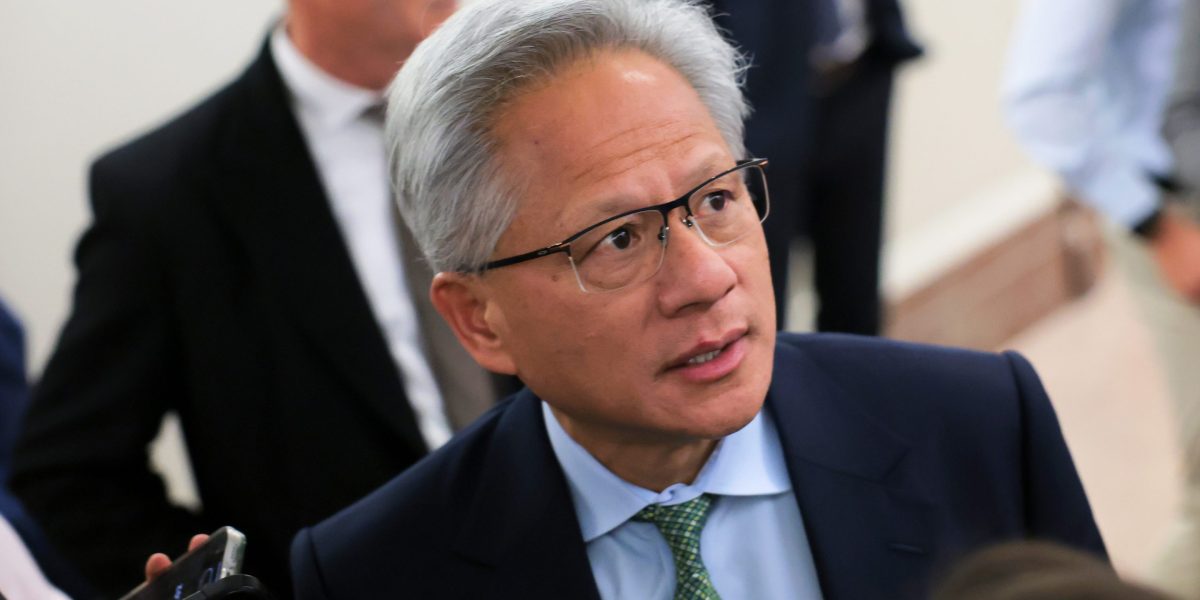
Nvidia CEO Jensen Huang says AI job disruption will be gradual and may spawn ‘robot clothing’ industry
In an interview with Joe Rogan, Nvidia CEO Jensen Huang said he does not expect a sudden wave of AI‑driven layoffs, arguing that jobs built entirely around routine tasks are most at risk while complex roles such as radiology remain more resilient. He predicted AI will also create new lines of work—including technicians who build and maintain AI assistants and even a future “robot apparel” industry—as humanoid robots become more widespread.

Japan drafts basic AI program aiming to raise public usage to 80%
Japan’s government has prepared a draft basic program on AI development and use that targets raising the public AI utilization rate first to 50% and eventually to 80%. The plan also seeks to attract about ¥1 trillion in private-sector investment for AI R&D, positioning AI as core social infrastructure and aiming to close the adoption gap with the US and China.

AWS re:Invent 2025 showcases new infrastructure for agentic AI workloads
At AWS re:Invent 2025, Amazon Web Services highlighted a slate of new services aimed at "agentic" AI — autonomous AI agents that can carry out multi‑step tasks — including Amazon S3 Vectors for vector search over enterprise data, new EC2 Trn3 UltraServers optimized for large‑scale model training and inference, and M9g instances powered by the latest Graviton5 CPUs. The announcements underscore AWS’s push to provide a full stack for building and scaling AI agents, from specialized hardware to data infrastructure, as hyperscalers compete to own the generative and agentic AI platform layer.
Greater Bay Area bets on AI ‘alchemy’ with dense supply chain and aggressive policy support
An in-depth feature from 21st Century Business Herald describes how the Guangdong–Hong Kong–Macao Greater Bay Area, especially Shenzhen, is cultivating an AI and robotics cluster via fast government decision-making, open real-world deployment scenarios and a highly concentrated hardware supply chain. Local AI firms in chips, robots, lidar and enterprise AI say policies such as "compute vouchers", data subsidies and full-city scenario openness are helping them iterate quickly and expand globally, positioning the Bay Area as a leading testbed for applied AI rather than just model development.

Baidu’s Kunlun AI chip unit plans Hong Kong IPO after new funding round
Sources cited by Chinese tech outlet MyDrivers say Baidu’s AI chip subsidiary Kunlunxin has shifted its listing plan from Shanghai’s STAR Market to a Hong Kong IPO, aiming to file as early as Q1 2026 and list in early 2027. The report adds that Kunlunxin recently completed a new funding round valuing the company at about 21 billion yuan (roughly $3 billion) and that its 2024 revenue exceeded 1 billion yuan, surpassing domestic AI chip peers such as Cambricon and Moore Threads, underscoring Baidu’s growing in-house AI hardware capabilities.

China’s civil aviation regulator issues ‘AI + Civil Aviation’ plan to deeply integrate AI across the sector by 2030
China’s Civil Aviation Administration has released an Implementation Opinion on promoting high-quality development of "AI + civil aviation," setting targets to make AI integral to aviation safety, operations, passenger services, logistics, regulation and infrastructure planning by 2027, and to achieve broad, deep AI integration with a mature governance and safety system by 2030. The document identifies 42 priority application scenarios—ranging from risk early-warning and intelligent scheduling to smarter logistics and regulatory decision-making—and calls for stronger data, infrastructure platforms and domain-specific models to support the transformation.([ce.cn](https://www.ce.cn/cysc/newmain/yc/jsxw/202512/t20251206_2625091.shtml?utm_source=openai))
Huawei’s Ren Zhengfei says AI will enter an era of surplus compute, with focus on real‑world applications
Huawei CEO Ren Zhengfei, speaking in a newly published transcript of a November meeting with ICPC programming contest winners, argued that fears of AI compute shortages are overblown and that a future era of excess computing power is “inevitable.” He said Huawei is prioritizing communications technology (wireless, optical and core networks) and near‑term 3–5 year industrial AI applications—such as unmanned mining, port automation and smarter steelmaking—rather than chasing long‑horizon AGI and ASI research, which he characterized as a greater focus of U.S. firms. ([chinanews.com.cn](https://www.chinanews.com.cn/cj/2025/12-05/10527936.shtml?utm_source=openai))

Pope Leo XIV urges that AI serve the common good, not concentrate wealth and power
Speaking to participants at a Vatican conference on “Artificial Intelligence and Care of Our Common Home,” Pope Leo XIV said AI forces humanity to ask what it means to be human and warned that the technology must not be used solely to accumulate wealth and power in the hands of a few. Citing a UN report on the risk of a new ‘Great Divergence’ between rich and poor countries, he called for frameworks that safeguard human dignity, especially that of children and young people, and ensure AI is deployed inclusively for human development. ([cruxnow.com](https://cruxnow.com/vatican/2025/12/ai-forces-us-to-ask-what-does-it-mean-to-be-human-pope-leo-says))

Is artificial intelligence pushing entire national economies to the edge?
Al Jazeera’s Chinese-language service examines how rapid AI adoption could entrench or widen the economic gap between rich and poor countries, warning that productivity gains may accrue mainly to advanced economies unless inclusive policies are adopted. The analysis highlights risks around data access, compute concentration and labor displacement, arguing that without global governance and investment in human capital, AI could exacerbate long‑standing structural inequalities. ([chinese.aljazeera.net](https://chinese.aljazeera.net/economy/2025/12/5/%E4%BA%BA%E5%B7%A5%E6%99%BA%E8%83%BD%E6%98%AF%E5%90%A6%E6%AD%A3%E5%9C%A8%E5%B0%86%E6%95%B4%E4%B8%AA%E5%9B%BD%E5%AE%B6%E7%9A%84%E7%BB%8F%E6%B5%8E%E6%8E%A8%E5%90%91%E8%BE%B9%E7%BC%98))

China’s Boao conference promotes ‘AI+’ integration with the real economy
At the 2025 Digital-Intelligence Technology Innovation Development Conference in Boao, Hainan, Chinese officials, academics and industry leaders discussed how “AI+” applications can drive industrial upgrading, with sessions on AI policy, technical trends and large-scale deployment across manufacturing, transportation and services. The event, organized by Xinhua and partners, highlighted the need to combine AI with 5G/6G, industrial IoT and robotics while building governance and security frameworks to manage risks from deep integration of AI into the real economy. ([wxb.xzdw.gov.cn](https://wxb.xzdw.gov.cn/xxh/xxhgzdt/202512/t20251205_629870.html))

Indian op‑ed warns of AI and humanoid robotics as potential existential threat to humans
An opinion column in Indian daily The Hans India argues that rapid advances in AI and humanoid robotics could trigger mass job displacement and, in the long run, pose an existential threat if highly autonomous machines begin independently evaluating which human roles are 'necessary'. The author notes that companies such as Tesla and Samsung are already demonstrating humanoid robots for household and industrial tasks, and contends that societies must consciously reinforce emotional and ethical values rather than competing to be 'better machines'.

Boao conference promotes 'AI+' integration across Chinese industries
Xinhua reports that the 2025 Digital Intelligence Technology Innovation Development Conference opened in Boao, Hainan, under the theme “AI empowers, leading new quality,” with a focus on integrating artificial intelligence into traditional and emerging industries. The state-backed event, part of a broader enterprise forum series, brought together policymakers, researchers and companies to discuss AI policy direction, technology iteration, application scenarios and ecosystem building as China seeks to use "AI+" to upgrade its industrial base.

China-ASEAN 'A Super League' AI competition and cooperation center boost Guangxi’s AI hub ambitions
People’s Daily reports that Guangxi’s “AI Empowering Thousands of Industries Super League” (A Super League) and the new China–ASEAN Artificial Intelligence Application Cooperation Center in Nanning are drawing more than ten thousand AI teams from across China and 11 ASEAN countries into competitions spanning smart cities, cross‑border e‑commerce, health and media. Officials say the league and the “Nan A Center” are helping concentrate capital and projects — including a planned CNY 10 billion AI industry fund and over 60 early-stage deployments — to make Guangxi a key integration point between Beijing/Shanghai/Guangzhou R&D and ASEAN AI applications.
AI boom dominates Reuters NEXT as executives eye productivity gains but warn of job and energy risks
At the Reuters NEXT conference in New York, business and government leaders described AI as the biggest technological upheaval since the internet, crediting it with trillions in investment and a major boost to GDP growth while also warning about job displacement and energy‑hungry data centers. Speakers from companies including Writer, Moderna and Cisco said customers are already using AI to slow headcount growth and rethink workforce planning, even as economists and policymakers urged a focus on AI as a complement to labor rather than a replacement. ([reuters.com](https://www.reuters.com/business/media-telecom/ais-rise-stirs-excitement-sparks-job-worries-2025-12-04/))

Anthropic CEO warns some AI rivals are ‘YOLO‑ing’ massive bets amid bubble concerns
At The New York Times DealBook Summit, Anthropic CEO Dario Amodei said he is bullish on AI’s long‑term potential but cautioned that some companies are taking "unwise" risks by front‑loading huge infrastructure investments before economic payoffs are clear. He contrasted Anthropic’s more conservative planning with competitors he suggested may overextend on data centers and GPUs, implicitly referencing OpenAI, and said misjudging chip depreciation timelines and demand could bankrupt aggressive players if AI revenues slow. ([techcrunch.com](https://techcrunch.com/2025/12/04/anthropic-ceo-weighs-in-on-ai-bubble-talk-and-risk-taking-among-competitors/))

Amazon outlines $12.7 billion AI and cloud infrastructure push in India to reach 15 million SMBs and 4 million students
Amazon reaffirmed plans to invest $12.7 billion in local cloud and AI infrastructure in India by 2030, aiming to bring agentic and generative AI tools to 15 million small businesses and AI literacy programs to 4 million government‑school students. The initiative expands AWS data‑center capacity in Telangana and Maharashtra and rolls out AI‑powered seller tools, shopping assistants like Rufus and Lens AI, and large‑scale education programmes aligned with India’s national AI and education strategies.

Snowflake and Anthropic sign $200 million multi-year partnership to embed Claude agents in enterprise data cloud
Snowflake and Anthropic expanded their strategic partnership in a multi‑year deal worth $200 million, making Claude models deeply integrated into Snowflake Cortex AI and powering Snowflake’s new “Snowflake Intelligence” enterprise agent. The collaboration aims to help more than 12,600 Snowflake customers deploy agentic AI over governed, sensitive data across all three major clouds, moving AI use from pilots to production in regulated industries.

AWS unveils new Nova 2 AI models, Trainium3 UltraServers and frontier agents at re:Invent 2025
Amazon Web Services announced a major expansion of its AI portfolio at re:Invent 2025, introducing the multimodal Nova 2 Omni model family, new Nova Forge tooling to let customers build custom models, and EC2 Trn3 UltraServers based on its next‑generation Trainium3 chip. AWS also previewed Trainium4 and launched new Bedrock AgentCore capabilities, including policy controls, evaluation tools and memory, plus a new class of autonomous 'frontier agents' and on‑prem 'AWS AI Factories' combining Nvidia and Trainium hardware. These moves aim to deepen AWS’s position in enterprise AI infrastructure and managed model services against rivals such as Microsoft Azure and Google Cloud.
Snowflake and Anthropic sign $200 million multi-year partnership to embed Claude agents in Snowflake’s AI Data Cloud
Snowflake and Anthropic announced a $200 million, multi-year expansion of their strategic partnership that brings Anthropic’s Claude reasoning models and agentic AI directly into Snowflake’s Cortex AI platform for more than 12,600 enterprise customers. The deal is designed to let heavily regulated industries run complex, multi-step analysis on sensitive financial, healthcare and operational data inside Snowflake’s governed environment, while the companies jointly market Claude-powered enterprise data agents worldwide.
People’s Daily urges 'long-termist spirit' in China’s AI development
An opinion piece in China’s People’s Daily argues that developing artificial intelligence requires a “long-termist spirit,” urging Chinese entrepreneurs to focus on foundational research, talent cultivation, and resilient industrial chains rather than short-term hype. The article frames AI as a strategic technology for national rejuvenation and calls for coordinated efforts across government, academia and industry to build sustainable advantages.
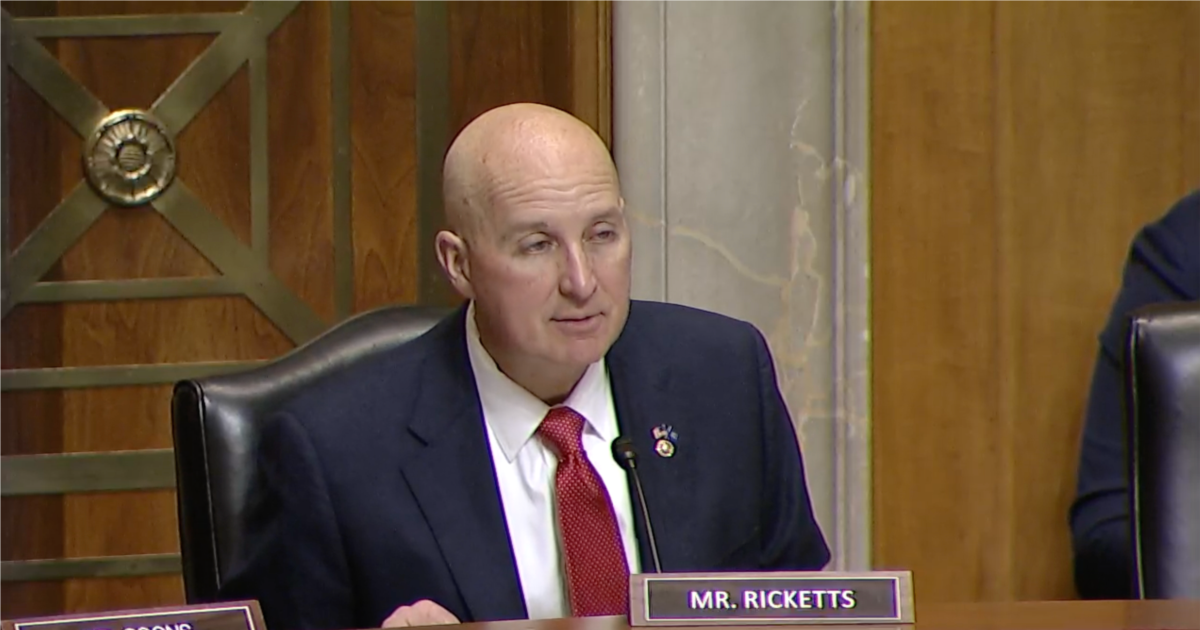
U.S. senators warn AI race has entered a 'critical window' and urge moves to prevent China overtaking
In remarks reported in Chinese, U.S. senators and technology experts warned that the global AI race has entered a critical window in which China could surpass the United States in key capabilities. They called for stronger export controls on advanced chips, tighter restrictions on AI cooperation with Chinese entities, and greater federal investment in domestic AI research and infrastructure to safeguard U.S. technological and national security leadership.

AWS debuts Nova Forge, a service for building proprietary frontier‑grade LLMs on enterprise data
Amazon Web Services announced Nova Forge, a new service that lets enterprises blend their proprietary data with AWS‑curated corpora at different checkpoints in a frontier model’s training process, producing custom LLMs that internalize business logic rather than relying solely on RAG or fine‑tuning. The subscription‑priced service is positioned as an "AI factory" play that tightly couples Trainium hardware, SageMaker, and Bedrock, offering a path to high‑precision domain models for regulated sectors like finance, healthcare, industrial control, and large‑scale code assistants.
Study finds major AI companies' safety practices fall far short of global standards
A new study reported by Reuters concludes that safety practices at major AI firms including Anthropic, OpenAI, xAI and Meta fall "far short" of international best practices, particularly around independent oversight, red-teaming and incident disclosure. The report warns that even companies perceived as safety leaders are not meeting benchmarks set by global governance frameworks, adding pressure on regulators to move from voluntary commitments to enforceable rules.
Nvidia says new AI server boosts Chinese mixture‑of‑experts models tenfold
Nvidia released benchmark data showing its latest AI server, which packs 72 of its top chips into a single system, can deliver roughly a 10x performance gain when serving large mixture‑of‑experts models such as Moonshot AI’s Kimi K2 Thinking and DeepSeek’s models. The results aim to show that even as some new models train more efficiently, Nvidia’s high‑end servers remain critical for large‑scale inference, reinforcing its dominance against rivals like AMD and Cerebras in the AI deployment market.

Study finds major AI companies’ safety practices fall short of emerging global standards
A new edition of the Future of Life Institute’s AI Safety Index concludes that leading AI developers including Anthropic, OpenAI, xAI and Meta lack robust strategies to control potential superintelligent systems, leaving their safety practices "far short" of emerging international norms. The report, based on an independent expert panel, comes amid growing concern over AI‑linked self‑harm cases and AI‑driven hacking, and has prompted renewed calls from researchers such as Max Tegmark, Geoffrey Hinton and Yoshua Bengio for binding safety standards and even temporary bans on developing superintelligence until better safeguards exist.

Anthropic’s Jared Kaplan warns humanity must decide on AI autonomy by 2030
Anthropic chief scientist Jared Kaplan told The Guardian, in comments reported by Indian media, that humanity faces a critical choice by around 2030 on whether to allow AI systems to train and improve themselves autonomously, potentially triggering an "intelligence explosion" or a loss of human control. Kaplan also predicted that many blue‑collar jobs and even school‑level cognitive tasks could be overtaken by AI within two to three years, urging governments and society to confront the trade‑offs of super‑powerful AI while there is still time to set governance boundaries.

Anthropic prepares for potential 2026 IPO as AI race with OpenAI intensifies
Anthropic, maker of the Claude chatbot, has hired Silicon Valley law firm Wilson Sonsini to prepare its corporate structure for a possible initial public offering as early as 2026, according to reporting based on Financial Times sources. The company is also negotiating a new funding round that could value it above $300 billion, underscoring how leading frontier‑model labs are racing not only on technology but also on access to capital as they compete with OpenAI for dominance in generative AI.

AWS expands Nova 2 AI models, Trainium3 UltraServers and 'frontier agents' at re:Invent 2025
Amazon Web Services used its re:Invent 2025 conference to unveil a Nova 2 family of foundation models (Lite, Pro, Sonic and Omni), new Trainium3 UltraServers built on a 3 nm AI chip, and a class of long‑running 'frontier agents' that act as virtual developers, security engineers and DevOps staff. The company also broadened Amazon Bedrock with 18 additional open‑weight models from partners such as Mistral AI, Google, MiniMax, NVIDIA and OpenAI, and introduced AI governance tools like Bedrock AgentCore Policy, Evaluations and Memory plus on‑prem 'AWS AI Factories' that bundle NVIDIA GPUs, Trainium and Bedrock/SageMaker for sovereign, high‑performance AI infrastructure.([notimerica.com](https://www.notimerica.com/ciencia-tecnologia/noticia-portaltic-aws-presenta-modelos-ia-nova-servidores-trainium3-ultraservers-frontier-agents-20251203125319.html))
Indian data center operator Sify Infinit Spaces bets on AI boom but wary of bubble
Sify Infinit Spaces, which is set to become India’s first listed pure-play data center operator, says generative AI workloads are a major driver of demand but warns of potential overbuilding if the hype outpaces sustainable usage. The company, backed by Kotak Private Equity and spun out of early Indian ISP Sify Technologies, operates 14 data centers with 11 more under development and plans a roughly 37 billion rupee IPO, while still relying heavily on hyperscale clients such as Alphabet, Amazon and Microsoft for capacity growth.
The AI frenzy is driving a memory chip supply crisis
Reuters reports that an acute global shortage of memory chips is emerging as tech giants race to build AI data centers, diverting capacity into high-bandwidth memory for GPUs and away from traditional DRAM and flash used in consumer devices. Major AI players including Microsoft, Google, ByteDance, OpenAI, Amazon, Meta, Alibaba and Tencent are scrambling to secure supply from Samsung, SK Hynix and Micron, with SK Hynix warning the shortfall could last through late 2027, potentially delaying AI infrastructure projects and adding inflationary pressure worldwide.
Vinci emerges from stealth with $46M to accelerate physics‑driven AI chip simulation
Silicon Valley startup Vinci has come out of stealth with a physics‑driven AI platform that it claims can run chip and hardware simulations up to 1,000x faster than traditional finite element analysis tools, without training on customer data. The company disclosed $46 million in total seed and Series A funding led by Xora Innovation and Eclipse, with backing from Khosla Ventures, to expand deployments at leading semiconductor manufacturers.
d-Matrix raises $275M Series C to scale AI inference chip platform
Santa Clara–based d-Matrix closed a $275 million Series C round at a $2 billion valuation to expand its full-stack AI inference platform, which combines Corsair accelerators, JetStream networking and Aviator software for large language model serving. The oversubscribed round, led by a global consortium including BullhoundCapital, Triatomic Capital and Temasek with participation from QIA, EDBI and Microsoft’s M12, will fund global deployments and roadmap advances such as 3D memory stacking to deliver up to 10× faster, more energy‑efficient inference than GPU-based systems. ([theaiinsider.tech](https://theaiinsider.tech/2025/11/29/d-matrix-announces-275m-in-funding-to-power-the-age-of-ai-inference/))
GC AI raises $60M Series B to build AI platform for in-house legal teams
Legal-tech startup GC AI closed a $60 million Series B at a $555 million valuation to grow its AI platform used by over 1,000 in-house legal departments for contracts, compliance, employment law and regulatory workflows. Led by Scale Venture Partners and Northzone with participation from Sound Ventures and others, the funding will support deeper enterprise integrations and the development of an AI ‘action layer’ that automates more of corporate legal work. ([theaiinsider.tech](https://theaiinsider.tech/2025/11/29/gc-ai-closes-60m-series-b-to-give-every-company-a-legal-advantage/))
Attentive.ai secures $30.5M Series B to expand AI-powered construction takeoff platform
Attentive.ai, which builds the Beam AI platform for automated construction takeoffs, raised a $30.5 million Series B round led by Insight Partners, bringing its total funding to $48 million. The company plans to accelerate development of AI-native preconstruction workflows and expand into new markets, aiming to help over 1,100 contractors and suppliers scale bidding volume by automating manual estimation work. ([theaiinsider.tech](https://theaiinsider.tech/2025/11/29/attentive-ai-secures-30-5m-series-b-to-accelerate-ai-innovation-in-construction/))
Discussion
Advances AGI Timeline
This trend may accelerate progress toward AGI
OpenAI and Google are locked in a fierce battle for AI dominance as they ramp up model releases and partnerships. This arms race underscores a growing divide between firms that can effectively implement AI and those still caught in trial phases. Companies must adopt robust strategies and infrastructure to stay competitive in this rapidly evolving landscape, or they will face obsolescence.
Timeline
25 eventsBCG warns of AI-driven cyber attacks
BCG's report highlights a significant concern regarding AI in cybersecurity, prompting action.
Google launches AI-powered simultaneous interpretation feature
This is a significant product launch that enhances Google's AI capabilities in real-time voice translation.
UK government partners with Google DeepMind for AI research
This partnership aims to establish an AI research lab and has significant implications for AI in public services.
ByteDance and Alibaba order Nvidia's H200 AI chips
This indicates a significant demand for advanced AI hardware from major Chinese tech firms.
Alibaba creates Qianwen consumer business unit for AI
This launch consolidates AI applications and hardware, indicating a strategic shift in Alibaba's approach.