Nvidia's Strategic Play: Groq Talent and Technology Deal
Main Take
Nvidia's $20 billion licensing deal with Groq marks a pivotal shift in AI hardware strategy. By focusing on specialized chips for running AI, Nvidia aims to dominate the growing demand for tailored solutions. This trend highlights the industry's move away from one-size-fits-all GPUs, revealing a landscape where companies prioritize efficiency and performance over generalization.
The Story So Far
Nvidia's recent $20 billion licensing deal with Groq is reshaping the AI landscape. This agreement, announced in late December 2025, allows Nvidia to access Groq's advanced AI running technology while bringing key talent into its fold. Groq, known for its innovative chip designs, will continue operating independently under new leadership, signaling a strategic partnership rather than a full acquisition.
The backdrop of this deal is a rapidly evolving AI market, where companies are increasingly seeking specialized solutions. Nvidia's shift from general-purpose GPUs to focused AI chips reflects a broader industry trend. As AI applications diversify, the demand for tailored hardware solutions grows. This deal positions Nvidia to lead in the emerging market for specialized AI processing, potentially sidelining competitors who stick to traditional GPU architectures.
Key developments leading to this moment include Nvidia's ongoing negotiations to acquire AI21 Labs, another strategic move aimed at bolstering its talent pool. The focus on acquiring skilled teams and technology underscores the urgency of innovation in AI. As Nvidia consolidates its position, the industry is likely to see a wave of similar deals, as companies scramble to enhance their capabilities.
The stakes are high. Nvidia's success could set a precedent, encouraging other tech giants to pursue aggressive talent and technology acquisitions. This could lead to a more fragmented but efficient AI ecosystem, where specialized companies thrive. Watch for more announcements in early 2026 as the AI arms race intensifies.
Who Should Care
Expect increased competition in the AI hardware space, driving innovation and potentially lowering costs.
Specialized chips may accelerate breakthroughs in AI capabilities, enhancing research outcomes.
Engineers should prepare for a shift in design paradigms, focusing on optimizing for specific AI tasks.

Related Articles (9)
Nvidia–Groq and Meta–Manus deals herald 2026 AI consolidation wave
Spanish outlet ElNacional.cat reported from Barcelona at 5:30 a.m. CET on Jan. 4, 2026 that Nvidia is paying around $20 billion for a licensing and talent deal with Groq, while Meta is acquiring Chinese‑founded AI agent startup Manus for an estimated $2–3 billion. The column frames these moves as emblematic of an AI M&A boom and a prelude to blockbuster IPOs from SpaceX, OpenAI and Anthropic.([elnacional.cat](https://www.elnacional.cat/oneconomia/es/on-ia/semana-ia-inteligencia-artificial-va-compras_1532545_102.html))
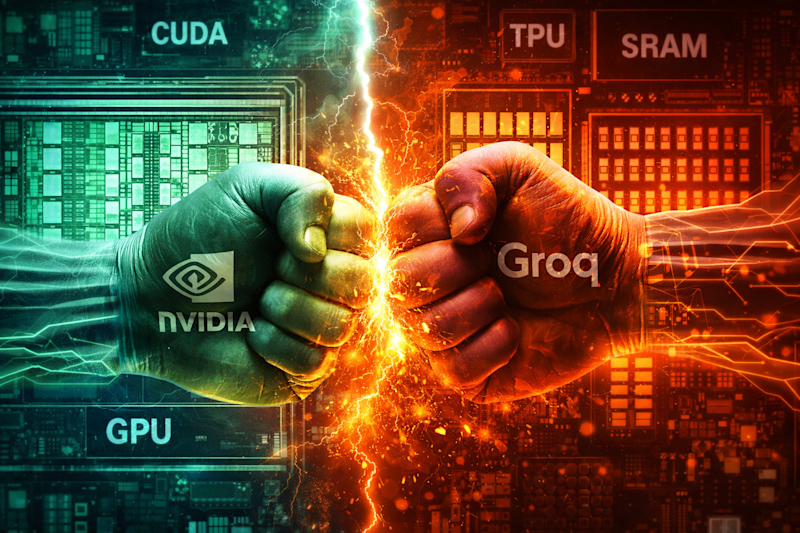
Nvidia–Groq $20B IP pact signals end of one-size-fits-all GPUs
On January 3, 2026, VentureBeat published an analysis arguing that Nvidia’s roughly $20 billion non‑exclusive licensing deal for Groq’s AI inference technology marks a strategic shift away from general-purpose GPUs toward specialized prefill and decode accelerators. The piece frames the Groq agreement, announced in late December 2025, as a cornerstone of Nvidia’s plan to dominate disaggregated AI inference workloads.

Nvidia licenses Groq AI inference tech in reported $20B mega deal
Nvidia has entered a non‑exclusive licensing agreement for Groq’s AI inference chip technology and is hiring founder Jonathan Ross, president Sunny Madra and other key staff into a new inference division. Industry coverage on December 30, 2025 characterizes the arrangement as a de‑facto “reverse acqui‑hire” worth around $20 billion in licensing and asset transfers, while Groq continues operating independently under a new CEO.
Nvidia in talks for up to $3B AI21 Labs LLM acquisition
On December 30–31, 2025, multiple outlets reported that Nvidia is in advanced negotiations to acquire Israeli generative AI startup AI21 Labs for between $2 billion and $3 billion, citing Calcalist. Reuters said the talks focus heavily on acquiring AI21’s roughly 200-strong large language model talent base, while Times of India and Chinese financial media echoed the reported valuation range.([reuters.com](https://www.reuters.com/business/nvidia-advanced-talks-buy-israels-ai21-labs-up-3-billion-report-says-2025-12-30/))
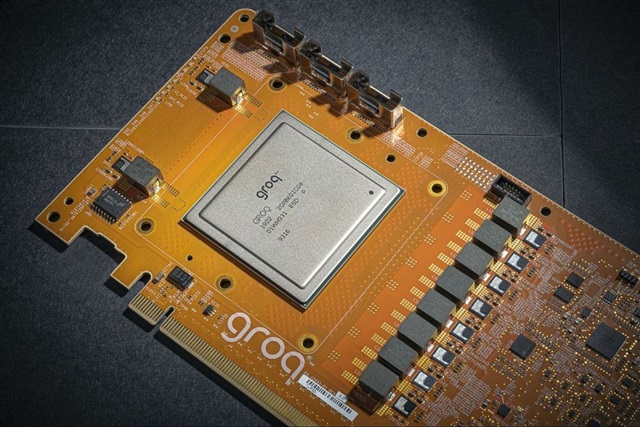
Nvidia licenses Groq AI chip tech in reported $20B mega-deal
Nvidia has entered a non‑exclusive licensing agreement for Groq’s AI inference technology, in a deal widely reported at about $20 billion, while hiring founder‑CEO Jonathan Ross, president Sunny Madra and other key engineers. Groq says it will remain an independent company under new CEO Simon Edwards and continue operating its GroqCloud service without interruption. ([reuters.com](https://www.reuters.com/business/nvidia-buy-ai-chip-startup-groq-about-20-billion-cnbc-reports-2025-12-24/?utm_source=openai))

Nvidia and Groq strike reported $20B AI inference licensing ‘acqui-hire’
On December 28, 2025, a Nasdaq/Motley Fool analysis detailed Nvidia’s non‑exclusive licensing agreement for Groq’s AI inference technology, describing it as an effective ‘acqui‑hire’. Media reports say Nvidia will pay around $20 billion while bringing Groq’s founder Jonathan Ross, president Sunny Madra and key engineers into Nvidia, with Groq continuing to operate independently under a new CEO. ([nasdaq.com](https://www.nasdaq.com/articles/nvidias-aqui-hire-groq-eliminates-potential-competitor-and-marks-its-entrance-non-gpu-ai))
Nvidia licenses Groq AI tech and hires leadership team
On December 27, 2025, Nvidia confirmed it is licensing AI chip startup Groq’s inference technology and hiring founder Jonathan Ross, president Sunny Madra and key team members. Groq said it will remain an independent company under new CEO Simon Edwards as part of the non-exclusive agreement, pushing back on earlier reports of a full $20 billion acquisition. ([newagebd.net](https://www.newagebd.net/post/mis/286332/nvidia-expands-ai-empire-with-groq-talent-grab))
Nvidia and Groq unveil AI inference licensing and talent deal
On December 26, 2025, Nvidia said it will take a non‑exclusive license to AI chip startup Groq’s inference technology and hire founder Jonathan Ross, president Sunny Madra and other engineers. Groq told Reuters it will remain an independent company under new CEO Simon Edwards, and no financial terms were disclosed.
Nvidia and Groq sign AI chip licensing deal amid $20B rumors
Groq announced on December 24, 2025 that it has entered a non-exclusive licensing agreement for its AI inference technology with Nvidia, and that founder Jonathan Ross and other leaders will join Nvidia. On December 25, 2025, Reuters and other outlets reported the deal as a major AI ‘acquihire’, while CNBC-linked reports continue to suggest Nvidia is paying around $20 billion for Groq’s assets, a figure neither company has confirmed.
Discussion
Key Players
Advances AGI Timeline
This trend may accelerate progress toward AGI
Nvidia's $20 billion licensing deal with Groq marks a pivotal shift in AI hardware strategy. By focusing on specialized chips for running AI, Nvidia aims to dominate the growing demand for tailored solutions. This trend highlights the industry's move away from one-size-fits-all GPUs, revealing a landscape where companies prioritize efficiency and performance over generalization.
Timeline
5 eventsNvidia licenses Groq AI inference tech in reported $20B mega deal
The licensing agreement is framed as a major industry move, further emphasizing the financial scale and strategic implications of the partnership.
Nvidia licenses Groq AI chip tech in reported $20B mega-deal
The deal is reported to be worth around $20 billion, indicating a major investment in AI technology and talent acquisition.
Nvidia licenses Groq AI tech and hires leadership team
The confirmation of the licensing agreement and the hiring of Groq's key team members represents a significant partnership in the AI sector.
Nvidia unveils AI inference licensing and talent deal with Groq
Nvidia's confirmation of the licensing deal and hiring of Groq's leadership team marks a major strategic move in AI technology.
Nvidia and Groq sign AI chip licensing deal
Nvidia entered a significant non-exclusive licensing agreement for Groq's AI inference technology, which includes the hiring of key leadership.