This trend is no longer active
This trend was archived on Dec 30, 2025 as it is no longer seeing new developments.
AI Reshapes Workforce Dynamics Globally
Main Take
The gap between AI adoption and strategic implementation is widening. Companies are investing heavily in AI tools without clear plans for maximizing their impact. This misalignment threatens productivity gains and could lead to wasted resources if firms don’t pivot quickly.
Who Should Care
Expect increased funding for companies that can demonstrate effective AI strategy.
Focus on developing frameworks that help organizations integrate AI more effectively.
Prepare for a shift towards building scalable AI solutions in diverse business environments.

Related Articles (47)
Enterprise AI faces 2026 reckoning to scale or stall
In an opinion piece for CIO, consultant Michael Bertha argues that after two years of pilots and proofs‑of‑concept, 2026 will separate organizations that can scale AI from those stuck in perpetual experimentation. He describes a growing "expectation versus execution" gap: boards have read the same reports promising double‑digit productivity gains, but many CIOs lack the operating model and capacity to deliver them. The article sketches a playbook that starts by turning IT itself into a productivity showcase—using tools like GitHub Copilot to measurably cut development time—then federating AI delivery via domain‑specific centers of excellence rather than a single, overloaded central team. Bertha stresses that the winning model is a hub‑and‑spoke structure where a central AI group provides platforms and guardrails while business units own outcomes and funding. For enterprises staring at mounting AI spend with limited ROI, the message is blunt: 2026 is the year you either architect for scale or risk losing credibility with both leadership and frontline teams.

Costa Rica firms bet on AI to transform cybersecurity, survey finds
A Microsoft-sponsored survey of 100 Costa Rican security and IT professionals finds that 57% of large companies expect AI to have a high impact on their cybersecurity practices in the near future. Around one-third of firms say they are already moderately dependent on AI for threat response, while 7% report high dependence, even as 60% still perceive elevated risk levels in their current defences. Microsoft’s regional cybersecurity director argues that the challenge is no longer whether to invest in security but how to scale it responsibly with AI and strong governance at each organisational layer. The report suggests AI agents are being used to accelerate detection, triage and incident response, while partially compensating for local talent shortages. For Latin America more broadly, Costa Rica’s posture illustrates how mid-sized economies may leapfrog straight into AI-augmented security operations without ever fully staffing traditional SOC models.
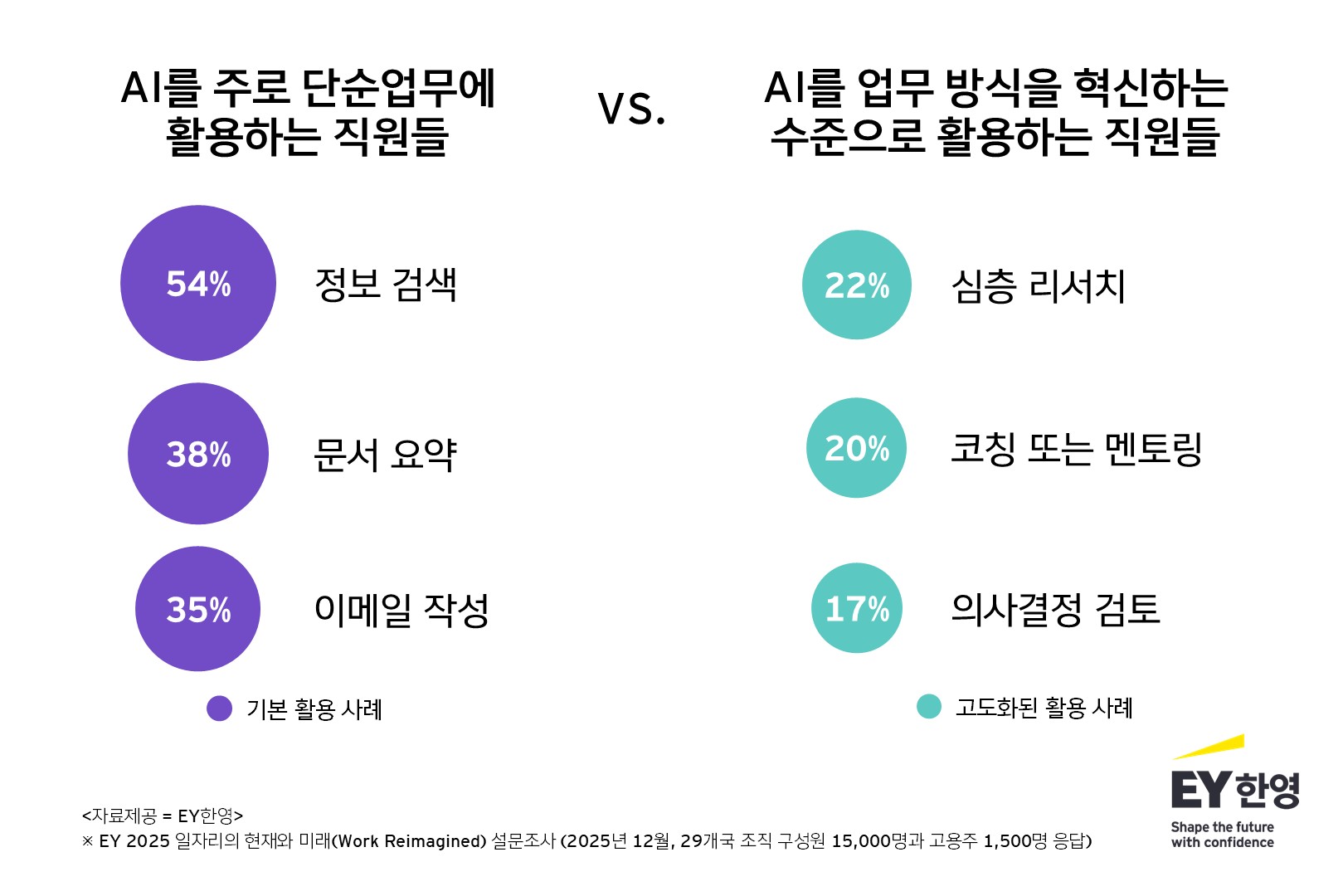
EY Korea survey reveals AI productivity gains hinge on talent strategy
A new EY Korea report argues that the real differentiator in AI performance isn’t model choice but people strategy, finding up to a 40% productivity gap between companies with robust talent approaches and those without. In a global survey of 15,000 employees and 1,500 employers across 29 countries, 88% of workers said they already use AI in daily tasks, but only 5% are using it in ways that truly transform how work is done; most usage is still limited to search and summarization. The study highlights a sharp skills and culture gap: just 12% of employees feel they receive sufficient AI training, and 37% worry that over‑reliance on AI could erode their expertise, suggesting that many firms are rolling out tools faster than they’re evolving incentives, learning and job design. EY’s takeaway is that companies treating AI purely as a cost-cutting lever risk commoditized outcomes, while those investing in training, experimentation time and new performance metrics are more likely to convert AI into durable competitive advantage rather than a short-lived efficiency play.([ey.com](https://www.ey.com/ko_kr/newsroom/2025/12/ey-korea-news-release-2025-12-16))
Use of AI among Italian companies doubles, but adoption still lags in smaller firms
A new report from Italy’s national statistics agency ISTAT finds that 16.4% of Italian firms with at least 10 employees used some form of artificial intelligence in 2025, up sharply from 8.2% in 2024 and 5.0% in 2023. Adoption is heavily skewed toward larger enterprises: more than half of companies with 250+ employees now deploy AI, compared with about 15.7% of smaller firms. The most common use cases are text data extraction, generative AI for language and images, and speech‑to‑text tools, indicating that practical, workflow‑oriented applications are beating out moonshot projects. Companies that haven’t adopted AI cite a lack of skills, unclear regulation, data‑protection worries and high costs as key obstacles, and a notable minority still say AI is of “no use” to them. The findings highlight a growing digital divide inside Europe’s SME‑heavy economies: while national champions race ahead with AI, the long tail of smaller businesses risks being left behind without targeted support and upskilling.

AI in companies: adoption is booming, but strategy is lagging
Ecuadorian outlet KCH Comunicación reports that nearly half of companies globally now run at least one generative AI project—large enterprises often juggle half a dozen—yet only about 37% have a coherent AI strategy. The piece argues that many organizations are experimenting tactically with chatbots, copilots and automation without tying them to clear business metrics or governance, effectively flipping the usual sequence of "strategy first, technology later." It highlights a skills gap: even AI specialists typically have less than three years of hands‑on GenAI experience, which helps explain why firms are still discovering best practices on the fly. The author warns that incumbents who treat AI as a side experiment risk being outpaced by leaner, AI‑native competitors that bake agents into core operations from day one, and calls for AI strategies to be integrated as deeply as past industrial and digital transformations.([kchcomunicacion.com](https://kchcomunicacion.com/2025/12/15/ia-en-empresas-adopcion-dispara-pero-hay-estrategia-real/))

AI already affects 2 in 10 jobs in Spain, with women more exposed
Spanish outlet 65ymás summarizes new research from the VRAIN Institute at the Universitat Politècnica de València showing that between 18% and 22% of jobs in Spain are highly exposed to transformation by artificial intelligence, depending on the province. Madrid and Barcelona top the list with exposure above 21.5%, driven by concentrations of services, education, healthcare, and information‑sector roles that are easier to augment or reshape with AI, while more agricultural and traditional manufacturing regions see lower impacts. The study also finds a pronounced gender gap: women’s jobs are 1.3 to over 3 percentage points more exposed to AI than men’s, because women are over‑represented in service and care professions that sit squarely in AI’s crosshairs. Researchers argue that these structural patterns, rather than short‑term cycles, will determine who benefits and who is displaced, and urge policymakers to target retraining and social protections with a clear eye on geography and gender.

Harness raises $240 million Series E to scale AI-powered software delivery platform
San Francisco-based Harness closed a $240 million Series E financing at a $5.5 billion valuation, combining a $200 million primary investment led by Goldman Sachs Alternatives with a planned $40 million secondary tender offer involving IVP, Menlo Ventures and Unusual Ventures. The company will use the capital to expand its AI‑driven 'after‑code' DevOps platform, Harness AI, which applies specialized agents and a software delivery knowledge graph to automate testing, deployment, security and optimization across more than 1,000 enterprise customers. ([wvnews.com](https://www.wvnews.com/news/around_the_web/partners/pr_newswire/subject/venture_capital/harness-announces-240m-financing-round-led-by-goldman-sachs-alternatives-to-advance-ai-for-everything/article_1d864d93-7db5-5ada-a61c-996a31b87e72.html))
AI startup Serval valued at $1 billion after Sequoia-led $75 million Series B
San Francisco-based Serval, which uses AI to automate IT support and broader internal workflows, raised a $75 million Series B round led by Sequoia, boosting its valuation to $1 billion just three months after its previous raise. The company says it now automates more than half of IT tickets for customers and plans to scale its 30‑person team to over 100 next year as demand grows from enterprises and other AI startups using its platform to handle help-desk and onboarding tasks. ([investing.com](https://www.investing.com/news/stock-market-news/ai-startup-serval-valued-at-1-billion-after-sequoialed-round-to-expand-it-automation-4402898?utm_source=openai))
Equixly raises €10M Series A for agentic AI 'hacker' platform that stress‑tests APIs
Italian cybersecurity startup Equixly has closed a €10 million Series A round led by 33N Ventures, with Alpha Intelligence Capital and existing investors JME Ventures, 360 Capital and Fondazione Cassa di Risparmio di Firenze, to expand its agentic AI-powered platform that simulates “AI hackers” probing enterprise APIs. Its swarm of autonomous AI agents maps and attacks API workflows to uncover complex logic and authorization flaws that traditional scanners often miss, and the funding will grow the AI research team, deepen DevSecOps integrations and support international expansion starting with a UK presence.([techfundingnews.com](https://techfundingnews.com/equixly-series-a-ai-hackers-api-security/?utm_source=openai))

Amazon announces $35 billion India investment to expand AI-driven digitization and jobs by 2030
Amazon has pledged more than $35 billion in new investment in India through 2030, building on nearly $40 billion already invested to date. The plan centers on AI-driven digitization of small businesses, expanded data center and logistics infrastructure, and AI education programs for millions of students, aiming to make India a key global hub for Amazon’s AI and cloud growth.

Indian edtech firm Uolo raises $7 million to expand AI-driven learning companions
Gurgaon-based edtech startup Uolo has raised $7 million in a funding round led by Australian VC firm Five Sigma, with participation from existing investors Blume Ventures, Morphosis and Alicorn. The company plans to use the capital to deepen its partnerships with mass-market schools and accelerate development of generative AI-based home learning companions, aiming to deliver affordable, AI-enhanced educational tools to over a million paying students.

OpenAI and Deutsche Telekom announce multi‑year AI collaboration to bring advanced AI to millions across Europe
OpenAI and Deutsche Telekom unveiled a multi‑year strategic collaboration to co‑develop multilingual, privacy‑first AI products for consumers and businesses across Europe, with first pilots slated for early 2026. As part of the deal, Deutsche Telekom will roll out ChatGPT Enterprise to employees and integrate OpenAI’s frontier models more deeply into customer care, internal copilots and network operations, positioning the operator as a full‑stack AI provider in the region. The partnership reflects OpenAI’s strategy of using major telcos as channels for distribution and cements Deutsche Telekom’s ambitions in sovereign AI infrastructure.
Microsoft commits $23 billion in new AI infrastructure investments focused on India and Canada
Microsoft announced $23 billion in new AI-related investments, including $17.5 billion over four years to expand cloud and AI infrastructure, skilling and operations in India and more than $5.4 billion to grow datacenter capacity and AI partnerships in Canada. The India plan includes a new hyperscale region in Hyderabad, expansion of existing regions, integration of Azure OpenAI services into national labour platforms and a pledge to train 20 million Indians in AI skills by 2030.

Microsoft commits US$17.5 billion to expand AI and cloud infrastructure in India
Microsoft announced its largest-ever investment in Asia, pledging US$17.5 billion over 2026–2029 to expand AI and cloud infrastructure, skilling and sovereign cloud capabilities across India. The plan includes scaling hyperscale datacenters, integrating Azure OpenAI services into public platforms like e‑Shram and the National Career Service to reach over 310 million informal workers, and doubling its AI skilling target in India to 20 million people by 2030.

IBM survey: AI tools widely adopted by Chilean workers but skills gaps limit full potential
IBM released survey results showing that more than 90% of Chilean office workers already use AI tools, with most reporting faster task completion, better workload management and improved accuracy. However, over half cite insufficient training, privacy concerns and integration challenges as major obstacles, prompting IBM to recommend stronger upskilling programs, data governance and clearer AI roadmaps for Chilean businesses.

Anthropic’s Interviewer study reveals stigma and anxiety around AI use among creative workers
Anthropic used its new Claude‑based "Interviewer" tool to conduct 1,250 in‑depth interviews with professionals, finding that while AI boosts productivity, many workers—especially creatives—hide their AI use due to stigma and fear of job loss. Among creative professionals, 97% said AI saves time and 68% said it improves work quality, yet 70% reported discrimination or negative judgment for relying on AI tools.

Survey: Nearly half of employers using AI aim to optimise headcount, reshaping workforce structures
A Robert Walters Hong Kong survey finds that 58% of employers have introduced AI in the workplace and, among them, 49% explicitly target headcount optimisation. While support and IT roles see the most automation pressure, demand is rising for specialists in data science, machine learning and AI product development, and most employees expect AI to positively impact their careers if they can reskill in time.

Reality and bubbles in the global AI investment wave
In a long-form analysis, Caixin argues that massive capital inflows have turned AI into the core of a new tech investment cycle, but warns that not all heavily hyped technologies will translate into sustainable productivity gains and profits. The piece highlights China’s aggressive ‘AI+’ industrial policies, the rapid spread of humanoid robots and AI agents, and booming valuations in AI chips and data centers, while cautioning that investors must distinguish between genuine innovation and speculative excess if they want to avoid an AI bubble. ([opinion.caixin.com](https://opinion.caixin.com/2025-12-08/102390796.html))

China outlines the next decade of AI: from AGI to embodied robots and industrial deployment
A feature in Sina Finance, sourced from China Youth Daily, sketches China’s AI roadmap for the next 10 years, emphasizing the push toward artificial general intelligence (AGI), embodied intelligence in humanoid robots, and large-scale deployment of AI agents across industries. Turing Award winner Andrew Yao (Yao Qizhi) and other experts argue that progress in embodied robots, scientific AI and safety governance will be key to reaching AGI, while industry voices from firms like Unitree and Alibaba Cloud stress that better data infrastructure, intelligent terminals and repeatable deployment patterns are needed for AI to truly scale in manufacturing and services. ([finance.sina.cn](https://finance.sina.cn/2025-12-08/detail-infzzuit2029380.d.html))

Anthropic study finds 70% of creative professionals hide AI use due to stigma
Using its new Anthropic Interviewer tool, Anthropic surveyed 1,250 workers and found that while 97% of creative professionals say AI saves them time and 68% report higher-quality work, 70% feel stigma from colleagues and often conceal their use of generative tools. The study, covered by German outlet The Decoder, also highlights deep economic anxiety among creatives over displacement by AI-generated content, even as many workers across sectors describe AI as augmentative rather than fully automating their roles.
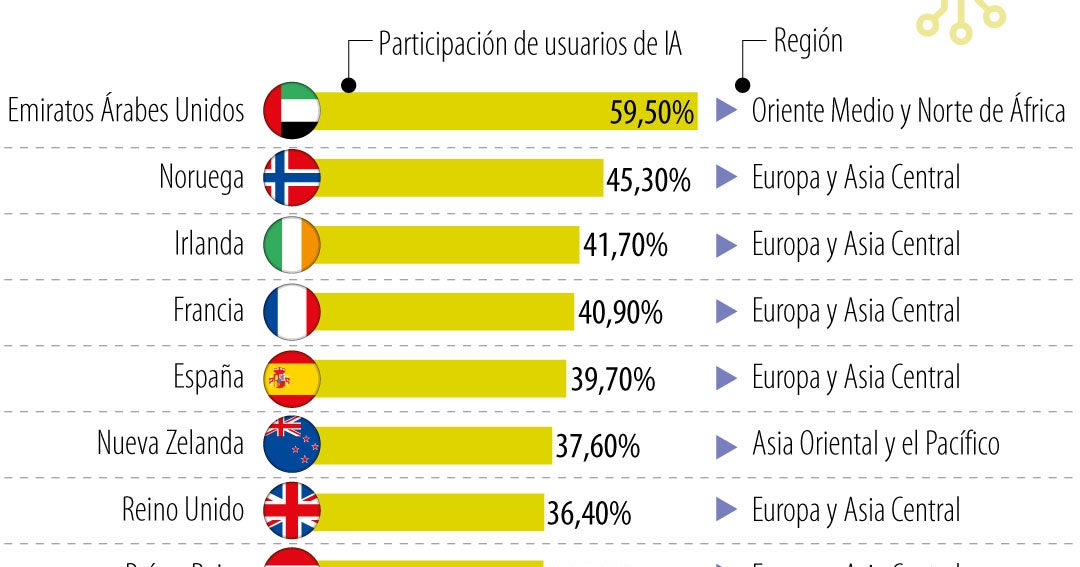
UAE tops global AI adoption as one in seven workers worldwide uses AI, Microsoft study finds
A new Microsoft-backed report highlighted by Colombia’s La República finds that the United Arab Emirates leads the world in AI adoption, with nearly 60% of its population using AI tools, followed by Norway, Ireland and France. Globally, AI adoption among working-age adults has tripled since 2022 to around 15%, but usage remains highly uneven and concentrated in a handful of countries and cities such as San Francisco, New York, London and Beijing.

China blue book urges clear boundaries for AI in cross-border law enforcement
China’s new "Foreign-related Rule-of-Law Blue Book (2025)" warns that accelerated use of AI in global law enforcement is outpacing legal frameworks and calls for明确 rules on how AI can be used in cross‑border policing. The report highlights risks around privacy, national security, algorithmic opacity and cross‑border data flows, and recommends a dedicated regulation on AI in law enforcement, judicial interpretations on AI-generated evidence, and development of interoperable cross-border AI enforcement standards.

China’s civil aviation regulator issues ‘AI + Civil Aviation’ plan to deeply integrate AI across the sector by 2030
China’s Civil Aviation Administration has released an Implementation Opinion on promoting high-quality development of "AI + civil aviation," setting targets to make AI integral to aviation safety, operations, passenger services, logistics, regulation and infrastructure planning by 2027, and to achieve broad, deep AI integration with a mature governance and safety system by 2030. The document identifies 42 priority application scenarios—ranging from risk early-warning and intelligent scheduling to smarter logistics and regulatory decision-making—and calls for stronger data, infrastructure platforms and domain-specific models to support the transformation.([ce.cn](https://www.ce.cn/cysc/newmain/yc/jsxw/202512/t20251206_2625091.shtml?utm_source=openai))
German AI startup Parloa said to seek about $200 million in new funding at up to $3 billion valuation
Bloomberg reports that Berlin‑ and New York‑based customer‑service AI startup Parloa is in talks to raise roughly $200 million in fresh capital at a valuation in the $2–3 billion range, more than doubling the $1 billion valuation it announced for its Series C round in May. The company, which builds agentic AI systems for large enterprise contact centers, is said to be speaking with investors including General Catalyst, although no deal has yet been finalized. ([bloomberg.com](https://www.bloomberg.com/news/articles/2025-12-05/ai-startup-parloa-said-to-seek-200-million-in-new-funding-round))
Goldman Sachs flags diverging risks in AI‑linked debt between investment‑grade and high‑yield markets
New Goldman Sachs research highlighted by Reuters finds that a surge in AI‑related bond issuance to finance data centers and infrastructure is underperforming broader credit markets, with risks showing up differently in investment‑grade versus high‑yield segments. Investors are becoming more selective, with worries seen as issuer‑specific for top‑rated big tech borrowers but more sector‑wide in high yield, while the Bank of England has separately warned that heavy AI infrastructure borrowing could pose financial‑stability risks if valuations correct. ([reuters.com](https://www.reuters.com/business/ai-credit-concerns-playing-out-differently-investment-grade-high-yield-goldman-2025-12-05/))

Pope Leo XIV urges that AI serve the common good, not concentrate wealth and power
Speaking to participants at a Vatican conference on “Artificial Intelligence and Care of Our Common Home,” Pope Leo XIV said AI forces humanity to ask what it means to be human and warned that the technology must not be used solely to accumulate wealth and power in the hands of a few. Citing a UN report on the risk of a new ‘Great Divergence’ between rich and poor countries, he called for frameworks that safeguard human dignity, especially that of children and young people, and ensure AI is deployed inclusively for human development. ([cruxnow.com](https://cruxnow.com/vatican/2025/12/ai-forces-us-to-ask-what-does-it-mean-to-be-human-pope-leo-says))

Is artificial intelligence pushing entire national economies to the edge?
Al Jazeera’s Chinese-language service examines how rapid AI adoption could entrench or widen the economic gap between rich and poor countries, warning that productivity gains may accrue mainly to advanced economies unless inclusive policies are adopted. The analysis highlights risks around data access, compute concentration and labor displacement, arguing that without global governance and investment in human capital, AI could exacerbate long‑standing structural inequalities. ([chinese.aljazeera.net](https://chinese.aljazeera.net/economy/2025/12/5/%E4%BA%BA%E5%B7%A5%E6%99%BA%E8%83%BD%E6%98%AF%E5%90%A6%E6%AD%A3%E5%9C%A8%E5%B0%86%E6%95%B4%E4%B8%AA%E5%9B%BD%E5%AE%B6%E7%9A%84%E7%BB%8F%E6%B5%8E%E6%8E%A8%E5%90%91%E8%BE%B9%E7%BC%98))
Wall Street races to shed risk from AI’s massive borrowing binge
Bloomberg reports that global banks are simultaneously extending huge credit lines to leading AI and cloud companies while aggressively seeking to offload that exposure through tools like credit derivatives and significant risk transfer deals. Rising hedging costs for borrowers such as Oracle and heightened scrutiny of AI‑linked leverage show how financiers are trying to capture upside from the AI boom without being overexposed to a potential valuation correction. ([bloomberg.com](https://www.bloomberg.com/news/articles/2025-12-05/wall-street-races-to-cut-its-risk-from-ai-s-borrowing-binge))

Legal AI startup Harvey confirms US$160 million round led by a16z at US$8 billion valuation
Harvey, a San Francisco–based legal AI platform, has confirmed a new US$160 million investment led by Andreessen Horowitz that values the company at US$8 billion, following earlier US$300 million rounds in February and June. The funding, which also involves investors such as T. Rowe Price–advised accounts, WndrCo, Sequoia and Kleiner Perkins, will support expansion of Harvey’s products for law firms and in‑house legal teams and includes its first tender offer to provide liquidity to employees.

Phoebe Gates’ AI shopping startup Phia raising US$30 million at US$180 million valuation
Phia, an AI‑powered shopping assistant co‑founded by Phoebe Gates and Sophia Kianni, is raising US$30 million in new funding that will value the New York–based startup at about US$180 million. The round, led by Notable Capital with participation from Kleiner Perkins and Khosla Ventures, will help Phia expand its AI agent that compares prices, tracks discounts and personalizes shopping across tens of thousands of retailers.
Australia’s NEXTDC signs deal with OpenAI to build hyperscale AI campus and GPU supercluster in Sydney
Australian data center operator NEXTDC has signed a deal with OpenAI to co-develop and operate a hyperscale AI campus and GPU supercluster at its planned S7 site in Eastern Creek, Sydney. The project will make OpenAI an anchor tenant in what is expected to be the largest data center in the Southern Hemisphere, underscoring the escalating global race to secure AI compute capacity and positioning Australia as a significant regional hub for advanced AI workloads. ([reuters.com](https://www.reuters.com/world/asia-pacific/australias-nextdc-signs-deal-with-openai-build-hyperscale-ai-campus-gpu-2025-12-04/))

Anthropic CEO warns some AI rivals are ‘YOLO‑ing’ massive bets amid bubble concerns
At The New York Times DealBook Summit, Anthropic CEO Dario Amodei said he is bullish on AI’s long‑term potential but cautioned that some companies are taking "unwise" risks by front‑loading huge infrastructure investments before economic payoffs are clear. He contrasted Anthropic’s more conservative planning with competitors he suggested may overextend on data centers and GPUs, implicitly referencing OpenAI, and said misjudging chip depreciation timelines and demand could bankrupt aggressive players if AI revenues slow. ([techcrunch.com](https://techcrunch.com/2025/12/04/anthropic-ceo-weighs-in-on-ai-bubble-talk-and-risk-taking-among-competitors/))

Amazon outlines $12.7 billion AI and cloud infrastructure push in India to reach 15 million SMBs and 4 million students
Amazon reaffirmed plans to invest $12.7 billion in local cloud and AI infrastructure in India by 2030, aiming to bring agentic and generative AI tools to 15 million small businesses and AI literacy programs to 4 million government‑school students. The initiative expands AWS data‑center capacity in Telangana and Maharashtra and rolls out AI‑powered seller tools, shopping assistants like Rufus and Lens AI, and large‑scale education programmes aligned with India’s national AI and education strategies.
Can AI break a 150-year U.S. growth trend without overheating the economy?
A Reuters analysis examines whether massive AI-driven investment can lift U.S. GDP per capita above its long‑run 2% growth trend for the first time in 150 years without triggering inflation. Citing BlackRock’s outlook and other research, the piece argues that AI could accelerate innovation itself, but warns that the current capex and policy mix may risk economic overheating before productivity gains fully materialize.
OpenAI moves to acquire Neptune to strengthen AI model training tools
OpenAI has entered into a definitive agreement to acquire neptune.ai, a startup that builds experiment-tracking and training-monitoring tools used to debug and improve large AI models. The deal, reportedly valued at under $400 million in stock according to media accounts, will bring Neptune’s metrics and dashboarding stack in-house as OpenAI seeks deeper visibility into how its frontier models learn and to accelerate research workflows.
Study finds major AI companies' safety practices fall far short of global standards
A new study reported by Reuters concludes that safety practices at major AI firms including Anthropic, OpenAI, xAI and Meta fall "far short" of international best practices, particularly around independent oversight, red-teaming and incident disclosure. The report warns that even companies perceived as safety leaders are not meeting benchmarks set by global governance frameworks, adding pressure on regulators to move from voluntary commitments to enforceable rules.
Microsoft trims AI software sales targets as enterprise adoption lags
Multiple Microsoft divisions have lowered sales growth targets for certain AI products, after many sales teams missed their goals in the fiscal year ending June, according to a report in The Information cited by Reuters. The rare move to cut product‑specific quotas is stoking investor concern that real‑world enterprise adoption of generative AI is slower than hype suggests, even as Microsoft remains one of the biggest financial winners from its early bet on OpenAI.

Anthropic’s Jared Kaplan warns humanity must decide on AI autonomy by 2030
Anthropic chief scientist Jared Kaplan told The Guardian, in comments reported by Indian media, that humanity faces a critical choice by around 2030 on whether to allow AI systems to train and improve themselves autonomously, potentially triggering an "intelligence explosion" or a loss of human control. Kaplan also predicted that many blue‑collar jobs and even school‑level cognitive tasks could be overtaken by AI within two to three years, urging governments and society to confront the trade‑offs of super‑powerful AI while there is still time to set governance boundaries.
Bank of England warns AI‑driven stock boom is stretching valuations and raising systemic risks
In its half‑yearly Financial Stability Report, the Bank of England said risks to the UK financial system have risen this year, citing stretched equity valuations for companies linked to artificial intelligence, rapid growth in private credit, and large leveraged bets in the gilt repo market. The central bank estimates enthusiasm for AI has pushed US stock valuations to their most extended levels since the dot‑com bubble and UK levels to their highest since the global financial crisis, warning that a sharp correction could transmit losses through credit markets even though core UK banks remain well capitalised.
World Economic Forum outlines governance blueprint for enterprise AI agents
The World Economic Forum has published guidance on how organisations should classify, evaluate, and govern AI agents as they move from prototypes to autonomous collaborators in business and public services. The framework emphasises agent "resumes", contextual evaluation beyond standard ML benchmarks, risk assessment tied to autonomy and authority levels, and progressive governance that scales oversight with agent capability.
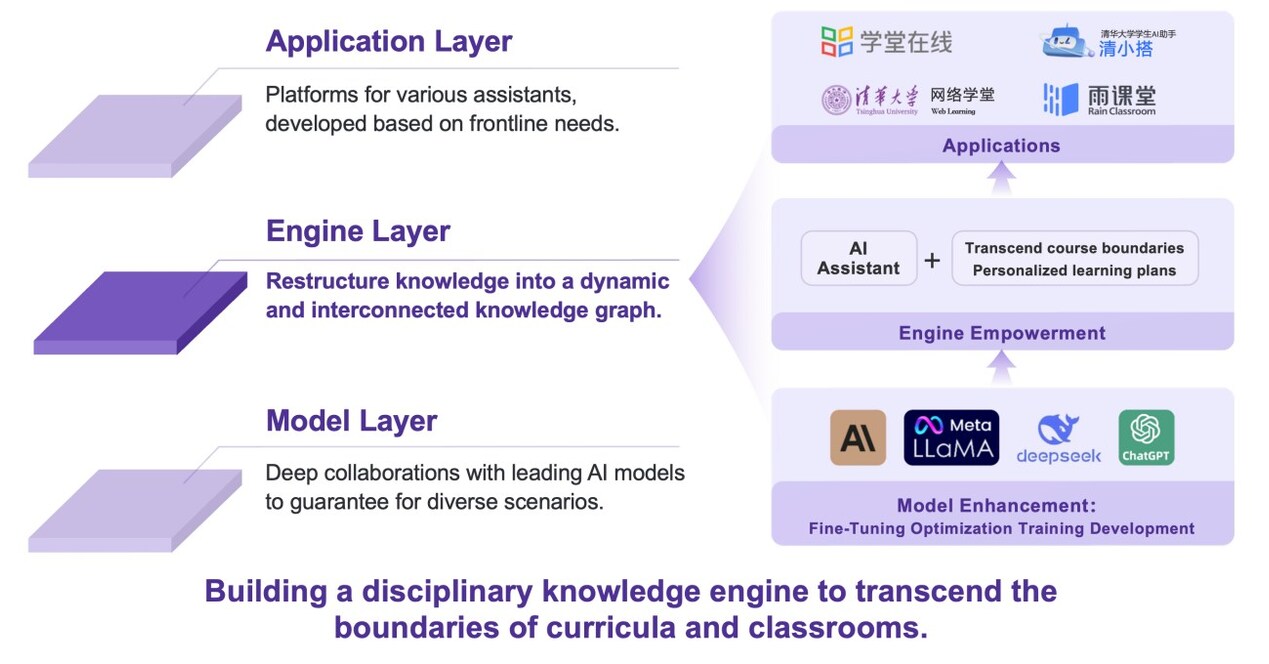
Tsinghua University issues first campus‑wide framework for using AI in teaching and research
Tsinghua University has released guiding principles that set detailed rules for how students and faculty may use artificial intelligence in education and academic work, described as the institution's first comprehensive, university-wide AI governance framework. The guidelines emphasise AI as an auxiliary tool, mandate disclosure of AI use, ban ghost‑writing and plagiarism with AI, and address data security, bias and the digital divide as AI becomes embedded in classrooms and labs.
UN report warns AI could widen gap between rich and poor countries
A new report from the UN Development Programme warns that artificial intelligence could trigger a "next great divergence" between developed and developing countries, reversing decades of convergence in income, health and education. The study urges policymakers to invest in skills, infrastructure and governance so that lower‑income states are not left behind as advanced economies accelerate AI deployment.

Most enterprises hit roadblocks deploying AI and revert to human workflows, Network World reports
New survey data cited by Network World shows that nearly 80% of companies have rolled back AI initiatives and returned to human‑centric processes after disappointing performance, integration headaches or skills gaps. While executives still expect productivity gains from AI, the report underscores how underperforming models, difficulty scaling to complex tasks and lack of internal expertise are stalling enterprise AI rollouts and creating a gap between expectations and reality.
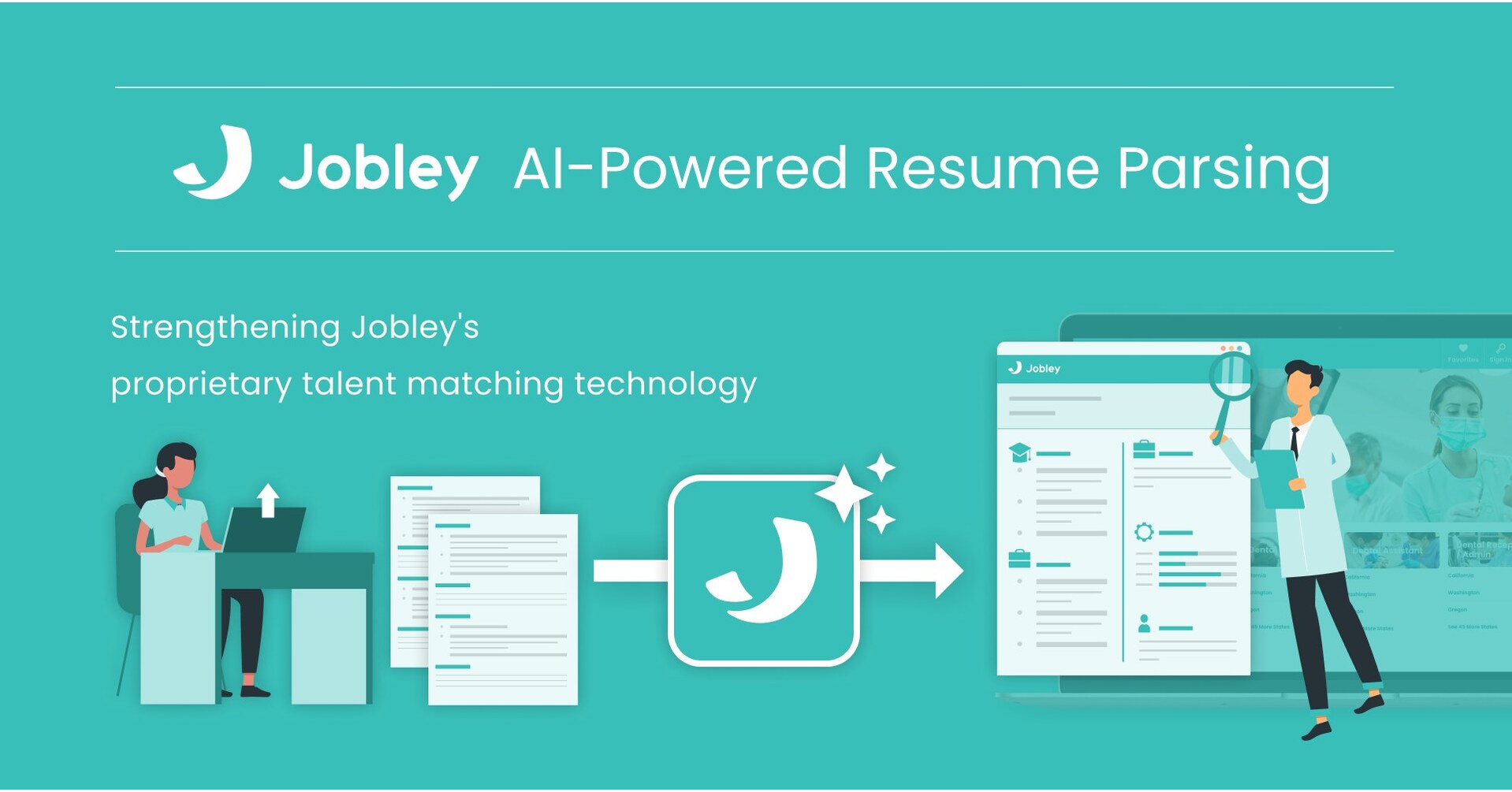
Jobley rolls out AI-powered resume parsing to improve dental hiring in the U.S.
U.S. dental hiring platform Jobley, owned by Japan-based Medley, launched an AI-powered resume parsing feature that converts uploaded resumes into structured, searchable candidate profiles based on skills, licenses, and experience. The company says the tool will significantly increase high-quality candidate data and enable more accurate early-stage matching and proactive outreach, reflecting how sector-specific hiring platforms are embedding AI to tackle persistent labor shortages.

Resume Now publishes 2025 AI workplace survey series and 2026 trends report
Resume Now released an AI Trends for 2026 report summarizing eight surveys of thousands of U.S. workers and employers on how AI reshaped hiring, management, and pay in 2025. The findings highlight widespread use of AI tools in job search and HR, growing worker dependence on systems like ChatGPT, and rising concerns over transparency and governance, underscoring how generative AI is now embedded in everyday work rather than being an experiment.

Vietnam’s 2026 salaries set to surge, AI professionals seen gaining up to 25%: survey
A new salary survey by recruitment firm Robert Walters forecasts sharp pay rises in Vietnam in 2026, with compensation for artificial intelligence, data, and digital transformation professionals expected to increase by 15–25%. The report links the trend to rapid AI adoption, a boom in renewable energy projects, and sustained foreign investment, which together are intensifying competition for highly skilled tech and analytics talent across the country.
MIT study estimates AI could already replace 11.7% of US workforce
A new study from MIT, reported by Asia Television News, uses an "Iceberg Index" labour simulation model to estimate that current AI systems could technically replace about 11.7% of US workers, representing US$1.2 trillion in wages. The research suggests disruption will reach far beyond tech roles to areas like HR, finance and logistics across all 50 states, and is being used by several US states to test policy responses before large-scale reskilling and infrastructure investments are made. ([atvnewsonline.com](https://atvnewsonline.com/world/mit%E7%A0%94%E7%A9%B6%EF%BC%9Aai%E5%B7%B2%E5%8F%AF%E5%8F%96%E4%BB%A3%E7%BE%8E%E5%9B%BD11-7%E5%8A%B3%E5%8A%A8%E5%8A%9B/))
Discussion
Delays AGI Timeline
This trend may slow progress toward AGI
The gap between AI adoption and strategic implementation is widening. Companies are investing heavily in AI tools without clear plans for maximizing their impact. This misalignment threatens productivity gains and could lead to wasted resources if firms don’t pivot quickly.
Timeline
15 eventsHarness raises $240 million Series E
Significant funding round that boosts company valuation to $5.5 billion.
Serval valued at $1 billion after $75 million Series B
Funding round leads to a notable valuation milestone for the company.
Equixly raises €10M Series A
Funding will help expand their cybersecurity platform.
Amazon announces $35 billion investment in India
Major investment aimed at expanding AI-driven digitization and infrastructure.
Uolo raises $7 million for AI-driven learning companions
Funding to enhance educational technology offerings.