This trend is no longer active
This trend was archived on Dec 30, 2025 as it is no longer seeing new developments.
AI Redefines Cultural and Educational Landscapes
Main Take
Guangdong is positioning itself as a leader in AI integration with significant investments and strategic partnerships. The region's focus on industrial applications reveals a shift from theoretical AI to practical, measurable outcomes. This trend illustrates the growing importance of local ecosystems in driving technological advancements and productivity gains.
Who Should Care
Expect increased funding opportunities in robotics and AI applications.
Research on AI safety and ethical implications will gain urgency.
Look for a surge in demand for AI talent focused on industrial applications.

Related Articles (48)
Cyberway hosts Guangzhou forum on industrial AI integration and enablement
Chinese IT firm Cyberway held a high-level academic and technology exchange in Guangzhou focused on how AI can be more deeply integrated into industrial and enterprise workflows. The event brought together scholars and industry experts to discuss new pathways for AI deployment across manufacturing, logistics, and other sectors, with an emphasis on building ecosystems that connect research, standards and real-world scenarios. While the release offers few technical specifics, it highlights how Chinese regional hubs are trying to position themselves as testbeds for "industry enablement"—moving beyond showcasing robots to demonstrating measurable productivity and quality gains. Such forums also serve a political function, aligning local government priorities with national strategies around intelligent manufacturing and digital transformation. For global observers, the event is another data point that much of the AI race will be fought at the level of sector-specific integration and local ecosystems, not just headline-grabbing foundation model launches.

Changsha AI push accelerates manufacturing-led industrial upgrade
Changsha has unveiled a five-year strategy that makes “two-way empowerment” between artificial intelligence and manufacturing the core path for its next phase of industrialization, according to a detailed briefing from the city’s industry and IT bureau. The plan calls for deploying AI across full manufacturing value chains, from unmanned construction equipment and smart R&D platforms to L4 autonomous shuttles and logistics vehicles, and for building 100 exemplar AI application scenarios and 25 industry-specific large models. Officials aim to cultivate a roster of AI “specialized and innovative” firms and unicorns, achieve intelligent transformation across all sizable industrial enterprises, and lift local compute capacity to 5 EFLOPS by 2030 while building open-source communities around AI chips and software. At the same time, Changsha is emphasizing AI safety governance, including monitoring, risk warning and ethical oversight mechanisms, underlining how Chinese cities are now treating AI infrastructure, models and regulation as a single strategic package rather than separate tracks.([chinanews.com.cn](https://www.chinanews.com.cn/cj/2025/12-16/10534157.shtml))

Ren Zhengfei tells ICPC champions: AI’s real power is in industry, not just labs
In a lengthy Q&A with ICPC world finalists at a Huawei campus, founder Ren Zhengfei argued that the most important breakthroughs in AI over the next 3–5 years will come from applying large models to gritty industrial and medical use cases rather than chasing abstract benchmarks. He cited examples like AI‑optimized blast furnaces, unmanned coal mining, fully automated ports in Tianjin and Chancay, and medical models that analyze pathology slides or retinal images to bring specialist‑grade diagnosis to remote areas, framing these as the kinds of 1% efficiency gains that compound into massive national productivity. Ren repeatedly told the young medalists that “hope lies in youth,” but stressed that sovereign AI strength will depend on deep collaboration between universities doing “0‑1” research and companies like Huawei turning theory into robust products. He also took a pragmatic line on geopolitics, saying Huawei will buy quantum computers once they exist rather than trying to lead that field, and that even under US sanctions, China must stay open to foreign technology and global talent while focusing its own efforts on networks and applied AI that unlock real‑world value.

Guangdong releases 2025 AI & robotics whitepaper and Pearl River AI Index; 14 projects signed worth ¥24.6B
At the Guangdong-Hong Kong-Macao Greater Bay Area AI & Robotics Industry Conference in Guangzhou, organizers released the 2025 Guangdong AI & Robotics Industry Whitepaper alongside the “AIR Pearl River Index (2025),” framing Guangdong as a national first-tier AI/robotics hub by scale, applications, and industrial linkages. The report cited 2024 Guangdong AI core industry output of about ¥220B and robotics revenue of about ¥99.2B, signaling that the province is turning AI from “lab demos” into measurable industrial production. The event also unveiled a provincial “embodied intelligence” (physical AI) training-ground initiative and related ecosystem centers (e.g., for domestic compute chips and OpenHarmony adaptation), emphasizing that compute, standards, and deployment venues are now as strategic as model quality. A key market signal: 14 AI/robotics projects across six cities were signed with total stated investment above ¥24.6B—an indicator that regional governments are packaging capital, facilities, and industrial partners to accelerate commercialization. Tencent’s disclosed collaborations with dozens of embodied-intelligence firms underline how platform players are positioning to become the infrastructure layer for the province’s next wave of robotics and agentic deployments.
Guangdong now has over 3,700 AI and robotics companies, new white paper says
At the 2025 Guangdong-Hong Kong-Macao Greater Bay Area AI & Robotics Industry Conference in Guangzhou, organizers released a provincial industry white paper and a related “Pearl River Index” report. The report claims Guangdong has surpassed 3,700 AI and robotics companies (with more than 2,000 described as AI “core” companies), and places the province in China’s top tier nationally on multiple industrial indicators. It also frames Guangdong’s 2024 AI core-industry scale at roughly RMB 220 billion and cites a sizable smart-robotics revenue base, reinforcing the region’s role as both an applications hub and a hardware-heavy supply chain center. The deeper implication for the global AI race: the densest AI competition may increasingly be decided not just by model labs, but by regions that can industrialize AI quickly—where talent pipelines, component ecosystems, and downstream manufacturing sit in the same geography.
Guangdong’s XAIR conference pushes 'AI + manufacturing' and talent pipelines as robotics moves from demos to factory floors
A major Guangdong–Hong Kong–Macao Greater Bay Area AI-and-robotics gathering (XAIR) opened in Guangzhou, using the event as a springboard for industrial deployment—not just flashy demos. Organizers highlighted “AI+manufacturing” priorities, pointing to large-scale digital transformation efforts and showcasing how robots are evolving from fixed-program machines into more adaptive, collaborative systems inside production lines and logistics hubs. The event also leaned hard into workforce strategy: a dedicated talent forum argued for tighter links between academia and industry, launched talent alliances, and rolled out training/assessment initiatives aimed at embodied intelligence roles. The deeper takeaway is that China’s robotics push is becoming an ecosystem play—policy + standards + skills + procurement—where companies like Pudu Robotics and XPeng (alongside telecom and manufacturing giants) use regional platforms to accelerate commercialization and lock in supply-chain and deployment advantages.

AI Tech Briefing (Overnight): Google adds AI-powered simultaneous interpretation; other AI industry updates
Chinese outlet Sina’s AI briefing roundup highlights a fresh wave of AI product and industry updates from the past night, led by Google rolling out an AI-driven real-time voice translation / simultaneous interpretation capability (as reported by the outlet). In practical terms, this kind of ‘always-on’ translation moves AI from “generate text” into the ambient layer of daily communication—meetings, travel, customer support—where latency and reliability matter more than flashy demos. The roundup format also reflects a broader reality: major AI changes are now shipping continuously across products (apps, devices, cloud) and getting surfaced to the public as a stream of incremental releases rather than single blockbuster launches. For watchers of the Race to AGI, these small shipping moments are often the real leading indicator—because they reveal where model capability has become cheap and stable enough to productize at scale. ([news.sina.com.cn](https://news.sina.com.cn/zx/ds/2025-12-13/doc-inhaqxsv6747298.shtml?utm_source=openai))

Beijing launches first AI-focused OPC service plan to support 'one-person companies'
Beijing’s Zhongguancun AI Beiwai Community has unveiled the city’s first "artificial intelligence OPC (one-person company) service plan" to help individual developers and creators build AI-driven businesses. The program offers subsidized office space, flexible compute resources, an "agent marketplace," financing and incubation support aimed at turning solo AI developers and AIGC creators into scalable startups within the capital’s flagship AI innovation zone.([beijing.gov.cn](https://www.beijing.gov.cn/ywdt/gzdt/202512/t20251209_4329326.html))
Chinese experts at WIC2025 highlight power-grid AI as key to next-generation energy systems
At the World Innovation Conference (WIC2025) in Guangzhou, Chinese engineers and academics argued that "power artificial intelligence" (AI EPS) will be central to building next‑generation energy systems that are transparent and highly automated. Southern Grid experts described progress toward an AI‑driven grid that could operate with navigation‑like situational awareness and "autonomous driving"‑style control of power flows.
Guangdong’s core AI industry tops 230 billion yuan as China’s robot output leads the nation
Officials in Guangdong province reported that the region’s core artificial intelligence industry exceeded 230 billion yuan (about US$32 billion) in output from January to October 2025, with industrial and service robot production both ranked first nationwide. The figures highlight Guangdong’s growing strength in AI chips, model algorithms, intelligent terminals and robotics as it positions the Pearl River Delta as a key AI and automation hub in China.
New Chinese AI advances unveiled at Greater Bay Area Science Forum
At the 2025 Greater Bay Area Science Forum’s AI sub‑forum in Guangzhou, Chinese institutions released several new domestic AI achievements, including a 2025 AI Frontier Technology Trend Report highlighting agents, communication protocols and embodied intelligence. The event showcased advances in foundational research, platform building and applied AI, signalling continued state‑backed momentum for AI innovation in the Guangdong–Hong Kong–Macao Greater Bay Area.

GSMA Innovation Forum in Shenzhen highlights mobile AI and low‑altitude economy as China’s next growth engines
The GSMA hosted its Innovation Forum in Shenzhen, emphasizing mobile AI, the low‑altitude economy (drones and eVTOL), and global market expansion as key drivers of China’s digital ecosystem. A new GSMA report on "AI large model empowering verticals" showcases nearly 20 operator‑led AI deployments across sectors such as healthcare, industrial manufacturing and public services, aiming to provide replicable best practices for operators worldwide.

DeepMind CEO Demis Hassabis urges maximum AI scaling on path to AGI
In new remarks highlighted by India Today, Google DeepMind CEO Demis Hassabis argued that current AI systems should be pushed to their computational limits, saying scaling will be at least a key component—and possibly the entirety—of future AGI systems. He acknowledged challenges around data and compute, while critics like Yann LeCun warn that simply adding more data and compute will not solve the hardest AI problems, underscoring a growing strategic divide over how to reach AGI.

China outlines the next decade of AI: from AGI to embodied robots and industrial deployment
A feature in Sina Finance, sourced from China Youth Daily, sketches China’s AI roadmap for the next 10 years, emphasizing the push toward artificial general intelligence (AGI), embodied intelligence in humanoid robots, and large-scale deployment of AI agents across industries. Turing Award winner Andrew Yao (Yao Qizhi) and other experts argue that progress in embodied robots, scientific AI and safety governance will be key to reaching AGI, while industry voices from firms like Unitree and Alibaba Cloud stress that better data infrastructure, intelligent terminals and repeatable deployment patterns are needed for AI to truly scale in manufacturing and services. ([finance.sina.cn](https://finance.sina.cn/2025-12-08/detail-infzzuit2029380.d.html))
Top scientists converge in Guangxi to boost AI-driven high-quality development
A Xinhua report describes a recent high-level talent event in China’s Guangxi region where 28 academicians and national experts met to promote the integration of artificial intelligence into local industries. The initiative aims to inject new momentum into Guangxi’s AI and related sectors by fostering joint projects, talent pipelines and application pilots aligned with China’s broader digital and AI development strategy.
Chinese cybersecurity symposium spotlights generative AI safety and data‑driven policing
The Fourth Cybersecurity Research and Development Symposium, held at Jiangxi Police College, focused heavily on generative AI safety, protection of critical information infrastructure and training specialized data‑policing talent. Speakers from police, academia and research institutes described how generative AI can both strengthen capabilities—such as encrypted traffic detection, malware analysis, vulnerability management and threat intelligence—and introduce new risks that require integrated 'professional + mechanism + big data' approaches, underscoring China’s effort to embed AI governance and security into law‑enforcement practice.
Tengchong Scientists Forum AI sub‑forum focuses on 'AGI’s next paradigm' and AI4S initiatives
At the 2025 Tengchong Scientists Forum in Yunnan, China, an AI sub‑forum themed “AGI’s Next Paradigm” brought together scientists, academics and industry leaders to discuss breakthroughs in general intelligence, AI for science and industrial applications. Hosted by China Mobile’s Yunnan subsidiary, the event launched the Jiutian 'Renewing Communities' youth AI scientist support program and the AI4S 'Model Open Space' cooperation plan, which will build the 'Tiangong Zhiyan' scientific AI workstation and unveil new AI applications including a mental‑health agent and dual‑intelligent city projects, signaling China’s push to link frontier AGI research with large‑scale compute and real‑world deployments.

Experts at Doha Forum urge new global rules to govern AI in warfare
At the Doha Forum 2025, a panel of international experts warned that rapidly advancing military uses of AI—especially in nuclear command and autonomous weapons—require urgent global rules to ensure accountability and human control. Speakers argued that AI is a “civilizational technology” akin to electricity and called for governance frameworks like the REAIM commission’s “Responsible by Design” report to keep military AI aligned with human rights and international law.([koreatimes.co.kr](https://www.koreatimes.co.kr/amp/foreignaffairs/others/20251206/ai-risks-in-warfare-demand-new-global-rules))

China opens 2025 Tengchong Scientist Forum on ‘Science and AI Changing the World’
The 2025 Tengchong Scientist Forum opened in Yunnan with the theme “Science · AI Changing the World”, gathering hundreds of leading scientists, university heads and entrepreneurs to discuss AI’s role in reshaping research and industry. At the event, China released its first systematic "Technology Foresight and Future Vision 2049" report, which identifies areas including artificial intelligence and general-purpose robots as among ten key technology visions for a 2049 human–machine coexisting smart society.
China blue book urges clear boundaries for AI in cross-border law enforcement
China’s new "Foreign-related Rule-of-Law Blue Book (2025)" warns that accelerated use of AI in global law enforcement is outpacing legal frameworks and calls for明确 rules on how AI can be used in cross‑border policing. The report highlights risks around privacy, national security, algorithmic opacity and cross‑border data flows, and recommends a dedicated regulation on AI in law enforcement, judicial interpretations on AI-generated evidence, and development of interoperable cross-border AI enforcement standards.

Experts warn AI is reshaping childhood through toys, tutors and digital companions
A feature on The Cool Down, drawing on recent analysis in The Economist, describes how AI‑powered toys, tutoring systems and chatbots are increasingly mediating children’s play and learning, with some adolescents reporting AI conversations as equally or more rewarding than talking to people. While personalized instruction and adaptive games can help struggling students, experts caution that opaque AI companions risk narrowing kids’ information diets, undermining social skills and adding to the environmental footprint of large‑scale AI infrastructure.

China’s civil aviation regulator issues ‘AI + Civil Aviation’ plan to deeply integrate AI across the sector by 2030
China’s Civil Aviation Administration has released an Implementation Opinion on promoting high-quality development of "AI + civil aviation," setting targets to make AI integral to aviation safety, operations, passenger services, logistics, regulation and infrastructure planning by 2027, and to achieve broad, deep AI integration with a mature governance and safety system by 2030. The document identifies 42 priority application scenarios—ranging from risk early-warning and intelligent scheduling to smarter logistics and regulatory decision-making—and calls for stronger data, infrastructure platforms and domain-specific models to support the transformation.([ce.cn](https://www.ce.cn/cysc/newmain/yc/jsxw/202512/t20251206_2625091.shtml?utm_source=openai))
Goldman Sachs flags diverging risks in AI‑linked debt between investment‑grade and high‑yield markets
New Goldman Sachs research highlighted by Reuters finds that a surge in AI‑related bond issuance to finance data centers and infrastructure is underperforming broader credit markets, with risks showing up differently in investment‑grade versus high‑yield segments. Investors are becoming more selective, with worries seen as issuer‑specific for top‑rated big tech borrowers but more sector‑wide in high yield, while the Bank of England has separately warned that heavy AI infrastructure borrowing could pose financial‑stability risks if valuations correct. ([reuters.com](https://www.reuters.com/business/ai-credit-concerns-playing-out-differently-investment-grade-high-yield-goldman-2025-12-05/))

Pope Leo XIV urges that AI serve the common good, not concentrate wealth and power
Speaking to participants at a Vatican conference on “Artificial Intelligence and Care of Our Common Home,” Pope Leo XIV said AI forces humanity to ask what it means to be human and warned that the technology must not be used solely to accumulate wealth and power in the hands of a few. Citing a UN report on the risk of a new ‘Great Divergence’ between rich and poor countries, he called for frameworks that safeguard human dignity, especially that of children and young people, and ensure AI is deployed inclusively for human development. ([cruxnow.com](https://cruxnow.com/vatican/2025/12/ai-forces-us-to-ask-what-does-it-mean-to-be-human-pope-leo-says))

Agents-as-a-service poised to reshape enterprise software and corporate structures
A CIO feature argues that autonomous AI agents delivered as “agents-as-a-service” are rapidly emerging on top of traditional SaaS, with more than half of surveyed executives already experimenting with AI agents for customer service, marketing, cybersecurity and software development. Drawing on forecasts from Gartner and IDC, it predicts that by 2026 a large share of enterprise applications will embed agentic AI, shifting user interaction away from individual apps toward cross‑app AI orchestrators and forcing CIOs to rethink pricing, integration and security models. ([cio.com](https://www.cio.com/article/4098664/agents-as-a-service-are-poised-to-rewire-the-software-industry-and-corporate-structures.html))

Is artificial intelligence pushing entire national economies to the edge?
Al Jazeera’s Chinese-language service examines how rapid AI adoption could entrench or widen the economic gap between rich and poor countries, warning that productivity gains may accrue mainly to advanced economies unless inclusive policies are adopted. The analysis highlights risks around data access, compute concentration and labor displacement, arguing that without global governance and investment in human capital, AI could exacerbate long‑standing structural inequalities. ([chinese.aljazeera.net](https://chinese.aljazeera.net/economy/2025/12/5/%E4%BA%BA%E5%B7%A5%E6%99%BA%E8%83%BD%E6%98%AF%E5%90%A6%E6%AD%A3%E5%9C%A8%E5%B0%86%E6%95%B4%E4%B8%AA%E5%9B%BD%E5%AE%B6%E7%9A%84%E7%BB%8F%E6%B5%8E%E6%8E%A8%E5%90%91%E8%BE%B9%E7%BC%98))

China’s Boao conference promotes ‘AI+’ integration with the real economy
At the 2025 Digital-Intelligence Technology Innovation Development Conference in Boao, Hainan, Chinese officials, academics and industry leaders discussed how “AI+” applications can drive industrial upgrading, with sessions on AI policy, technical trends and large-scale deployment across manufacturing, transportation and services. The event, organized by Xinhua and partners, highlighted the need to combine AI with 5G/6G, industrial IoT and robotics while building governance and security frameworks to manage risks from deep integration of AI into the real economy. ([wxb.xzdw.gov.cn](https://wxb.xzdw.gov.cn/xxh/xxhgzdt/202512/t20251205_629870.html))
Wall Street races to shed risk from AI’s massive borrowing binge
Bloomberg reports that global banks are simultaneously extending huge credit lines to leading AI and cloud companies while aggressively seeking to offload that exposure through tools like credit derivatives and significant risk transfer deals. Rising hedging costs for borrowers such as Oracle and heightened scrutiny of AI‑linked leverage show how financiers are trying to capture upside from the AI boom without being overexposed to a potential valuation correction. ([bloomberg.com](https://www.bloomberg.com/news/articles/2025-12-05/wall-street-races-to-cut-its-risk-from-ai-s-borrowing-binge))

Indian op‑ed warns of AI and humanoid robotics as potential existential threat to humans
An opinion column in Indian daily The Hans India argues that rapid advances in AI and humanoid robotics could trigger mass job displacement and, in the long run, pose an existential threat if highly autonomous machines begin independently evaluating which human roles are 'necessary'. The author notes that companies such as Tesla and Samsung are already demonstrating humanoid robots for household and industrial tasks, and contends that societies must consciously reinforce emotional and ethical values rather than competing to be 'better machines'.

Boao conference promotes 'AI+' integration across Chinese industries
Xinhua reports that the 2025 Digital Intelligence Technology Innovation Development Conference opened in Boao, Hainan, under the theme “AI empowers, leading new quality,” with a focus on integrating artificial intelligence into traditional and emerging industries. The state-backed event, part of a broader enterprise forum series, brought together policymakers, researchers and companies to discuss AI policy direction, technology iteration, application scenarios and ecosystem building as China seeks to use "AI+" to upgrade its industrial base.

China-ASEAN 'A Super League' AI competition and cooperation center boost Guangxi’s AI hub ambitions
People’s Daily reports that Guangxi’s “AI Empowering Thousands of Industries Super League” (A Super League) and the new China–ASEAN Artificial Intelligence Application Cooperation Center in Nanning are drawing more than ten thousand AI teams from across China and 11 ASEAN countries into competitions spanning smart cities, cross‑border e‑commerce, health and media. Officials say the league and the “Nan A Center” are helping concentrate capital and projects — including a planned CNY 10 billion AI industry fund and over 60 early-stage deployments — to make Guangxi a key integration point between Beijing/Shanghai/Guangzhou R&D and ASEAN AI applications.
AI boom dominates Reuters NEXT as executives eye productivity gains but warn of job and energy risks
At the Reuters NEXT conference in New York, business and government leaders described AI as the biggest technological upheaval since the internet, crediting it with trillions in investment and a major boost to GDP growth while also warning about job displacement and energy‑hungry data centers. Speakers from companies including Writer, Moderna and Cisco said customers are already using AI to slow headcount growth and rethink workforce planning, even as economists and policymakers urged a focus on AI as a complement to labor rather than a replacement. ([reuters.com](https://www.reuters.com/business/media-telecom/ais-rise-stirs-excitement-sparks-job-worries-2025-12-04/))
People’s Daily urges 'long-termist spirit' in China’s AI development
An opinion piece in China’s People’s Daily argues that developing artificial intelligence requires a “long-termist spirit,” urging Chinese entrepreneurs to focus on foundational research, talent cultivation, and resilient industrial chains rather than short-term hype. The article frames AI as a strategic technology for national rejuvenation and calls for coordinated efforts across government, academia and industry to build sustainable advantages.
CBC News tightens AI usage rules, mandating human oversight and transparency for automated content
CBC News has updated its internal guidelines on the use of AI, emphasizing that artificial intelligence is a tool, not the creator, of published content. The policy allows AI for assistive tasks like data analysis, drafting suggestions and accessibility services, but bans AI from writing full articles or creating public-facing images or videos, and requires explicit disclosure to audiences when AI plays a significant role in a story.
Study finds major AI companies' safety practices fall far short of global standards
A new study reported by Reuters concludes that safety practices at major AI firms including Anthropic, OpenAI, xAI and Meta fall "far short" of international best practices, particularly around independent oversight, red-teaming and incident disclosure. The report warns that even companies perceived as safety leaders are not meeting benchmarks set by global governance frameworks, adding pressure on regulators to move from voluntary commitments to enforceable rules.
Microsoft trims AI software sales targets as enterprise adoption lags
Multiple Microsoft divisions have lowered sales growth targets for certain AI products, after many sales teams missed their goals in the fiscal year ending June, according to a report in The Information cited by Reuters. The rare move to cut product‑specific quotas is stoking investor concern that real‑world enterprise adoption of generative AI is slower than hype suggests, even as Microsoft remains one of the biggest financial winners from its early bet on OpenAI.

Anthropic’s Jared Kaplan warns humanity must decide on AI autonomy by 2030
Anthropic chief scientist Jared Kaplan told The Guardian, in comments reported by Indian media, that humanity faces a critical choice by around 2030 on whether to allow AI systems to train and improve themselves autonomously, potentially triggering an "intelligence explosion" or a loss of human control. Kaplan also predicted that many blue‑collar jobs and even school‑level cognitive tasks could be overtaken by AI within two to three years, urging governments and society to confront the trade‑offs of super‑powerful AI while there is still time to set governance boundaries.

AWS unveils frontier AI agents that act as autonomous software team-mates
Amazon Web Services introduced a new class of "frontier agents"—Kiro autonomous agent, AWS Security Agent and AWS DevOps Agent—designed to work as autonomous teammates that can run for hours or days handling coding, security and operations tasks with minimal human oversight. The agents integrate with common developer and ops tools (GitHub, Jira, Slack, CloudWatch, Datadog, etc.) and are pitched as a step-change from task-level copilots toward fully agentic systems embedded across the software lifecycle. ([aboutamazon.com](https://www.aboutamazon.com/news/aws/amazon-ai-frontier-agents-autonomous-kiro))

AI-generated fake reviews raise new concerns about trust in online car shopping
An investigation by The Drive highlights how suspiciously polished, template-like reviews on a Ford dealership’s CarGurus page appear to be AI-generated, underscoring how generative tools are being used to manipulate dealership reputations. The piece warns that the growing market for AI-assisted ‘reputation management’ further erodes trust in online reviews, making it harder for consumers to distinguish authentic feedback from automated slop. ([thedrive.com](https://www.thedrive.com/news/add-ai-to-the-list-of-reasons-you-cant-trust-online-car-dealer-reviews))
Bank of England warns AI‑driven stock boom is stretching valuations and raising systemic risks
In its half‑yearly Financial Stability Report, the Bank of England said risks to the UK financial system have risen this year, citing stretched equity valuations for companies linked to artificial intelligence, rapid growth in private credit, and large leveraged bets in the gilt repo market. The central bank estimates enthusiasm for AI has pushed US stock valuations to their most extended levels since the dot‑com bubble and UK levels to their highest since the global financial crisis, warning that a sharp correction could transmit losses through credit markets even though core UK banks remain well capitalised.
World Economic Forum outlines governance blueprint for enterprise AI agents
The World Economic Forum has published guidance on how organisations should classify, evaluate, and govern AI agents as they move from prototypes to autonomous collaborators in business and public services. The framework emphasises agent "resumes", contextual evaluation beyond standard ML benchmarks, risk assessment tied to autonomy and authority levels, and progressive governance that scales oversight with agent capability.
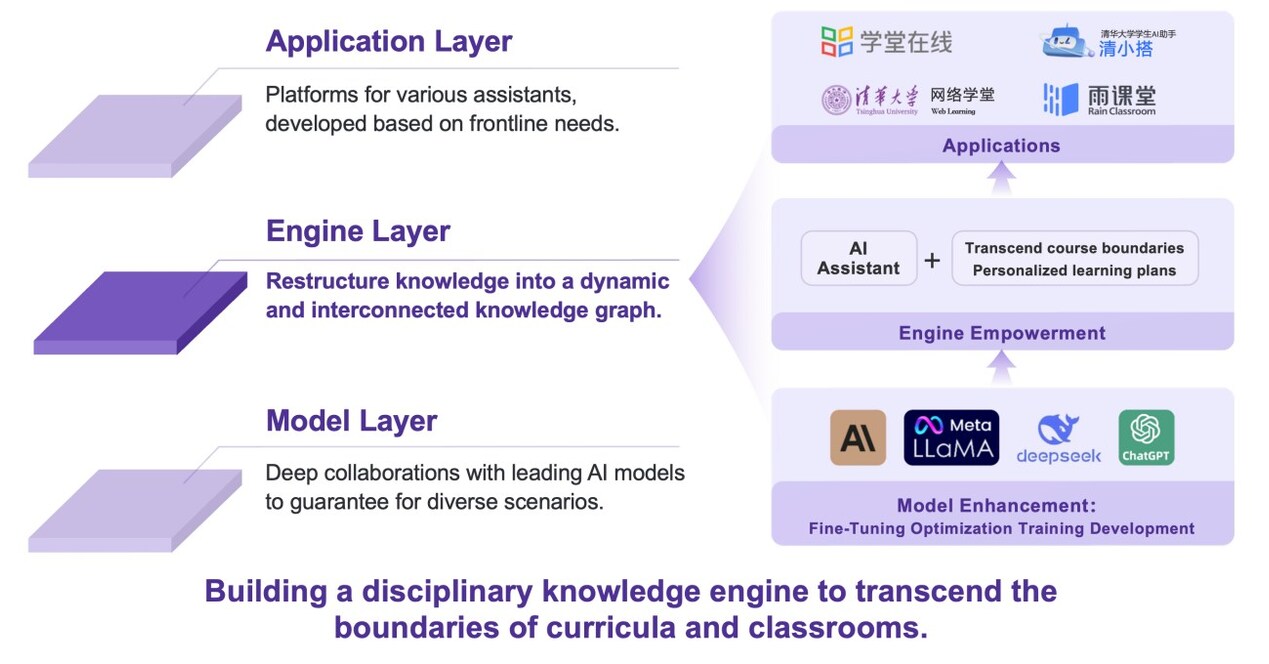
Tsinghua University issues first campus‑wide framework for using AI in teaching and research
Tsinghua University has released guiding principles that set detailed rules for how students and faculty may use artificial intelligence in education and academic work, described as the institution's first comprehensive, university-wide AI governance framework. The guidelines emphasise AI as an auxiliary tool, mandate disclosure of AI use, ban ghost‑writing and plagiarism with AI, and address data security, bias and the digital divide as AI becomes embedded in classrooms and labs.
UN report warns AI could widen gap between rich and poor countries
A new report from the UN Development Programme warns that artificial intelligence could trigger a "next great divergence" between developed and developing countries, reversing decades of convergence in income, health and education. The study urges policymakers to invest in skills, infrastructure and governance so that lower‑income states are not left behind as advanced economies accelerate AI deployment.

Most enterprises hit roadblocks deploying AI and revert to human workflows, Network World reports
New survey data cited by Network World shows that nearly 80% of companies have rolled back AI initiatives and returned to human‑centric processes after disappointing performance, integration headaches or skills gaps. While executives still expect productivity gains from AI, the report underscores how underperforming models, difficulty scaling to complex tasks and lack of internal expertise are stalling enterprise AI rollouts and creating a gap between expectations and reality.

The future of education in an AI‑driven world
In a Forbes column, leadership expert Julie Kratz, drawing on insights from Instructure chief academic officer Melissa Loble, argues that AI will automate many technical skills and push education systems to prioritize 'human skills' such as critical thinking, decision-making, and contextual reasoning. The piece predicts a shift toward case-based, experiential, and practitioner-led learning as institutions adapt curricula and talent development strategies to a workplace increasingly shaped by AI tools.

With AI, the age of industrialised falsehood is coming to India
In an opinion piece, technology executive Aditya Vikram Kashyap warns that India's massive digital scale makes it especially vulnerable to 'industrialised' AI-driven disinformation, from deepfake political videos to fabricated financial announcements that could move markets. He calls for stronger 'truth infrastructure'—including watermarking of corporate disclosures, liability for platforms that amplify synthetic content, and better public digital literacy—to counter what he terms the 'disinformation dividend'.
Column: How AI is reshaping journalism and democracy
A column in Nepal’s Kathmandu Post argues that generative AI systems, trained on massive scraped datasets and optimized for plausible prediction rather than truth, are already transforming how news is produced and consumed, often in ways invisible to audiences. The authors warn that as AI-generated text and images flood the information ecosystem without clear labeling, it becomes harder to distinguish reporting from simulation, threatening public trust and democratic deliberation unless newsrooms develop stronger standards, verification practices and governance around AI use.
Egyptian state daily asks: can artificial intelligence run film festivals?
In a column in Egypt’s state‑owned Al‑Ahram, critic Essam Saad explores how AI is moving beyond editing and screenwriting assistance to influence the management of film festivals, from scheduling and audience analytics to jury selection. While acknowledging efficiency gains, the article warns that over‑automating festival decisions could erode the human, emotional and cultural dimensions of cinema events, turning them into "cold" algorithmic systems and raising broader questions about AI’s role in artistic gatekeeping.
Discussion
Advances AGI Timeline
This trend may accelerate progress toward AGI
Guangdong is positioning itself as a leader in AI integration with significant investments and strategic partnerships. The region's focus on industrial applications reveals a shift from theoretical AI to practical, measurable outcomes. This trend illustrates the growing importance of local ecosystems in driving technological advancements and productivity gains.
Timeline
12 eventsGuangdong releases 2025 AI & robotics whitepaper and signs 14 projects
The release of a whitepaper and the signing of projects worth ¥24.6B indicate a significant commitment to AI and robotics development.
Guangdong surpasses 3,700 AI and robotics companies
This milestone reflects significant growth in the number of companies in the AI and robotics sector in Guangdong.
Google rolls out AI-powered simultaneous interpretation
Google launched a new AI-driven real-time voice translation feature, enhancing communication capabilities.
Beijing launches AI-focused OPC service plan
Beijing introduced a service plan to support AI-driven businesses, promoting entrepreneurship in the AI sector.
Guangdong's AI industry surpasses 230 billion yuan
Guangdong province reported significant growth in its AI industry, marking a major economic milestone.