This trend is no longer active
This trend was archived on Dec 28, 2025 as it is no longer seeing new developments.
AI Infrastructure Investment Soars
Main Take
Accenture reported strong earnings, emphasizing the urgent demand for AI services. This comes as investors are increasingly wary of soaring AI infrastructure costs, particularly after disappointing forecasts from Oracle and Broadcom. The emerging pattern reveals a critical shift: while AI spending is booming, the pressure is mounting to prove profitability and sustainable growth amidst concerns of an investment bubble.
Who Should Care
Expect tighter scrutiny on AI spending and profit potential.
Focus on efficiency and cost-effective AI solutions.

Related Articles (49)
Accenture tops revenue forecasts on surging demand for AI services
Accenture reported first-quarter revenue of $18.74 billion on 18 December, beating analyst estimates on the back of strong demand for AI-powered IT services. The company highlighted $21 billion in new bookings and recent partnerships with OpenAI and Anthropic to upskill its workforce on frontier models.
AI stocks wobble as Oracle and Broadcom spending stirs doubts
A Nasdaq analysis warns that investors are growing more skeptical about sky‑high AI stock valuations as tech giants like Oracle and Broadcom commit tens or even hundreds of billions of dollars to data centers and AI infrastructure. The piece argues that the market is no longer automatically rewarding every AI‑driven capex announcement; instead, investors are asking tougher questions about whether the power, land and chip demands behind the AI boom are sustainable. ([nasdaq.com](https://www.nasdaq.com/articles/oracle-broadcom-concerns-about-artificial-intelligence-stocks-are-starting-pile)) With leaders such as Nvidia, Microsoft and Alphabet all pouring cash into GPUs and cloud capacity, the concern is that returns may arrive more slowly than the spending curve—and that not every player will be able to pass costs on to customers. The article frames this as a maturing phase of the AI trade: enthusiasm remains, but investors increasingly want concrete evidence that these infrastructure bets will translate into durable cash flows rather than another overbuilt tech bubble.
Bridgewater warns Big Tech’s AI splurge is drifting into a ‘dangerous’ bubble
Bridgewater Associates’ co‑chief investment officer Greg Jensen is warning that the AI boom is entering a “dangerous” phase as Big Tech increasingly leans on external capital to fund massive compute and data‑center build‑outs. In a note cited by Reuters, Jensen argues there is a “reasonable probability” the market soon finds itself in an AI bubble, with valuations and capex racing ahead of clear profit visibility. He points to a surge in AI data‑center and project financing deals—up to roughly $125 billion this year from $15 billion over the same period in 2024—as evidence that internal cash flows are no longer sufficient to sustain the current investment tempo. Recent disappointments, such as Oracle’s weaker‑than‑expected AI‑driven forecasts, have already rattled investors and highlighted how hard it is to translate AI hype into earnings. If the thesis is right, late‑stage private rounds and highly levered infrastructure bets could be most exposed, even if long‑term demand for AI compute remains strong.

China AI Weekly: Oracle denies OpenAI data-center delays as market jitters collide with the OpenAI–Google rivalry
Chinese financial outlet Yicai’s weekly AI roundup says Oracle responded to market rumors of delayed OpenAI data-center buildouts, insisting the projects are on schedule even as investor nerves remain sensitive to any sign of infrastructure slippage. The item underlines a core reality of the ‘Race to AGI’ era: capital markets increasingly treat compute delivery timelines like product roadmaps—misses can move valuations as much as model releases. It also frames the OpenAI–Google competitive cycle as a rapid “announce-and-counter” loop, where each new model or agent launch immediately forces defensive positioning from rivals. Read together, the themes point to a tightening coupling between model progress, hyperscale construction logistics (labor/material constraints), and public-market confidence in multi-year AI capex. The deeper implication is that frontier AI competition is becoming as much about execution in physical infrastructure as it is about algorithmic advances.

AI data center boom could be bad news for other infrastructure projects
TechCrunch reports that the rapid buildout of AI data centers is starting to collide with traditional public-works priorities, as both rely on the same scarce inputs: construction labor, equipment, and financing capacity. The piece points to rising private spending on data centers that is approaching the scale of public transportation construction, setting up a real competition for crews and project timelines. Autodesk CEO Andrew Anagnost is quoted arguing that data center construction will inevitably "suck" resources away from other projects—an unglamorous but important constraint as governments try to modernize roads, bridges, and utilities. The deeper implication for the Race to AGI is that compute expansion isn’t just a chip problem anymore: physical infrastructure (and the workforce behind it) is becoming a bottleneck that can reshape where and how fast frontier capacity gets built.
US stocks slide as Broadcom outlook rekindles fears of an AI investment bubble
US markets fell as investors reacted to signals that AI infrastructure growth may be running into margin pressure and capex reality checks, with Broadcom’s outlook amplifying concerns. The move dragged other AI-adjacent names and put the spotlight back on whether today’s spending pace can translate into durable profits, not just revenue growth. A key takeaway is that the AI trade is maturing: the market is starting to separate “AI demand exists” from “AI demand is profitable at scale,” especially for hardware/system sellers. For builders and buyers of AI, this kind of volatility tends to accelerate interest in efficiency—cheaper inference, better utilization, and more defensible unit economics.
Nvidia weighs increasing H200 AI chip output as China demand surges after U.S. export green light
Nvidia is evaluating adding production capacity for its H200 AI chips to meet heavy interest from Chinese customers after the U.S. said exports could proceed under a fee structure. The story matters because it shows how quickly demand can rebound when policy constraints loosen—even partially—and how supply planning becomes a geopolitical decision, not just an operations one. It also highlights a second-order constraint: advanced foundry capacity (notably at TSMC) is finite, and Nvidia is balancing current-gen demand (H200) against ramping its newest lines. If Beijing adds conditions (e.g., bundling domestic chips), the “AI chips into China” channel could morph into an industrial-policy lever rather than a straightforward sale.
AI bubble jitters flare up after Oracle capex shock and Broadcom margin warning ripple through markets
A new wave of “AI bubble” nerves hit markets after Oracle’s surprise capex ramp (to fund AI infrastructure) collided with Broadcom warning that a growing mix of custom AI chips could dilute margins. The mood shift didn’t kill the AI trade, but it did change the vibe: investors are getting pickier about who can spend big on AI *and* show a credible path to profits. Broadcom’s commentary is especially notable because it sits in the plumbing layer of AI (custom accelerators and systems), where demand is real but pricing/margins can be messy. The takeaway: AI demand is still strong, but Wall Street is increasingly rewarding disciplined execution over sheer spending bravado.
AI data center boom leans harder on debt as bonds, private credit and securitization accelerate
Financing for AI data centers is increasingly shifting from “cash-rich hyperscalers just spend” to a broader credit story, with data center/project financing volumes sharply higher and more issuance expected. Reuters flags rising investor attention on credit risk signals (like CDS moves) and the growing role of private credit and securitized products to fund buildouts. This matters because the AI buildout’s bottleneck isn’t only GPUs—it’s power, real estate, and capital structure, and debt markets can tighten faster than tech demand cools. The deep dive question investors are now asking: if utilization or pricing disappoints, who eats the downside—hyperscalers, data center owners, or the credit wrappers holding the risk?
Taiwan markets shrug off AI bubble worries as investors bet on Nvidia/Google-driven supply chain
A Reuters report from Taipei/Singapore describes Taiwan’s tech-heavy market pressing ahead despite renewed “AI bubble” anxiety elsewhere, with local investors leaning into Taiwan’s structural advantage in the AI hardware supply chain. The key argument is that Taiwan benefits whether GPUs (Nvidia) or alternative accelerators like Google’s TPUs win share, because Taiwan-linked manufacturing and component ecosystems sit under both paths. The piece highlights flagship beneficiaries such as TSMC and Foxconn, and frames the rally as supported by earnings growth rather than purely speculative multiples. Why it matters: for AGI-era capacity planning, Taiwan remains a central chokepoint—investor confidence here signals continued belief that AI capex (chips, advanced packaging, and compute buildouts) will keep flowing through Taiwan’s industrial base for years, even if software-side winners rotate.

South Korea’s president calls for nationwide AI literacy, pushing mass education and broader access
South Korea’s president publicly urged that AI literacy be taught as universally as reading and arithmetic, arguing that everyday life will soon require baseline competence in AI tools. In a government briefing, the science/ICT minister noted many citizens still don’t know how to use AI—prompting the president to emphasize rapid, broad-based education and more accessible learning environments. The plan discussed includes expanding digital learning centers and rolling out practical AI education initiatives, starting with students and vulnerable groups. Why it matters: as AI agents and copilots become default interfaces for services, governments that treat AI literacy as infrastructure (not just workforce training) could accelerate domestic adoption—raising competitive pressure on consumer AI platforms, local model providers, and public-sector AI procurement across the region.
Broadcom forecasts upbeat quarterly revenue on strong demand for AI chips and networking
Broadcom projected first-quarter revenue above Wall Street estimates, attributing the outlook to sustained demand for AI silicon and data-center networking. The company said its AI semiconductor revenue (including custom accelerators and networking chips used in AI data centers) is expected to double to about $8.2B in the fiscal first quarter. The update reinforces that spending on AI infrastructure is still accelerating, especially in high-bandwidth interconnects and custom silicon programs. For the competitive landscape, it signals continued diversification beyond GPUs toward specialized accelerators and the networking stack that makes large-scale training and inference viable.
Time magazine names the ‘Architects of AI’ as its 2025 Person of the Year
Time named the “Architects of AI” as its 2025 Person of the Year, highlighting the people behind major advances in the field rather than the technology itself. Reuters reported that the recognition centers on how AI has rapidly transformed work, media, and broader society—while also raising new risks and controversies. The selection reflects AI’s mainstreaming: frontier model labs and enabling hardware companies are now treated as central institutions shaping global outcomes. For the AI industry, this kind of cultural canonization can accelerate adoption and investment, but it also intensifies scrutiny over safety, accountability, and societal impacts.
Oracle shares slide after weak outlook and soaring AI-related capex, fueling ‘AI bubble’ concerns
Oracle shares fell sharply after the company issued a dour forecast while highlighting significantly higher spending plans, intensifying investor scrutiny of whether AI infrastructure bets will pay off soon enough. Reuters described the move as sparking broader pressure on AI-linked equities, reflecting market sensitivity to capex-driven business models and uncertain near-term returns. Oracle’s positioning as a major cloud and infrastructure partner for large-scale AI deployments has tied its narrative closely to AI demand and the pace of monetization. The episode underscores a key industry tension: AI-driven growth is pushing unprecedented datacenter investment, but public markets are increasingly demanding clearer profit timelines and cash-flow discipline.

Disney escalates AI copyright fight with cease-and-desist against Google over Gemini and generative tools
Disney issued a cease-and-desist letter accusing Google of large-scale copyright infringement tied to generative AI outputs and alleged use of Disney works in AI development and distribution. The dispute spotlights a widening enforcement trend by major rights holders that combines legal pressure with demands for transparency on training data and stronger safeguards against infringing outputs. Coming alongside Disney’s licensed partnership with OpenAI, the move suggests studios may be converging on a dual strategy: monetize opt-in licensing while litigating or threatening action against unlicensed AI use. For AI platform operators, the case raises the stakes for dataset governance, output filtering, and product-level indemnity/controls as generative content becomes more deeply embedded in consumer platforms.

TIME names the 'Architects of AI' as its 2025 Person of the Year
TIME magazine selected the 'Architects of AI'—key figures behind modern AI systems—as its 2025 Person of the Year, highlighting how tools like ChatGPT and frontier models have reshaped the global economy, politics and daily life. The package and global TV coverage emphasize both the boom in AI investment and deployment and mounting anxieties over misinformation, job disruption and concentrated tech power. ([time.com](https://time.com/7339685/person-of-the-year-2025-ai-architects/))

UK government and Google DeepMind launch partnership to apply AI to science, clean energy and public services
The UK government has announced a wide‑ranging partnership with Google DeepMind that includes establishing the company’s first automated AI research lab in the UK, focusing initially on new superconducting materials to support cheaper medical imaging and more efficient chips. The agreement will give British scientists priority access to advanced DeepMind tools, explore a "Gemini for Government" system to cut bureaucracy, and deepen collaboration with the UK’s AI Security Institute to ensure AI is developed and deployed safely across critical sectors.

Google adds a second AI "alignment critic" to secure Gemini-powered Chrome browsing
Google is deploying a second AI model inside Chrome’s Gemini-powered browsing agent that acts as a “user alignment critic” to review proposed actions before they are executed. The design, detailed in a company security blog and highlighted by Computerworld, aims to mitigate indirect prompt injection attacks by isolating the critic from untrusted web content, restricting which sites the agent can act on, and adding additional gating and confirmation for sensitive operations such as banking or medical sites.

Pentagon selects Google Cloud’s Gemini for Government to power new GenAI.mil platform
The U.S. Department of War launched GenAI.mil, a department‑wide generative AI platform that will use Google Cloud’s Gemini for Government as its first enterprise AI system. The IL5‑authorized service will give roughly 3 million civilian and military personnel access to tools for summarizing policy handbooks, generating compliance checklists, drafting risk assessments and analyzing imagery and video, with the Pentagon emphasizing data sovereignty and that its data will not be used to train Google’s public models.

AI is transforming childhood in classrooms and at home, The Economist warns
A feature syndicated from The Economist argues that artificial intelligence is rapidly reshaping childhood by becoming embedded in education, games and digital companions. While AI tutors and adaptive learning tools from platforms such as Khan Academy, Google, OpenAI and Microsoft can personalize instruction, researchers warn that over-reliance may undermine critical thinking, blur academic integrity and alter children’s emotional development and relationships.
![[포토] 인공지능(AI) 제정법 관련 입법 공청회](https://image.newdaily.co.kr/site/data/img/2025/12/09/2025120900199_0.jpg)
South Korean parliament holds public hearing on proposed AI Basic Law
South Korea’s National Assembly Science, ICT, Broadcasting and Communications Committee held a public hearing on a draft ‘AI Basic Law’ in Seoul, signaling momentum toward a comprehensive legal framework for artificial intelligence. Lawmakers and experts discussed how to balance innovation with safeguards around data use, accountability and the social impact of AI systems.

Guangdong’s core AI industry tops 230 billion yuan as China’s robot output leads the nation
Officials in Guangdong province reported that the region’s core artificial intelligence industry exceeded 230 billion yuan (about US$32 billion) in output from January to October 2025, with industrial and service robot production both ranked first nationwide. The figures highlight Guangdong’s growing strength in AI chips, model algorithms, intelligent terminals and robotics as it positions the Pearl River Delta as a key AI and automation hub in China.
New Chinese AI advances unveiled at Greater Bay Area Science Forum
At the 2025 Greater Bay Area Science Forum’s AI sub‑forum in Guangzhou, Chinese institutions released several new domestic AI achievements, including a 2025 AI Frontier Technology Trend Report highlighting agents, communication protocols and embodied intelligence. The event showcased advances in foundational research, platform building and applied AI, signalling continued state‑backed momentum for AI innovation in the Guangdong–Hong Kong–Macao Greater Bay Area.

Anthropic’s Interviewer study reveals stigma and anxiety around AI use among creative workers
Anthropic used its new Claude‑based "Interviewer" tool to conduct 1,250 in‑depth interviews with professionals, finding that while AI boosts productivity, many workers—especially creatives—hide their AI use due to stigma and fear of job loss. Among creative professionals, 97% said AI saves time and 68% said it improves work quality, yet 70% reported discrimination or negative judgment for relying on AI tools.

OpenAI loses its market halo as Alphabet emerges as Wall Street’s preferred AI bet
Bloomberg reporting carried by The Straits Times and The Business Times says investor sentiment has shifted sharply away from OpenAI-linked stocks toward Alphabet, as concerns mount over OpenAI’s heavy spending, complex financing and mixed reception for GPT‑5, while Alphabet’s Gemini models, cash reserves and broader business lines look more durable. The report notes that a basket of OpenAI‑exposed companies such as Oracle, CoreWeave, AMD, Microsoft and Nvidia has risen 74% in 2025, but still badly lags the 146% jump in Alphabet‑exposed names like Broadcom, Lumentum, Celestica and TTM Technologies, prompting questions over whether OpenAI can fund its ambitions and remain the clear AI leader. ([straitstimes.com](https://www.straitstimes.com/business/companies-markets/openai-goes-from-stock-market-saviour-to-burden-as-ai-risks-mount))

China outlines the next decade of AI: from AGI to embodied robots and industrial deployment
A feature in Sina Finance, sourced from China Youth Daily, sketches China’s AI roadmap for the next 10 years, emphasizing the push toward artificial general intelligence (AGI), embodied intelligence in humanoid robots, and large-scale deployment of AI agents across industries. Turing Award winner Andrew Yao (Yao Qizhi) and other experts argue that progress in embodied robots, scientific AI and safety governance will be key to reaching AGI, while industry voices from firms like Unitree and Alibaba Cloud stress that better data infrastructure, intelligent terminals and repeatable deployment patterns are needed for AI to truly scale in manufacturing and services. ([finance.sina.cn](https://finance.sina.cn/2025-12-08/detail-infzzuit2029380.d.html))

Jamie Dimon says AI won’t ‘dramatically reduce’ jobs in the next year if it’s properly regulated
JPMorgan Chase CEO Jamie Dimon told Fox Business that artificial intelligence is unlikely to cause dramatic job losses over the next year, arguing that AI will initially create more work and productivity gains if governments put proper guardrails in place. Dimon advised workers to focus on critical thinking and interpersonal skills and said it’s up to governments and large corporations to phase in AI in ways that avoid widespread disruption, underscoring how major financial institutions now frame AI as both an economic opportunity and a regulatory responsibility.
Top scientists converge in Guangxi to boost AI-driven high-quality development
A Xinhua report describes a recent high-level talent event in China’s Guangxi region where 28 academicians and national experts met to promote the integration of artificial intelligence into local industries. The initiative aims to inject new momentum into Guangxi’s AI and related sectors by fostering joint projects, talent pipelines and application pilots aligned with China’s broader digital and AI development strategy.

Geoffrey Hinton says Google is set to overtake OpenAI in AI race
Geoffrey Hinton, often called the 'godfather of AI', told Business Insider that Google is now beginning to overtake OpenAI, citing the launch of its Gemini 3 model and Nano Banana Pro image generator alongside Google's custom AI chips and deep research bench. The Daily Star highlights Hinton's view that Google's scale, data and hardware stack now give it the edge, suggesting a potential shift in perceived leadership of the frontier-model race away from OpenAI toward Google and Google DeepMind.
Tengchong Scientists Forum AI sub‑forum focuses on 'AGI’s next paradigm' and AI4S initiatives
At the 2025 Tengchong Scientists Forum in Yunnan, China, an AI sub‑forum themed “AGI’s Next Paradigm” brought together scientists, academics and industry leaders to discuss breakthroughs in general intelligence, AI for science and industrial applications. Hosted by China Mobile’s Yunnan subsidiary, the event launched the Jiutian 'Renewing Communities' youth AI scientist support program and the AI4S 'Model Open Space' cooperation plan, which will build the 'Tiangong Zhiyan' scientific AI workstation and unveil new AI applications including a mental‑health agent and dual‑intelligent city projects, signaling China’s push to link frontier AGI research with large‑scale compute and real‑world deployments.
China blue book urges clear boundaries for AI in cross-border law enforcement
China’s new "Foreign-related Rule-of-Law Blue Book (2025)" warns that accelerated use of AI in global law enforcement is outpacing legal frameworks and calls for明确 rules on how AI can be used in cross‑border policing. The report highlights risks around privacy, national security, algorithmic opacity and cross‑border data flows, and recommends a dedicated regulation on AI in law enforcement, judicial interpretations on AI-generated evidence, and development of interoperable cross-border AI enforcement standards.
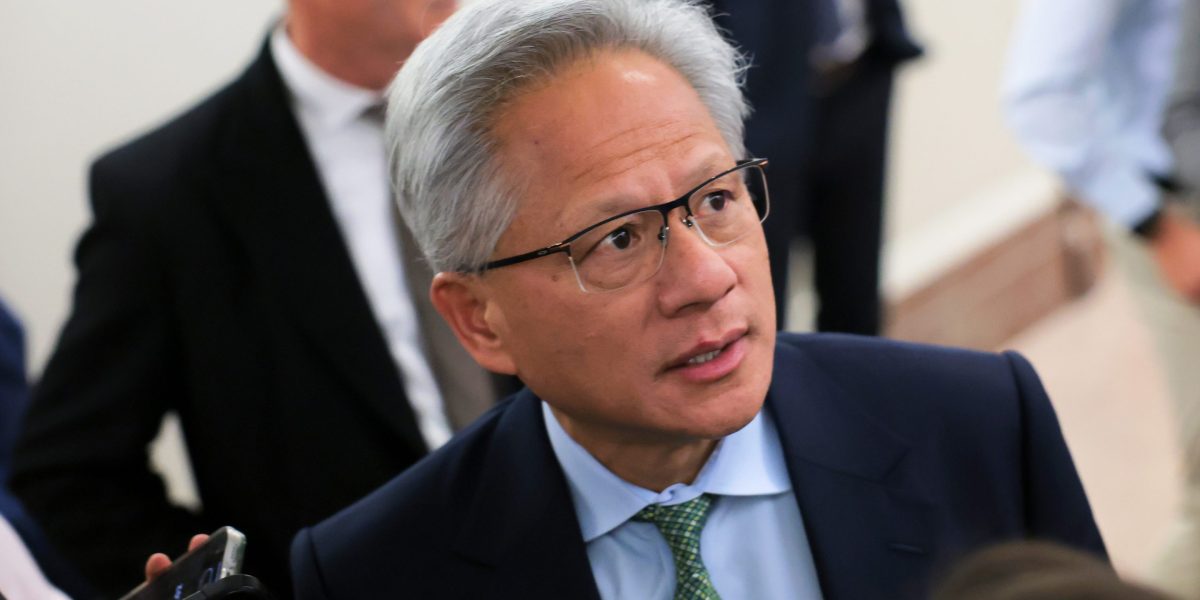
Nvidia CEO Jensen Huang says AI job disruption will be gradual and may spawn ‘robot clothing’ industry
In an interview with Joe Rogan, Nvidia CEO Jensen Huang said he does not expect a sudden wave of AI‑driven layoffs, arguing that jobs built entirely around routine tasks are most at risk while complex roles such as radiology remain more resilient. He predicted AI will also create new lines of work—including technicians who build and maintain AI assistants and even a future “robot apparel” industry—as humanoid robots become more widespread.

Report warns of ‘AI slop’ videos targeting babies on YouTube Kids
An investigation cited by The Indian Express finds that some YouTube creators are flooding YouTube Kids with low‑effort, AI‑generated videos aimed at children under two, raising concerns about developmental impacts and deceptive ‘educational’ claims. Experts quoted in the report say generative AI enables creators to mass‑produce poor‑quality content and AI voiceovers at scale, outpacing YouTube’s moderation efforts and exploiting gaps in platform rules.

Japan drafts basic AI program aiming to raise public usage to 80%
Japan’s government has prepared a draft basic program on AI development and use that targets raising the public AI utilization rate first to 50% and eventually to 80%. The plan also seeks to attract about ¥1 trillion in private-sector investment for AI R&D, positioning AI as core social infrastructure and aiming to close the adoption gap with the US and China.

AWS re:Invent 2025 showcases new infrastructure for agentic AI workloads
At AWS re:Invent 2025, Amazon Web Services highlighted a slate of new services aimed at "agentic" AI — autonomous AI agents that can carry out multi‑step tasks — including Amazon S3 Vectors for vector search over enterprise data, new EC2 Trn3 UltraServers optimized for large‑scale model training and inference, and M9g instances powered by the latest Graviton5 CPUs. The announcements underscore AWS’s push to provide a full stack for building and scaling AI agents, from specialized hardware to data infrastructure, as hyperscalers compete to own the generative and agentic AI platform layer.

Experts warn AI is reshaping childhood through toys, tutors and digital companions
A feature on The Cool Down, drawing on recent analysis in The Economist, describes how AI‑powered toys, tutoring systems and chatbots are increasingly mediating children’s play and learning, with some adolescents reporting AI conversations as equally or more rewarding than talking to people. While personalized instruction and adaptive games can help struggling students, experts caution that opaque AI companions risk narrowing kids’ information diets, undermining social skills and adding to the environmental footprint of large‑scale AI infrastructure.

Automated Christmas: AI brings new ways to shop for holiday gifts
An Associated Press report highlights how major retailers and tech companies are rolling out AI-powered shopping tools for the 2025 holiday season, from OpenAI’s ChatGPT shopping guides and Amazon’s Rufus assistant to Google’s AI-enhanced search and new price-tracking features. These systems promise more personalized recommendations and automated buying workflows, signaling a broader shift toward agentic, commerce-focused AI even as analysts note that consumer adoption and behavior change will take time.

Greater Bay Area bets on AI ‘alchemy’ with dense supply chain and aggressive policy support
An in-depth feature from 21st Century Business Herald describes how the Guangdong–Hong Kong–Macao Greater Bay Area, especially Shenzhen, is cultivating an AI and robotics cluster via fast government decision-making, open real-world deployment scenarios and a highly concentrated hardware supply chain. Local AI firms in chips, robots, lidar and enterprise AI say policies such as "compute vouchers", data subsidies and full-city scenario openness are helping them iterate quickly and expand globally, positioning the Bay Area as a leading testbed for applied AI rather than just model development.

South Korea unveils comprehensive AI talent strategy combining university reforms and global recruitment
South Korea’s government has outlined a sweeping AI talent strategy aimed at making the country one of the world’s top three AI powers, including strengthening math and science education from school level, expanding AI-focused university programs, and creating dedicated AI visas and easier residency paths for foreign researchers. The plan also includes setting up AI colleges at major science and technology institutes, upgrading “software-centered universities” into “AI-centered universities,” and partnering with ARM to found an “ARM Academy” expected to train around 1,400 top-tier semiconductor design specialists.([epochtimes.com](https://www.epochtimes.com/gb/25/12/6/n14649798.htm))

China’s civil aviation regulator issues ‘AI + Civil Aviation’ plan to deeply integrate AI across the sector by 2030
China’s Civil Aviation Administration has released an Implementation Opinion on promoting high-quality development of "AI + civil aviation," setting targets to make AI integral to aviation safety, operations, passenger services, logistics, regulation and infrastructure planning by 2027, and to achieve broad, deep AI integration with a mature governance and safety system by 2030. The document identifies 42 priority application scenarios—ranging from risk early-warning and intelligent scheduling to smarter logistics and regulatory decision-making—and calls for stronger data, infrastructure platforms and domain-specific models to support the transformation.([ce.cn](https://www.ce.cn/cysc/newmain/yc/jsxw/202512/t20251206_2625091.shtml?utm_source=openai))
Goldman Sachs flags diverging risks in AI‑linked debt between investment‑grade and high‑yield markets
New Goldman Sachs research highlighted by Reuters finds that a surge in AI‑related bond issuance to finance data centers and infrastructure is underperforming broader credit markets, with risks showing up differently in investment‑grade versus high‑yield segments. Investors are becoming more selective, with worries seen as issuer‑specific for top‑rated big tech borrowers but more sector‑wide in high yield, while the Bank of England has separately warned that heavy AI infrastructure borrowing could pose financial‑stability risks if valuations correct. ([reuters.com](https://www.reuters.com/business/ai-credit-concerns-playing-out-differently-investment-grade-high-yield-goldman-2025-12-05/))

China’s Boao conference promotes ‘AI+’ integration with the real economy
At the 2025 Digital-Intelligence Technology Innovation Development Conference in Boao, Hainan, Chinese officials, academics and industry leaders discussed how “AI+” applications can drive industrial upgrading, with sessions on AI policy, technical trends and large-scale deployment across manufacturing, transportation and services. The event, organized by Xinhua and partners, highlighted the need to combine AI with 5G/6G, industrial IoT and robotics while building governance and security frameworks to manage risks from deep integration of AI into the real economy. ([wxb.xzdw.gov.cn](https://wxb.xzdw.gov.cn/xxh/xxhgzdt/202512/t20251205_629870.html))
Wall Street races to shed risk from AI’s massive borrowing binge
Bloomberg reports that global banks are simultaneously extending huge credit lines to leading AI and cloud companies while aggressively seeking to offload that exposure through tools like credit derivatives and significant risk transfer deals. Rising hedging costs for borrowers such as Oracle and heightened scrutiny of AI‑linked leverage show how financiers are trying to capture upside from the AI boom without being overexposed to a potential valuation correction. ([bloomberg.com](https://www.bloomberg.com/news/articles/2025-12-05/wall-street-races-to-cut-its-risk-from-ai-s-borrowing-binge))

Dell lifts targets on surging AI server demand
Dell projected stronger revenue and profit as orders for AI-optimized servers accelerate, raising its fiscal 2026 AI server revenue goal to $25B. The company cited customers including the U.S. Department of Energy, G42, xAI and CoreWeave, signaling sustained infrastructure investment for AI workloads.

Alibaba beats revenue estimates as cloud/AI growth offsets profit drop
Alibaba topped quarterly revenue expectations as its cloud division and AI initiatives grew sharply, even as overall profit declined. The performance highlights how AI‑driven cloud demand is becoming a key growth engine for Chinese tech platforms amid intense domestic competition.

Zoom raises outlook as AI features drive enterprise demand
Zoom lifted its full‑year revenue and profit guidance, citing strong adoption of AI‑powered tools like AI Companion and Virtual Agent. The company also highlighted a partnership with Nvidia to support AI Companion 3.0, signaling ongoing investment in AI to spur growth beyond video meetings.

Amazon’s AWS commits up to $50B to expand AI and supercomputing capacity for U.S. government
Amazon Web Services announced it will invest up to $50 billion to add roughly 1.3 GW of AI/HPC capacity across its Top Secret, Secret and GovCloud regions, with projects breaking ground in 2026. The move bolsters AWS’ position in public-sector AI and gives federal agencies broader access to models and services like Bedrock, SageMaker, Nova and Anthropic’s Claude.
Alibaba’s Qwen AI app tops 10 million downloads in first week after relaunch
Alibaba said its unified Qwen consumer AI app surpassed 10 million downloads within a week of relaunch, boosting its push to compete with leading chatbots. Early traction suggests strong demand for Chinese-language AI assistants and bolsters Alibaba’s broader AI strategy across consumer and enterprise products.
Amazon raises $15B in first U.S. bond sale since 2022 to fuel AI infrastructure
Amazon sold $15B across six tranches in an oversubscribed offering as Big Tech taps debt markets to finance AI data center build‑outs. Proceeds may support acquisitions, capex, and buybacks, reflecting the sector’s capital intensity as AI workloads scale.
Discussion
Key Players
Neutral Impact
This trend has minimal direct impact on AGI timeline
Accenture reported strong earnings, emphasizing the urgent demand for AI services. This comes as investors are increasingly wary of soaring AI infrastructure costs, particularly after disappointing forecasts from Oracle and Broadcom. The emerging pattern reveals a critical shift: while AI spending is booming, the pressure is mounting to prove profitability and sustainable growth amidst concerns of an investment bubble.
Timeline
19 eventsAccenture reports $18.74B revenue, beats forecasts
Accenture's revenue surpassing forecasts indicates strong demand for AI services, marking a significant achievement.
Nvidia considers increasing H200 AI chip production
Nvidia's evaluation of increasing production capacity indicates a significant response to rising demand, which could impact the market.
Disney issues cease-and-desist against Google over AI copyright
This is a significant legal action that could impact the use of AI technologies.
UK government partners with Google DeepMind for AI research
This partnership aims to advance AI applications in critical areas, indicating significant collaboration.
Google adds AI 'alignment critic' to Chrome's Gemini browsing
This feature release enhances user safety in AI applications, marking a notable product update.