This trend is no longer active
This trend was archived on Dec 24, 2025 as it is no longer seeing new developments.
AI-Driven Investment: Boom or Bubble?
Main Take
OpenAI's GPT-5.2 aims to dominate agentic workflows, responding to escalating market demands. This intensifies the race among tech giants to establish leadership in AI-driven automation and task management. Expect heightened competition as companies rush to innovate and differentiate their offerings, potentially leading to oversaturated markets and inflated valuations.
Who Should Care
Prepare for volatility as firms scramble for market share in AI solutions.
Expect rapid development of new models and frameworks as competition heats up.
Focus on building scalable, adaptable systems to meet diverse enterprise needs.

Related Articles (38)
OpenAI launches GPT-5.2, pushing harder into agentic workflows
OpenAI launched GPT-5.2, a new flagship model family positioned for everyday professional use and multi-step “agentic” work (e.g., spreadsheets, presentations, code, tool-use, and long-context tasks). The release underscores the competitive pressure among frontier labs, with OpenAI framing GPT-5.2 as a direct response to a rapidly intensifying benchmark and product race. The rollout includes multiple variants (e.g., faster “Instant” and more deliberate “Thinking/Pro” modes), signaling continued segmentation by latency/price/reasoning depth for enterprise and power users. Strategically, GPT-5.2 strengthens OpenAI’s claim that the next battleground is dependable end-to-end task execution, not just raw benchmark scores, and it foreshadows more “assistant/agent” features being productized across ChatGPT and the API.
Microsoft CEO signals launch of new agentic AI model on Friday
In a brief dispatch from Chinese financial news outlet CLS, Microsoft CEO Satya Nadella is quoted as saying that the company plans to release a new "agent‑style" artificial intelligence model on Friday. While details such as the model’s name, capabilities and target products were not disclosed, the statement underscores Microsoft’s continued push into agentic AI systems following earlier efforts to make Windows and its security stack more agent‑driven.

Amazon announces $35 billion India investment to expand AI-driven digitization and jobs by 2030
Amazon has pledged more than $35 billion in new investment in India through 2030, building on nearly $40 billion already invested to date. The plan centers on AI-driven digitization of small businesses, expanded data center and logistics infrastructure, and AI education programs for millions of students, aiming to make India a key global hub for Amazon’s AI and cloud growth.
AWS weekly roundup highlights agentic AI push and new multimodal Bedrock capabilities after re:Invent
AWS published its December 8 weekly roundup synthesizing key announcements from re:Invent 2025, emphasizing AI agents as a new inflection point and promoting the Kiro Autonomous Agent as Amazon’s standard internal AI development environment. The post also spotlights multimodal retrieval for Amazon Bedrock Knowledge Bases and a preview of AWS Interconnect – Multicloud, framing these launches as foundational infrastructure for building production‑scale agentic AI systems.

Guangdong’s core AI industry tops 230 billion yuan as China’s robot output leads the nation
Officials in Guangdong province reported that the region’s core artificial intelligence industry exceeded 230 billion yuan (about US$32 billion) in output from January to October 2025, with industrial and service robot production both ranked first nationwide. The figures highlight Guangdong’s growing strength in AI chips, model algorithms, intelligent terminals and robotics as it positions the Pearl River Delta as a key AI and automation hub in China.
IEEE expert forecast: agentic AI systems set to spread in consumer markets, with new privacy risks
In a Chinese‑language article quoting IEEE experts, agentic AI—systems that can autonomously pursue goals and adjust strategies—is predicted to move rapidly from hype to real‑world deployment in consumer markets. While highlighting benefits from proactive assistants that can manage complex tasks over time, the piece warns that such autonomy also amplifies risks around data privacy, misuse and insufficient human oversight.

Survey: Nearly half of employers using AI aim to optimise headcount, reshaping workforce structures
A Robert Walters Hong Kong survey finds that 58% of employers have introduced AI in the workplace and, among them, 49% explicitly target headcount optimisation. While support and IT roles see the most automation pressure, demand is rising for specialists in data science, machine learning and AI product development, and most employees expect AI to positively impact their careers if they can reskill in time.

Reality and bubbles in the global AI investment wave
In a long-form analysis, Caixin argues that massive capital inflows have turned AI into the core of a new tech investment cycle, but warns that not all heavily hyped technologies will translate into sustainable productivity gains and profits. The piece highlights China’s aggressive ‘AI+’ industrial policies, the rapid spread of humanoid robots and AI agents, and booming valuations in AI chips and data centers, while cautioning that investors must distinguish between genuine innovation and speculative excess if they want to avoid an AI bubble. ([opinion.caixin.com](https://opinion.caixin.com/2025-12-08/102390796.html))

China outlines the next decade of AI: from AGI to embodied robots and industrial deployment
A feature in Sina Finance, sourced from China Youth Daily, sketches China’s AI roadmap for the next 10 years, emphasizing the push toward artificial general intelligence (AGI), embodied intelligence in humanoid robots, and large-scale deployment of AI agents across industries. Turing Award winner Andrew Yao (Yao Qizhi) and other experts argue that progress in embodied robots, scientific AI and safety governance will be key to reaching AGI, while industry voices from firms like Unitree and Alibaba Cloud stress that better data infrastructure, intelligent terminals and repeatable deployment patterns are needed for AI to truly scale in manufacturing and services. ([finance.sina.cn](https://finance.sina.cn/2025-12-08/detail-infzzuit2029380.d.html))
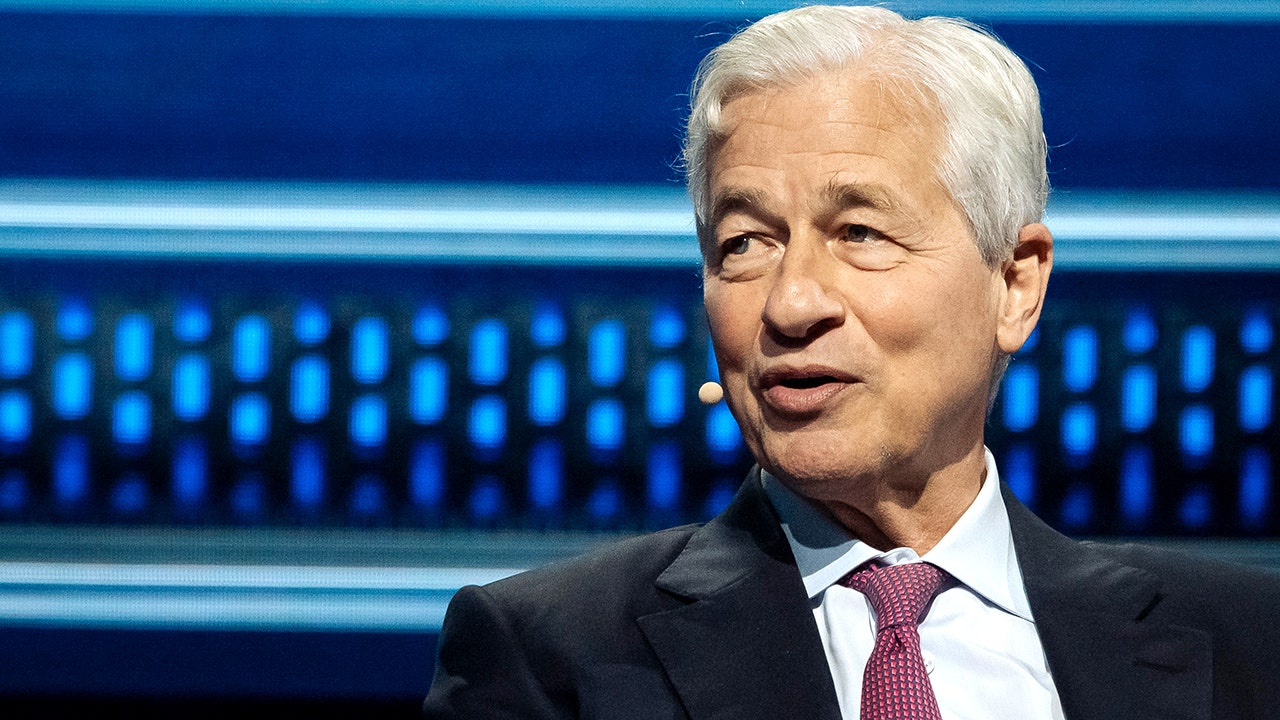
Jamie Dimon says AI won’t ‘dramatically reduce’ jobs in the next year if it’s properly regulated
JPMorgan Chase CEO Jamie Dimon told Fox Business that artificial intelligence is unlikely to cause dramatic job losses over the next year, arguing that AI will initially create more work and productivity gains if governments put proper guardrails in place. Dimon advised workers to focus on critical thinking and interpersonal skills and said it’s up to governments and large corporations to phase in AI in ways that avoid widespread disruption, underscoring how major financial institutions now frame AI as both an economic opportunity and a regulatory responsibility.
Apple faces major leadership shake-up as AI and design chiefs depart and chip chief weighs exit
Apple is undergoing one of its biggest leadership overhauls in decades, with the heads of artificial intelligence and interface design stepping down and the company’s general counsel and head of government affairs also set to leave, while long‑time chip chief Johny Srouji has discussed departing. The wave of exits underscores internal strain around Apple’s lagging AI strategy and raises questions about its ability to keep pace with rivals in advanced AI and custom silicon.([bloomberg.com](https://www.bloomberg.com/news/articles/2025-12-06/apple-rocked-by-executive-departures-with-johny-srouji-at-risk-of-leaving-next))
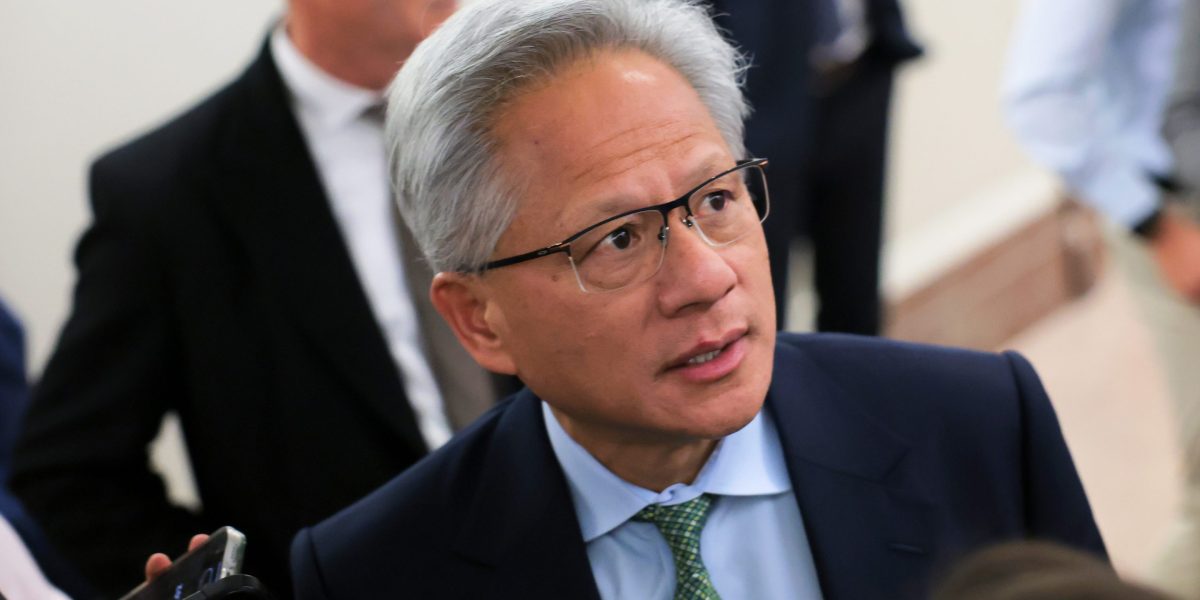
Nvidia CEO Jensen Huang says AI job disruption will be gradual and may spawn ‘robot clothing’ industry
In an interview with Joe Rogan, Nvidia CEO Jensen Huang said he does not expect a sudden wave of AI‑driven layoffs, arguing that jobs built entirely around routine tasks are most at risk while complex roles such as radiology remain more resilient. He predicted AI will also create new lines of work—including technicians who build and maintain AI assistants and even a future “robot apparel” industry—as humanoid robots become more widespread.

AWS re:Invent 2025 showcases new infrastructure for agentic AI workloads
At AWS re:Invent 2025, Amazon Web Services highlighted a slate of new services aimed at "agentic" AI — autonomous AI agents that can carry out multi‑step tasks — including Amazon S3 Vectors for vector search over enterprise data, new EC2 Trn3 UltraServers optimized for large‑scale model training and inference, and M9g instances powered by the latest Graviton5 CPUs. The announcements underscore AWS’s push to provide a full stack for building and scaling AI agents, from specialized hardware to data infrastructure, as hyperscalers compete to own the generative and agentic AI platform layer.

Greater Bay Area bets on AI ‘alchemy’ with dense supply chain and aggressive policy support
An in-depth feature from 21st Century Business Herald describes how the Guangdong–Hong Kong–Macao Greater Bay Area, especially Shenzhen, is cultivating an AI and robotics cluster via fast government decision-making, open real-world deployment scenarios and a highly concentrated hardware supply chain. Local AI firms in chips, robots, lidar and enterprise AI say policies such as "compute vouchers", data subsidies and full-city scenario openness are helping them iterate quickly and expand globally, positioning the Bay Area as a leading testbed for applied AI rather than just model development.
Goldman Sachs flags diverging risks in AI‑linked debt between investment‑grade and high‑yield markets
New Goldman Sachs research highlighted by Reuters finds that a surge in AI‑related bond issuance to finance data centers and infrastructure is underperforming broader credit markets, with risks showing up differently in investment‑grade versus high‑yield segments. Investors are becoming more selective, with worries seen as issuer‑specific for top‑rated big tech borrowers but more sector‑wide in high yield, while the Bank of England has separately warned that heavy AI infrastructure borrowing could pose financial‑stability risks if valuations correct. ([reuters.com](https://www.reuters.com/business/ai-credit-concerns-playing-out-differently-investment-grade-high-yield-goldman-2025-12-05/))
Huawei’s Ren Zhengfei says AI will enter an era of surplus compute, with focus on real‑world applications
Huawei CEO Ren Zhengfei, speaking in a newly published transcript of a November meeting with ICPC programming contest winners, argued that fears of AI compute shortages are overblown and that a future era of excess computing power is “inevitable.” He said Huawei is prioritizing communications technology (wireless, optical and core networks) and near‑term 3–5 year industrial AI applications—such as unmanned mining, port automation and smarter steelmaking—rather than chasing long‑horizon AGI and ASI research, which he characterized as a greater focus of U.S. firms. ([chinanews.com.cn](https://www.chinanews.com.cn/cj/2025/12-05/10527936.shtml?utm_source=openai))

Agents-as-a-service poised to reshape enterprise software and corporate structures
A CIO feature argues that autonomous AI agents delivered as “agents-as-a-service” are rapidly emerging on top of traditional SaaS, with more than half of surveyed executives already experimenting with AI agents for customer service, marketing, cybersecurity and software development. Drawing on forecasts from Gartner and IDC, it predicts that by 2026 a large share of enterprise applications will embed agentic AI, shifting user interaction away from individual apps toward cross‑app AI orchestrators and forcing CIOs to rethink pricing, integration and security models. ([cio.com](https://www.cio.com/article/4098664/agents-as-a-service-are-poised-to-rewire-the-software-industry-and-corporate-structures.html))

Is artificial intelligence pushing entire national economies to the edge?
Al Jazeera’s Chinese-language service examines how rapid AI adoption could entrench or widen the economic gap between rich and poor countries, warning that productivity gains may accrue mainly to advanced economies unless inclusive policies are adopted. The analysis highlights risks around data access, compute concentration and labor displacement, arguing that without global governance and investment in human capital, AI could exacerbate long‑standing structural inequalities. ([chinese.aljazeera.net](https://chinese.aljazeera.net/economy/2025/12/5/%E4%BA%BA%E5%B7%A5%E6%99%BA%E8%83%BD%E6%98%AF%E5%90%A6%E6%AD%A3%E5%9C%A8%E5%B0%86%E6%95%B4%E4%B8%AA%E5%9B%BD%E5%AE%B6%E7%9A%84%E7%BB%8F%E6%B5%8E%E6%8E%A8%E5%90%91%E8%BE%B9%E7%BC%98))
Wall Street races to shed risk from AI’s massive borrowing binge
Bloomberg reports that global banks are simultaneously extending huge credit lines to leading AI and cloud companies while aggressively seeking to offload that exposure through tools like credit derivatives and significant risk transfer deals. Rising hedging costs for borrowers such as Oracle and heightened scrutiny of AI‑linked leverage show how financiers are trying to capture upside from the AI boom without being overexposed to a potential valuation correction. ([bloomberg.com](https://www.bloomberg.com/news/articles/2025-12-05/wall-street-races-to-cut-its-risk-from-ai-s-borrowing-binge))
AI boom dominates Reuters NEXT as executives eye productivity gains but warn of job and energy risks
At the Reuters NEXT conference in New York, business and government leaders described AI as the biggest technological upheaval since the internet, crediting it with trillions in investment and a major boost to GDP growth while also warning about job displacement and energy‑hungry data centers. Speakers from companies including Writer, Moderna and Cisco said customers are already using AI to slow headcount growth and rethink workforce planning, even as economists and policymakers urged a focus on AI as a complement to labor rather than a replacement. ([reuters.com](https://www.reuters.com/business/media-telecom/ais-rise-stirs-excitement-sparks-job-worries-2025-12-04/))

Anthropic CEO warns some AI rivals are ‘YOLO‑ing’ massive bets amid bubble concerns
At The New York Times DealBook Summit, Anthropic CEO Dario Amodei said he is bullish on AI’s long‑term potential but cautioned that some companies are taking "unwise" risks by front‑loading huge infrastructure investments before economic payoffs are clear. He contrasted Anthropic’s more conservative planning with competitors he suggested may overextend on data centers and GPUs, implicitly referencing OpenAI, and said misjudging chip depreciation timelines and demand could bankrupt aggressive players if AI revenues slow. ([techcrunch.com](https://techcrunch.com/2025/12/04/anthropic-ceo-weighs-in-on-ai-bubble-talk-and-risk-taking-among-competitors/))
Cambricon plans to triple AI chip output to fill Nvidia’s gap in China
Beijing-based Cambricon Technologies is preparing to more than triple production of its AI accelerator chips in 2026, targeting around 500,000 units—including up to 300,000 of its latest Siyuan 590 and 690 processors—in an effort to capture market share left open by U.S. sanctions on Nvidia. The company intends to rely largely on Semiconductor Manufacturing International Corporation’s 7‑nanometre ‘N+2’ process, underscoring how China’s domestic chip ecosystem is scaling to support large‑model training despite export controls.
Can AI break a 150-year U.S. growth trend without overheating the economy?
A Reuters analysis examines whether massive AI-driven investment can lift U.S. GDP per capita above its long‑run 2% growth trend for the first time in 150 years without triggering inflation. Citing BlackRock’s outlook and other research, the piece argues that AI could accelerate innovation itself, but warns that the current capex and policy mix may risk economic overheating before productivity gains fully materialize.

OpenAI–TCS talks advance on HyperVault AI data centre partnership in India
OpenAI is in advanced discussions with Tata Consultancy Services (TCS) to lease at least 500 MW of capacity in HyperVault, TCS’s new AI-ready data centre subsidiary, according to Indian media reports. The proposed arrangement would make OpenAI the first anchor tenant in HyperVault’s planned gigawatt-scale facilities in India and support joint development of agentic AI solutions for enterprise customers, although no equity investment by OpenAI is planned at this stage.

Tractor Supply standardizes on OpenAI as its primary enterprise AI partner
U.S. retailer Tractor Supply has decided to consolidate its AI efforts around OpenAI, making it the company’s primary partner for generative and agentic AI across customer-facing tools and internal operations. The company has deployed OpenAI-powered chat assistants on its website, uses AI for supply chain and in‑store workflows, and is training employees on prompt design to automate more than 1,500 processes.
Microsoft trims AI software sales targets as enterprise adoption lags
Multiple Microsoft divisions have lowered sales growth targets for certain AI products, after many sales teams missed their goals in the fiscal year ending June, according to a report in The Information cited by Reuters. The rare move to cut product‑specific quotas is stoking investor concern that real‑world enterprise adoption of generative AI is slower than hype suggests, even as Microsoft remains one of the biggest financial winners from its early bet on OpenAI.

Anthropic prepares for potential 2026 IPO as AI race with OpenAI intensifies
Anthropic, maker of the Claude chatbot, has hired Silicon Valley law firm Wilson Sonsini to prepare its corporate structure for a possible initial public offering as early as 2026, according to reporting based on Financial Times sources. The company is also negotiating a new funding round that could value it above $300 billion, underscoring how leading frontier‑model labs are racing not only on technology but also on access to capital as they compete with OpenAI for dominance in generative AI.
The AI frenzy is driving a memory chip supply crisis
Reuters reports that an acute global shortage of memory chips is emerging as tech giants race to build AI data centers, diverting capacity into high-bandwidth memory for GPUs and away from traditional DRAM and flash used in consumer devices. Major AI players including Microsoft, Google, ByteDance, OpenAI, Amazon, Meta, Alibaba and Tencent are scrambling to secure supply from Samsung, SK Hynix and Micron, with SK Hynix warning the shortfall could last through late 2027, potentially delaying AI infrastructure projects and adding inflationary pressure worldwide.
Bank of England warns AI‑driven stock boom is stretching valuations and raising systemic risks
In its half‑yearly Financial Stability Report, the Bank of England said risks to the UK financial system have risen this year, citing stretched equity valuations for companies linked to artificial intelligence, rapid growth in private credit, and large leveraged bets in the gilt repo market. The central bank estimates enthusiasm for AI has pushed US stock valuations to their most extended levels since the dot‑com bubble and UK levels to their highest since the global financial crisis, warning that a sharp correction could transmit losses through credit markets even though core UK banks remain well capitalised.
OECD says AI investment boom is propping up global growth but could fuel asset bubble
The OECD’s latest Economic Outlook reports that a boom in artificial intelligence investment is helping global growth hold up despite U.S. tariff shocks, with world GDP forecast at 3.2% in 2025 and 2.9% in 2026. However, the organisation cautions that exuberant expectations around AI could lead to stretched equity valuations and a sharp correction if returns disappoint, adding to broader macroeconomic and trade risks.

Apple reshapes AI leadership as Amar Subramanya replaces Giannandrea
Apple has appointed Amar Subramanya as its new vice president of AI, taking over from long‑time AI and machine learning chief John Giannandrea, who will transition to an advisory role ahead of retirement in 2026. Subramanya, a veteran of Microsoft and Google’s Gemini assistant, will oversee Apple’s foundation models, machine‑learning research and AI safety as the company seeks to accelerate Siri and "Apple Intelligence" features across its devices.
UN report warns AI could widen gap between rich and poor countries
A new report from the UN Development Programme warns that artificial intelligence could trigger a "next great divergence" between developed and developing countries, reversing decades of convergence in income, health and education. The study urges policymakers to invest in skills, infrastructure and governance so that lower‑income states are not left behind as advanced economies accelerate AI deployment.

Apple reshapes AI leadership as John Giannandrea retires and ex‑Google/Microsoft researcher Amar Subramanya takes over
Apple has announced that long‑time AI chief John Giannandrea will step down from his role as Senior Vice President for Machine Learning and AI Strategy and move into an advisory position before retiring in spring 2026. He is being replaced by Amar Subramanya, a veteran AI researcher who previously led engineering for Google’s Gemini assistant and most recently served as corporate VP of AI at Microsoft; Subramanya becomes vice president of AI, reporting to software chief Craig Federighi and overseeing Apple Foundation Models, ML research, and AI safety and evaluation—part of a broader effort to accelerate Apple’s lagging generative‑AI push and a delayed, more capable Siri.
OpenAI takes equity stake in Thrive Holdings to push AI into accounting and IT services
OpenAI has taken an ownership stake in Thrive Holdings, a private‑equity style holding company created by major OpenAI investor Thrive Capital, as part of a partnership to modernize accounting and IT services firms with generative AI. Under the deal, OpenAI will embed research, product and engineering teams inside Thrive portfolio companies and use its models on company‑specific data, highlighting a trend toward "circular" AI deals where model providers become equity partners in downstream service businesses.
OpenAI and Google executives outline how AI is reshaping go-to-market strategies for startups
Egyptian daily Youm7 summarizes comments from OpenAI startup head Mark Manara and Google Cloud marketing VP Alison Wagonfeld at TechCrunch Disrupt 2025, describing how generative AI lets startups target and qualify customers more precisely while producing and testing marketing messages at scale. Both stress that AI augments rather than replaces human go-to-market expertise, shifting hiring toward curious, adaptable talent that can blend AI tooling with deep customer understanding. ([youm7.com](https://www.youm7.com/story/2025/11/30/%D9%83%D9%8A%D9%81-%D8%AA%D8%B9%D9%8A%D8%AF-OpenAI-%D9%88Google-%D8%AA%D8%B4%D9%83%D9%8A%D9%84-%D8%A7%D8%B3%D8%AA%D8%B1%D8%A7%D8%AA%D9%8A%D8%AC%D9%8A%D8%A7%D8%AA-%D8%AF%D8%AE%D9%88%D9%84-%D8%A7%D9%84%D8%B3%D9%88%D9%82-%D8%A8%D8%A7%D8%B3%D8%AA%D8%AE%D8%AF%D8%A7%D9%85-%D8%A7%D9%84%D8%B0%D9%83%D8%A7%D8%A1/7215717))
Investors eye AI profitability as key focus in the coming week
Ahead of upcoming economic and corporate updates, market participants are closely watching signals about the profitability of major AI companies and the broader impact of AI spending on U.S. equities. The focus reflects investor attempts to gauge whether heavy capital expenditure on AI infrastructure and models will translate into sustainable earnings growth.

Survey: Central banks cautious on AI, see risks and limited core use
A new OMFIF survey reported by Reuters finds most central banks are wary of AI risks, with tools largely used for basic tasks rather than core operations. Respondents warned AI-driven behavior could ‘accelerate future crises,’ highlighting a gap between AI hype and institutional adoption.

Dell lifts targets on surging AI server demand
Dell projected stronger revenue and profit as orders for AI-optimized servers accelerate, raising its fiscal 2026 AI server revenue goal to $25B. The company cited customers including the U.S. Department of Energy, G42, xAI and CoreWeave, signaling sustained infrastructure investment for AI workloads.
Discussion
Advances AGI Timeline
This trend may accelerate progress toward AGI
OpenAI's GPT-5.2 aims to dominate agentic workflows, responding to escalating market demands. This intensifies the race among tech giants to establish leadership in AI-driven automation and task management. Expect heightened competition as companies rush to innovate and differentiate their offerings, potentially leading to oversaturated markets and inflated valuations.
Timeline
11 eventsMicrosoft CEO signals launch of new agentic AI model
The announcement of a new AI model by Microsoft indicates a competitive move in the AI market.
OpenAI launches GPT-5.2, pushing harder into agentic workflows
The launch of GPT-5.2 represents a significant advancement in AI capabilities, targeting professional use.
Amazon announces $35 billion India investment to expand AI-driven digitization
This substantial investment will significantly impact the AI landscape in India and support local businesses.
AWS re:Invent 2025 showcases new infrastructure for agentic AI workloads
The introduction of new infrastructure for agentic AI workloads is a significant development.
Cambricon to triple AI chip output to 500,000 units
Cambricon's plan to triple production is a significant operational milestone aimed at capturing market share.