This trend is no longer active
This trend was archived on Dec 31, 2025 as it is no longer seeing new developments.
AI Nation-Building: Global Talent and Infrastructure Race
Main Take
Trump's order aims to unify AI regulations under federal control, stoking tensions with states that see it as an overreach. This conflict highlights a struggle between federal efficiency and state-level safeguards, revealing a deeper pattern of governance in tech. Expect increasing legal battles as states defend their rights against federal authority.
Who Should Care
Watch for shifts in funding strategies as regulatory uncertainty unfolds.
Prepare for compliance changes that could impact development timelines.
Related Articles (17)
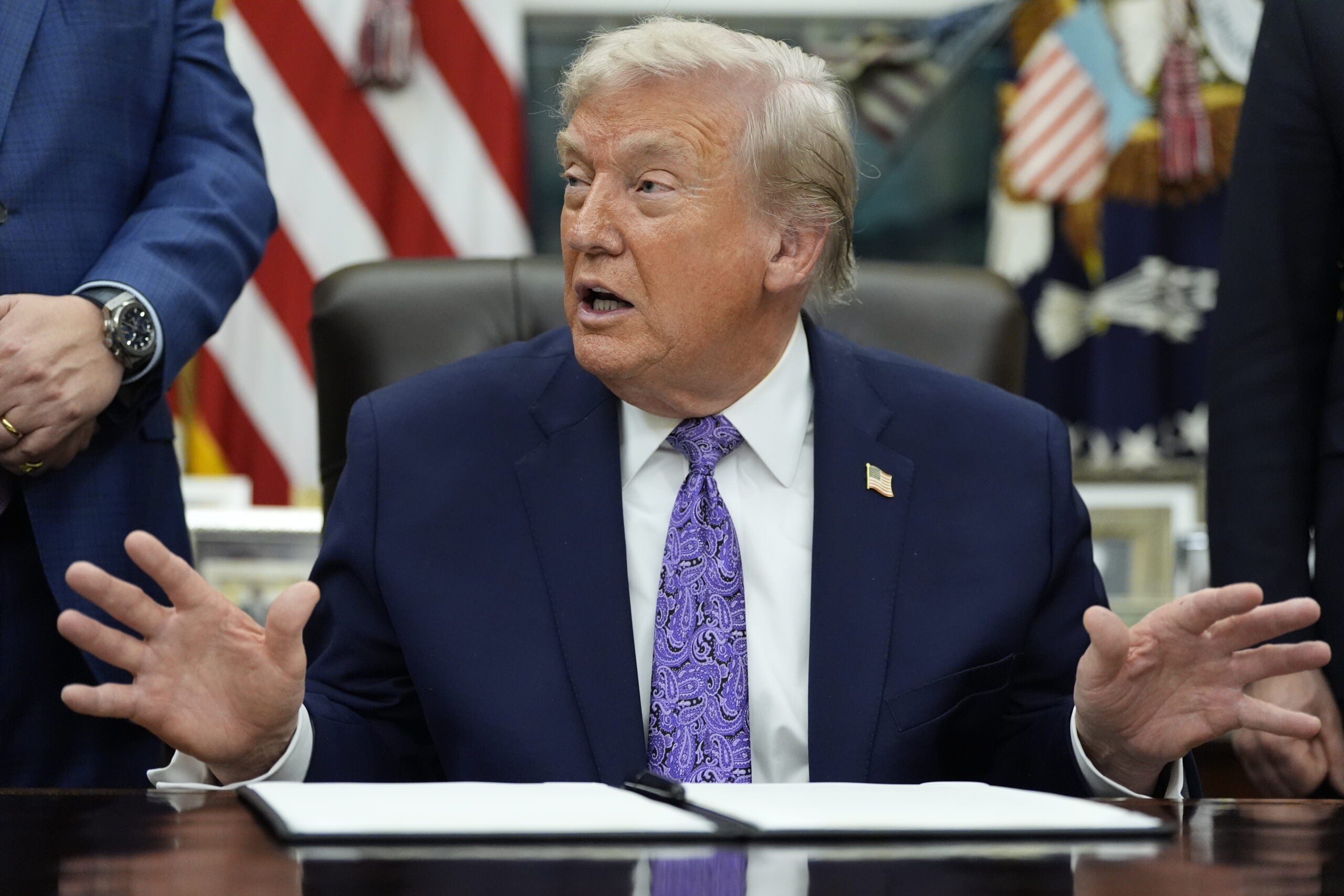
Wisconsin governor challenges Trump AI order preempting state laws
On December 16, 2025, Wisconsin Governor Tony Evers sent a letter urging President Trump to withdraw his December 11 executive order that seeks to preempt state AI regulations, with the story updated December 17 by Wisconsin Public Radio. Evers warned the order could undermine state laws on deepfakes, AI‑generated child exploitation material and disclosure of AI in political ads.

Trump AI order sparks pushback from Illinois and Colorado leaders
State officials in Illinois and Colorado are openly defying President Trump’s new executive order that seeks to block or pre‑empt state laws regulating artificial intelligence. In Illinois, Gov. JB Pritzker’s office and leading lawmakers blasted the order as a "blatant federal overreach," vowing to defend a suite of state AI rules that cover mental‑health counseling, employment screening, community college instruction and deepfake child pornography. ([capitolnewsillinois.com](https://capitolnewsillinois.com/news/illinois-leaders-wont-back-down-following-trumps-order-limiting-ai-regulation/)) Colorado Senator Michael Bennet issued his own statement calling the order a "dangerous overreach" that weakens states’ ability to protect children and consumers, and urged Congress to pass bipartisan national legislation instead of undermining local safeguards. ([bennet.senate.gov](https://www.bennet.senate.gov/2025/12/16/bennet-statement-on-president-trumps-executive-order-blocking-state-level-ai-laws/)) The executive order instructs the attorney general to create an AI Litigation Task Force to sue states whose laws it deems inconsistent with a national AI‑dominance agenda, and even raises the prospect of withholding rural broadband funds from jurisdictions with "onerous" AI rules. Together with Florida’s new classroom restrictions, the backlash underscores an emerging constitutional fight over who ultimately sets the ground rules for AI: Washington, or the states experimenting with more aggressive protections.
Trump AI order preempting state laws draws Senate backlash
Colorado senator Michael Bennet has blasted President Trump’s new executive order restricting current and future state laws that regulate the artificial intelligence industry. In a press‑release statement, Bennet calls the move a “dangerous overreach of power” that undermines states’ ability to protect children and consumers from AI‑related harms while still encouraging innovation. He argues that, absent comprehensive federal legislation, states need room to experiment with guardrails on issues like data use, content recommendation and automated decision‑making. The clash sets up yet another front in the ongoing tug‑of‑war between Washington and the states over who gets to set the rules of the AI game. For companies, it introduces new uncertainty: the White House may be promising deregulatory breathing room, but key lawmakers are signaling they view that as a temporary and politically contentious fix.
Gavin Newsom attacks Trump AI executive order as states brace for a legal showdown over AI rules
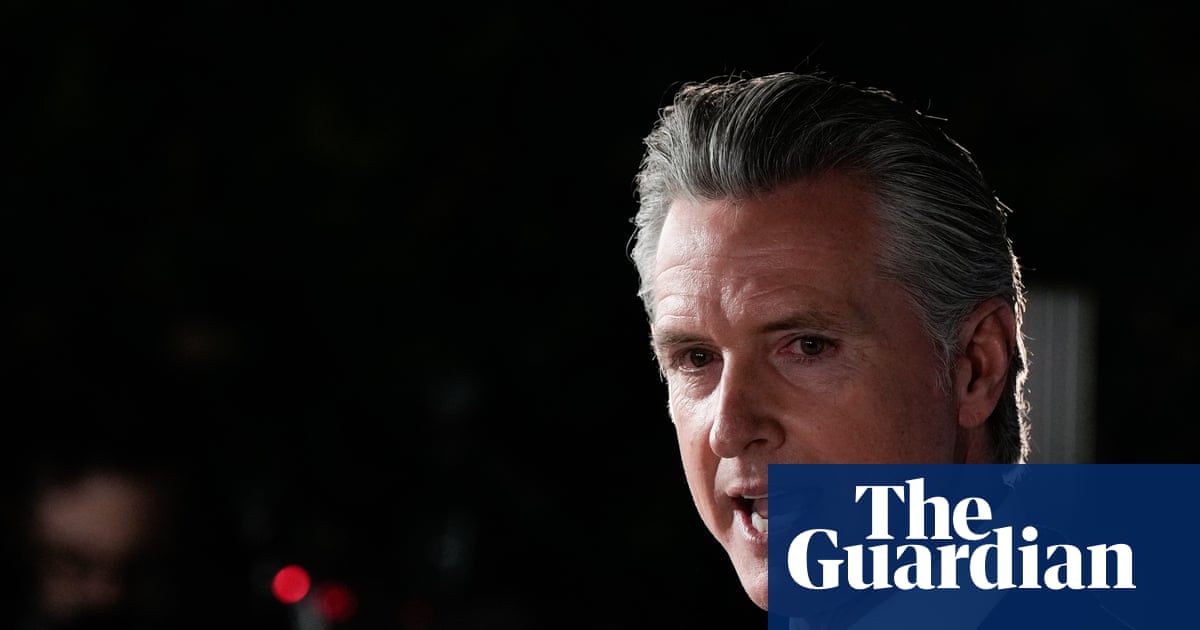
California Governor Gavin Newsom publicly slammed President Donald Trump’s AI executive order that aims to preempt (and litigate against) state-level AI laws, framing it as corruption-driven policy rather than innovation policy. The order’s architecture—especially an AI Litigation Task Force and threats tied to federal funding—sets up a high-stakes federal–state collision where the courts, not technologists, may define what ‘AI governance’ means in practice. California, as the center of gravity for many frontier AI firms, becomes the symbolic and legal battleground: if the federal preemption push sticks, state-led “AI safety + transparency” experiments could be chilled nationwide. The deeper significance: for leading AI companies, regulatory risk may shift from compliance engineering to constitutional litigation strategy—and timelines for deploying new systems could increasingly hinge on court calendars as much as model evals.
White House adviser says US will push Congress for a single national AI regulatory framework
The White House said it plans to work with Congress to create a single, nationwide framework to regulate AI, arguing that a patchwork of state rules could slow down deployment and weaken US competitiveness. The comments came from White House adviser Sriram Krishnan in an interview, framing federal action as both pro-innovation and strategically necessary. The deeper subtext is that Washington is trying to stabilize the policy surface area for frontier-model builders and downstream adopters—reducing compliance fragmentation while keeping leverage for national-security guardrails. If this effort turns into legislation (not just executive actions), it could reshape how enterprise AI is rolled out across highly regulated sectors like finance, healthcare, and critical infrastructure.

South Korea’s president calls for nationwide AI literacy, pushing mass education and broader access
South Korea’s president publicly urged that AI literacy be taught as universally as reading and arithmetic, arguing that everyday life will soon require baseline competence in AI tools. In a government briefing, the science/ICT minister noted many citizens still don’t know how to use AI—prompting the president to emphasize rapid, broad-based education and more accessible learning environments. The plan discussed includes expanding digital learning centers and rolling out practical AI education initiatives, starting with students and vulnerable groups. Why it matters: as AI agents and copilots become default interfaces for services, governments that treat AI literacy as infrastructure (not just workforce training) could accelerate domestic adoption—raising competitive pressure on consumer AI platforms, local model providers, and public-sector AI procurement across the region.
Trump signs executive order aimed at curbing state AI laws in favor of a national standard
President Donald Trump signed an executive order intended to push back on what the administration calls the most “onerous” state-level AI regulations, arguing that a patchwork of rules across 50 states could slow innovation and investment. The order sets up a path for federal action—via legal challenges and agency reviews—to preempt or contest state measures, while claiming it will not oppose child-safety-related rules. This is a major governance pivot for the U.S. AI ecosystem: it shifts the battlefield from state legislatures toward federal agencies, courts, and ultimately Congress, raising the stakes for national standards on transparency, risk mitigation, and model accountability. For AI companies, a single federal regime could reduce compliance fragmentation—but it could also harden into a high-impact procurement and enforcement framework if the federal government becomes more prescriptive. The strategic subtext is international: the administration explicitly frames regulatory speed as part of competing with China, making AI policy a competitiveness tool rather than purely a consumer-protection tool.
US to require AI vendors to measure political bias to sell LLMs to federal agencies
The Trump administration is tightening procurement rules for generative AI: vendors will need to measure and report political “bias” in large language models to be eligible for U.S. federal sales (with national security systems carved out). The move operationalizes earlier direction to avoid buying AI systems the administration frames as ideologically “woke,” and it effectively turns bias measurement into a gatekeeping compliance requirement for major government contracts. Practically, this raises the bar for model evaluation tooling and documentation, and could nudge vendors toward more standardized test suites (or at least defensible methodologies) for neutrality, factuality, and “truth-seeking.” The bigger impact is market-shaping: the U.S. government is a huge customer, so procurement checklists often become de facto industry standards—especially for enterprise deployments that mirror federal requirements. Expect a second-order fight over definitions (what counts as bias, which benchmarks, and how to prevent the metric from becoming performative).
South Korea to mandate labels on AI‑generated ads to curb deceptive deepfakes
South Korea has announced plans to require that all AI‑generated advertising content be clearly labeled as such from early 2026, amid a surge in deceptive promotions using fabricated experts and deepfaked celebrities to sell products online. Under the proposal, anyone creating, editing or posting AI‑generated photos or videos in ads must apply labels that platforms are not allowed to remove, with higher fines and punitive damages for violators and increased AI‑based monitoring by consumer and food‑safety regulators.
![[포토] 인공지능(AI) 제정법 관련 입법 공청회](https://image.newdaily.co.kr/site/data/img/2025/12/09/2025120900199_0.jpg)
South Korean parliament holds public hearing on proposed AI Basic Law
South Korea’s National Assembly Science, ICT, Broadcasting and Communications Committee held a public hearing on a draft ‘AI Basic Law’ in Seoul, signaling momentum toward a comprehensive legal framework for artificial intelligence. Lawmakers and experts discussed how to balance innovation with safeguards around data use, accountability and the social impact of AI systems.
Trump to issue order creating national AI rule
U.S. President Donald Trump said he will sign an executive order this week to create a single federal "One Rule" framework for artificial intelligence, aiming to preempt a growing patchwork of state-level AI regulations. The move is backed by major tech and AI firms that argue divergent state rules would stifle innovation, but is drawing bipartisan concern from states and lawmakers who see it as an overreach that weakens local protections and oversight.

Trump says he will sign 'ONE RULE' executive order to block state-level AI regulations
President Donald Trump said he will sign a 'ONE RULE' executive order this week to establish a single federal approval framework for artificial intelligence, preempting individual U.S. state AI laws that he argues threaten innovation. The move, backed by major AI firms and investors, would bar states from enforcing their own AI safeguards and is already drawing sharp criticism from state officials and lawmakers who warn it could undercut consumer protections and invite legal challenges.

Japan drafts basic AI program aiming to raise public usage to 80%
Japan’s government has prepared a draft basic program on AI development and use that targets raising the public AI utilization rate first to 50% and eventually to 80%. The plan also seeks to attract about ¥1 trillion in private-sector investment for AI R&D, positioning AI as core social infrastructure and aiming to close the adoption gap with the US and China.

South Korea unveils comprehensive AI talent strategy combining university reforms and global recruitment
South Korea’s government has outlined a sweeping AI talent strategy aimed at making the country one of the world’s top three AI powers, including strengthening math and science education from school level, expanding AI-focused university programs, and creating dedicated AI visas and easier residency paths for foreign researchers. The plan also includes setting up AI colleges at major science and technology institutes, upgrading “software-centered universities” into “AI-centered universities,” and partnering with ARM to found an “ARM Academy” expected to train around 1,400 top-tier semiconductor design specialists.([epochtimes.com](https://www.epochtimes.com/gb/25/12/6/n14649798.htm))

Korea’s President Lee and SoftBank’s Masayoshi Son discuss AI cooperation and artificial super intelligence
South Korean President Lee Jae Myung met SoftBank chairman Masayoshi Son in Seoul to discuss cooperation on artificial intelligence, semiconductors and large‑scale infrastructure, as Korea pursues its goal of becoming a top‑three AI power. Son warned of the coming era of 'artificial super intelligence' thousands of times more capable than the human brain, while the meeting also referenced SoftBank’s role in the US$500 billion Stargate AI infrastructure project and Korea’s planned ₩30 trillion (about US$22 billion) participation via the UAE segment.

KRAFTON opens applications for fourth AI Fellowship program with KRW 10 million scholarships
South Korean game developer KRAFTON has launched applications for the fourth cohort of its AI Fellowship Program, offering selected undergraduate fellows KRW 10 million in research scholarships plus a paid AI research internship from June to August 2026. Fellows will work with KRAFTON AI researchers and academic mentors on topics such as language models, multimodal learning, reinforcement learning and generative AI, with additional support if their work is accepted at top conferences like ICLR or ICML — underscoring the company’s push to build in-house frontier AI expertise for gaming and content.
South Korean president to meet SoftBank’s Masayoshi Son on AI and semiconductor cooperation
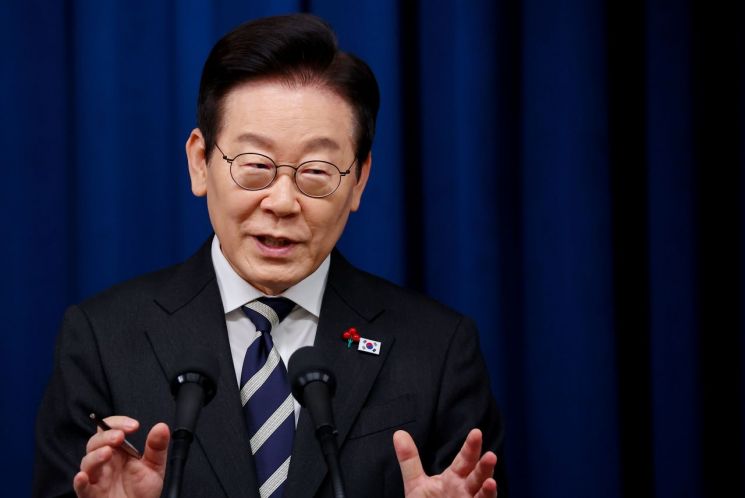
South Korean President Lee Jae‑myung will meet SoftBank Group chairman Masayoshi Son on December 5 to discuss cooperation in artificial intelligence, semiconductors and related infrastructure investment, according to the presidential office. The talks are expected to touch on SoftBank’s massive 'Stargate' AI infrastructure project with OpenAI and Oracle and on positioning South Korea as a top‑tier AI and chip hub, with key ministers and senior aides also attending.
Discussion
Key Players
Neutral Impact
This trend has minimal direct impact on AGI timeline
Trump's order aims to unify AI regulations under federal control, stoking tensions with states that see it as an overreach. This conflict highlights a struggle between federal efficiency and state-level safeguards, revealing a deeper pattern of governance in tech. Expect increasing legal battles as states defend their rights against federal authority.
Timeline
6 eventsTrump signs executive order to curb state AI laws
The executive order aims to establish a national standard for AI regulations, significantly impacting the regulatory landscape.
South Korea mandates labels on AI-generated ads
This regulatory decision addresses deceptive practices in advertising, marking a significant step in AI governance.
US requires AI vendors to measure political bias for federal sales
This regulatory decision impacts how AI vendors operate and sell to federal agencies, shaping the compliance landscape for AI products.
Trump to issue order creating national AI rule
The announcement of the upcoming executive order signifies a major shift in AI regulation, though not yet enacted.
Trump says he will sign 'ONE RULE' executive order
This statement indicates a significant forthcoming regulatory change aimed at standardizing AI laws.