Hitachi and Nvidia unveil physical AI strategy and HMAX services
TL;DR
At Hitachi Social Innovation Forum 2026 in Tokyo, Hitachi CEO Toshiaki Tokunaga declared 2026 the “first year of physical AI” and announced new HMAX services for data centers, cyber, data fabric and AI operations. Hitachi detailed a collaboration with Nvidia and showcased physical AI use cases tying digital twins, robots and edge AI into critical infrastructure management.
About this summary
This article aggregates reporting from 3 news sources. The TL;DR is AI-generated from original reporting. Race to AGI's analysis provides editorial context on implications for AGI development.
Read next
Race to AGI Analysis
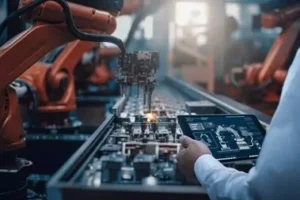
Hitachi is staking out a clear thesis that the next competitive frontier is not just bigger language models, but “physical AI” that can safely operate in power grids, transport and industrial plants. By splitting the journey into four stages (understanding the physical world, simulating it with digital twins, learning domain rules and finally executing in the real environment) and tying this to its HMAX platform, Hitachi is effectively pitching an operating system for AI‑driven infrastructure. The Nvidia collaboration around IWIM and Cosmos world models plugs Japanese operational expertise into the global GPU and simulation stack, giving Hitachi a credible story against US and Chinese industrial AI players.
For the AGI race, this matters because it moves cutting‑edge models out of screens and into high‑stakes physical systems where safety, redundancy and multi‑agent orchestration are non‑negotiable. Physical AI that can coordinate robots, sensors and control systems under strict safety rules is a proving ground for embedding advanced reasoning into the messy real world. If Hitachi and Nvidia can show that complex infrastructure can be run more autonomously without catastrophic failures, it will strengthen the argument that AGI‑level systems can be deployed beyond demos and developer tools.