US DOE launches Genesis Mission AI consortium for scientific discovery
TL;DR
Korean outlet Energy Safety News reports that the US Department of Energy has formally launched the Genesis Mission Consortium to accelerate scientific discovery with AI. The public‑private initiative, rooted in a 2025 executive order, brings together national labs, industry and academia to develop AI models, data standards and high‑performance compute infrastructure for energy and security applications.
About this summary
This article aggregates reporting from 1 news source. The TL;DR is AI-generated from original reporting. Race to AGI's analysis provides editorial context on implications for AGI development.
Race to AGI Analysis
The Genesis Mission Consortium signals that the U.S. energy and science establishment is moving from ad‑hoc AI pilots to a coordinated, programmatic structure for AI‑driven discovery. By explicitly tying AI to energy security and basic research, DOE is framing advanced models as national infrastructure, on par with particle accelerators or supercomputers. That matters for AGI because it justifies long‑term public investment in compute, data and talent pipelines outside the purely commercial race led by frontier labs and hyperscalers.
Equally important is the consortium’s design: national labs, Big Tech and universities sitting at the same table to standardize data, co‑develop models and share infrastructure. On paper, that could mitigate some concentration risks by ensuring publicly funded science benefits from cutting‑edge AI, not just private platforms. In practice, it may also deepen dependency on a few U.S. vendors for GPUs, cloud and foundation models. For the global AGI race, Genesis looks like an early blueprint for state‑backed “AI Manhattan Projects” focused on scientific and strategic advantage. Other blocs—Europe, China, India—are likely to respond with their own mission‑driven consortia, turning AI for science into a new axis of geopolitical competition alongside commercial chatbots and copilots.
Who Should Care
Related News

Google supports SALA 2026 to grow Latin American AI talent
3 weeks ago
Nvidia healthcare survey finds 70% of providers now using AI
3 weeks ago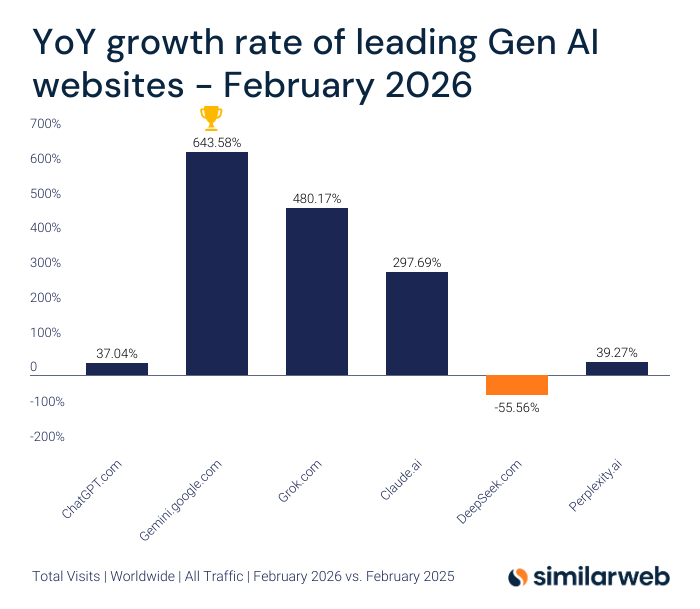
Google Gemini web traffic soars 643% as ChatGPT growth slows
3 weeks ago