Study finds AI chatbots trail search for consumer medical advice
TL;DR
On February 10, 2026, Computerworld reported on an Oxford Internet Institute study showing that people using LLM chatbots like GPT‑4o, Llama 3 and Command R did no better than a control group in judging urgency of health issues and were worse at identifying correct conditions. The research involved nearly 1,300 UK participants comparing chatbots with usual information sources such as search engines.
About this summary
This article aggregates reporting from 2 news sources. The TL;DR is AI-generated from original reporting. Race to AGI's analysis provides editorial context on implications for AGI development.
Race to AGI Analysis
The Oxford study undercuts a popular narrative: that consumer access to powerful LLMs will automatically democratize high‑quality medical triage. In realistic conditions—with laypeople describing symptoms in their own words—participants using chatbots didn’t do better than those using search engines, and actually performed worse at naming the right condition. That’s a sobering data point for anyone pitching today’s general‑purpose models as safe front doors for health advice.([computerworld.com](https://www.computerworld.com/article/4130361/ai-chatbots-worse-than-search-engines-for-medical-advice.html))
For the AGI race, the signal is subtle but important. It suggests we still don’t know how to reliably translate ‘superhuman exam performance’ into real‑world outcomes when users are untrained and the stakes are high. That gap puts a premium on domain‑specific fine‑tuning, interface design and guardrails—not just more parameters. It also strengthens the argument that serious medical deployments should be regulated and evaluated like medical devices, not generic SaaS.
In the near term, negative results like this may slow aggressive commercialization of chatbots as first‑line triage in national health systems, especially in Europe and the UK. But they’ll also push both labs and healthcare incumbents toward more rigorous human‑in‑the‑loop designs and outcome‑based benchmarks, which are necessary stepping stones if AGI‑level systems are ever going to be trusted in clinical workflows.
Who Should Care
Related News
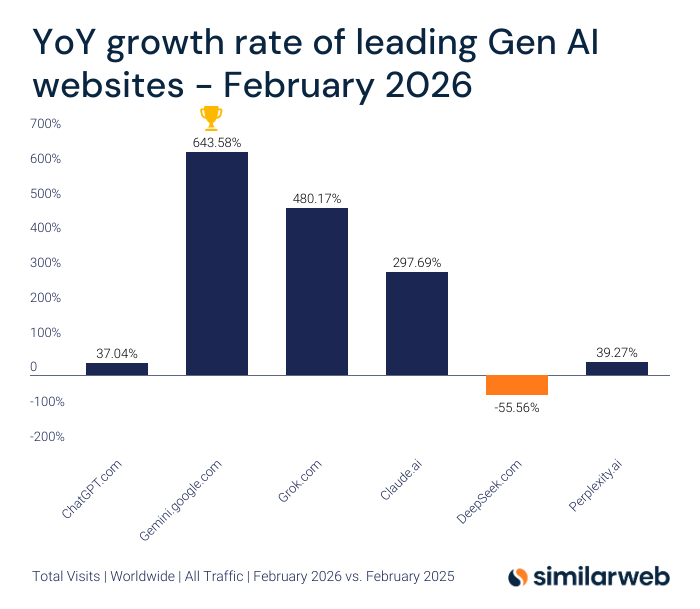
Google Gemini web traffic soars 643% as ChatGPT growth slows
3 weeks ago
OpenAI robotics chief quits over Pentagon AI deal backlash
3 weeks ago
Anthropic–OpenAI Pentagon AI deal triggers QuitGPT revolt
3 weeks ago