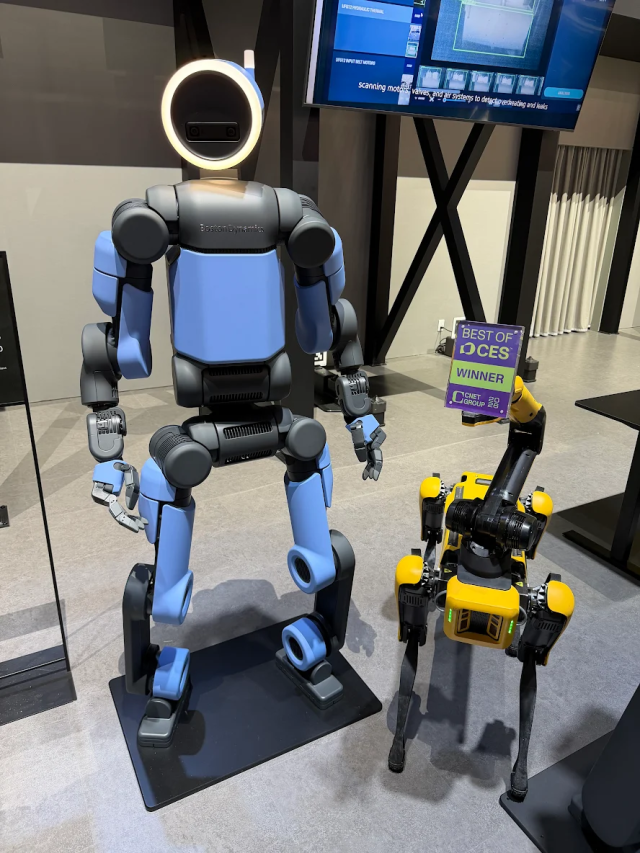
Hyundai’s Atlas humanoid wins CES 2026 Best Robot award
TL;DR
Hyundai Motor Group’s Atlas humanoid robot, developed by its U.S. robotics subsidiary Boston Dynamics, was named Best Robot of CES 2026 by CNET and other global media, according to reports on January 9, 2026. The fully electric humanoid is slated for phased deployment in Hyundai manufacturing plants starting around 2028–2030 to handle parts sorting, sequencing and heavy material handling.
About this summary
This article aggregates reporting from 3 news sources. The TL;DR is AI-generated from original reporting. Race to AGI's analysis provides editorial context on implications for AGI development.
Race to AGI Analysis
Atlas winning top robot honors at CES 2026 matters less as a trophy and more as a signal that industrial humanoids are finally moving from demo videos into factory deployment timelines. Hyundai’s plan to roll Atlas into EV plants by the late 2020s means we’re about to get large‑scale, real‑world data on how humanoid robots interact with messy workflows, human co‑workers and safety regulators. That feedback loop is essential if we ever want general‑purpose embodied agents that can act autonomously in unstructured environments.
Strategically, Hyundai is trying to turn its ownership of Boston Dynamics into a durable edge in “physical AI,” rather than ceding that territory to Tesla, Figure or Apptronik. A credible deployment roadmap backed by CNET’s validation helps attract both customers and talent to that vision. For the broader race to AGI, highly capable humanoids force alignment between perception, planning and control stacks in a single embodied system. That tends to surface failure modes that don’t show up in web‑scale text models, pushing research on robustness, tool use and safe autonomy—competencies AGI‑class systems will need if they’re ever allowed to operate beyond the lab.
Who Should Care
Companies Mentioned
Related News
Cadence touts pre‑validated AI chiplet platform to speed custom silicon
TodayCyberPress flags 91,000 attacks probing AI deployments worldwide
Today
Yuwell showcases AI health ring and wearables at CES 2026 debut
Today