Vibe coding trend shows how AI reshaped software work in 2025
TL;DR
Around 00:40 IST on January 1, 2026, The Times of India published a year‑end feature on “vibe coding,” a term coined by former Tesla AI director and OpenAI co‑founder Andrej Karpathy to describe natural‑language‑driven programming with AI agents. The piece recounts how the concept spread through 2025 and was later picked as Collins Dictionary’s word of the year as AI tools rewired software engineering workflows.
About this summary
This article aggregates reporting from 1 news source. The TL;DR is AI-generated from original reporting. Race to AGI's analysis provides editorial context on implications for AGI development.
Race to AGI Analysis
The “vibe coding” story is less about a meme and more about how fast AI has eaten the core workflows of software development. Karpathy’s term captures a reality many engineers felt in 2025: for a growing fraction of tasks, you describe intent in natural language and orchestrate agents, rather than manually writing every line of code. Tools like AI‑first IDEs and agentic copilots turned that from a curiosity into a normal way to ship features. Collins crowning it word of the year shows the cultural side of that shift; it’s now part of the mainstream lexicon, not just Hacker News slang.([timesofindia.indiatimes.com](https://timesofindia.indiatimes.com/technology/tech-news/rewind-2025-when-teslas-former-ai-director-gave-the-world-the-word-that-has-changed-the-work-of-software-engineers-forever/articleshow/126276591.cms))
For the race to AGI, this matters because it amplifies the feedback loop between powerful models and the tools used to build their successors. If a single engineer or a ten‑person startup can now wield what used to require a 50‑person dev team, the effective research and engineering capacity of the ecosystem explodes. That accelerates experimentation on new architectures, training regimes and agentic patterns—even if the underlying frontier models still come from a handful of big labs.
At the same time, the article surfaces emerging fault lines: warnings about “shaky foundations” and invisible technical debt when too much code is generated and too little is understood. That tension between speed and reliability will only grow as we move toward more autonomous AI systems, making software engineering culture a first‑class variable in the AGI timeline.
Who Should Care
Related News

California SB 53 forces frontier AI firms to reveal disaster risk plans
Today
China 2049 tech vision forecasts AGI, robots and smart cities
Today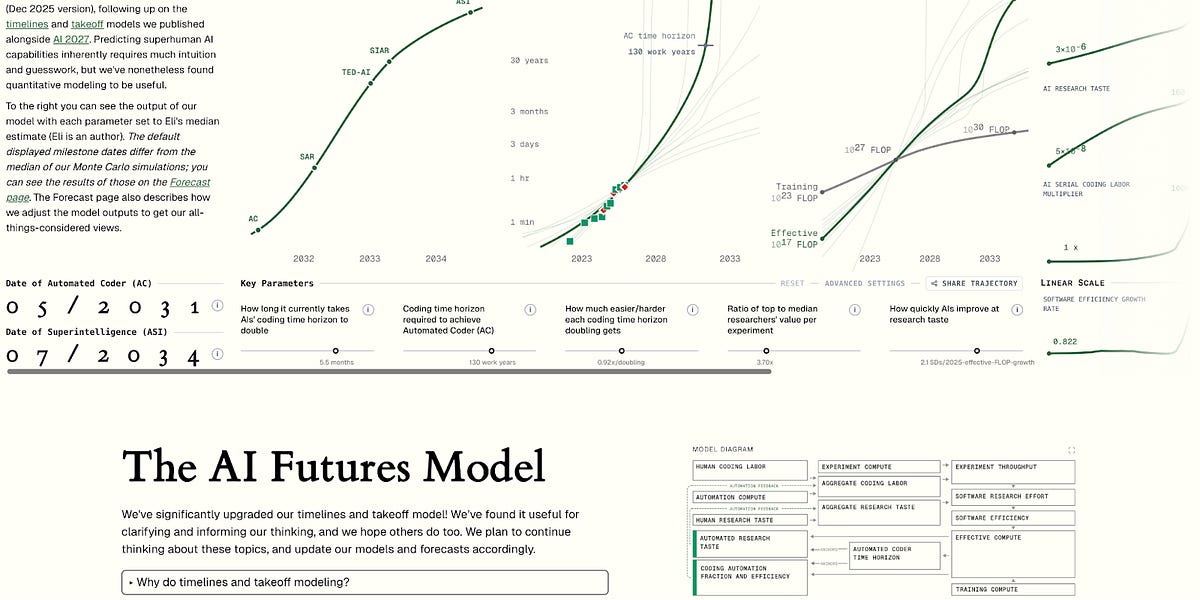
AI Futures Model pushes full coding automation forecast to 2031
Today