This trend is no longer active
This trend was archived on Dec 30, 2025 as it is no longer seeing new developments.
Global Data Center Arms Race for AI Compute
Main Take
India is emerging as a critical battleground for AI infrastructure. Major investments from Amazon, Microsoft, and others highlight its potential as a strategic hub for AI development and deployment. This reinforces the trend of tech giants prioritizing data sovereignty and local ecosystems, aiming to capture market share in a burgeoning AI landscape.
Who Should Care
Expect rising valuations in AI infrastructure, especially in emerging markets.
Access to diverse datasets will accelerate AI model training and capabilities.
More opportunities in AI-focused roles as infrastructure expands.

Related Articles (15)
Tata AI City plan in Lucknow targets massive TCS expansion
Uttar Pradesh chief minister Yogi Adityanath and Tata Sons chairman N. Chandrasekaran have revived and fleshed out plans for an “AI City” on the outskirts of Lucknow, pitching it as a global hub for artificial intelligence and a jobs engine for the state. The concept envisions a dense ecosystem of GPU data centers, AI innovation labs and startups that would plug into the state’s broader Vision 2047 strategy; officials say it should generate thousands of future-tech jobs and deepen the local startup scene. As part of the talks, Tata Consultancy Services proposed expanding headcount at its Lucknow and Noida centers from 16,000 to 30,000, while also exploring new investments in electronics, mobile manufacturing, power and EVs. The meeting highlights how India’s largest conglomerates and state governments are increasingly treating AI infrastructure as a core piece of regional economic policy, blending classic industrial projects like power plants with digital bets such as AI cities and centers of excellence.([hindustantimes.com](https://www.hindustantimes.com/cities/lucknow-news/yogi-and-tata-sons-chairman-discuss-ai-city-plan-investment-avenues-101765827506723.html))
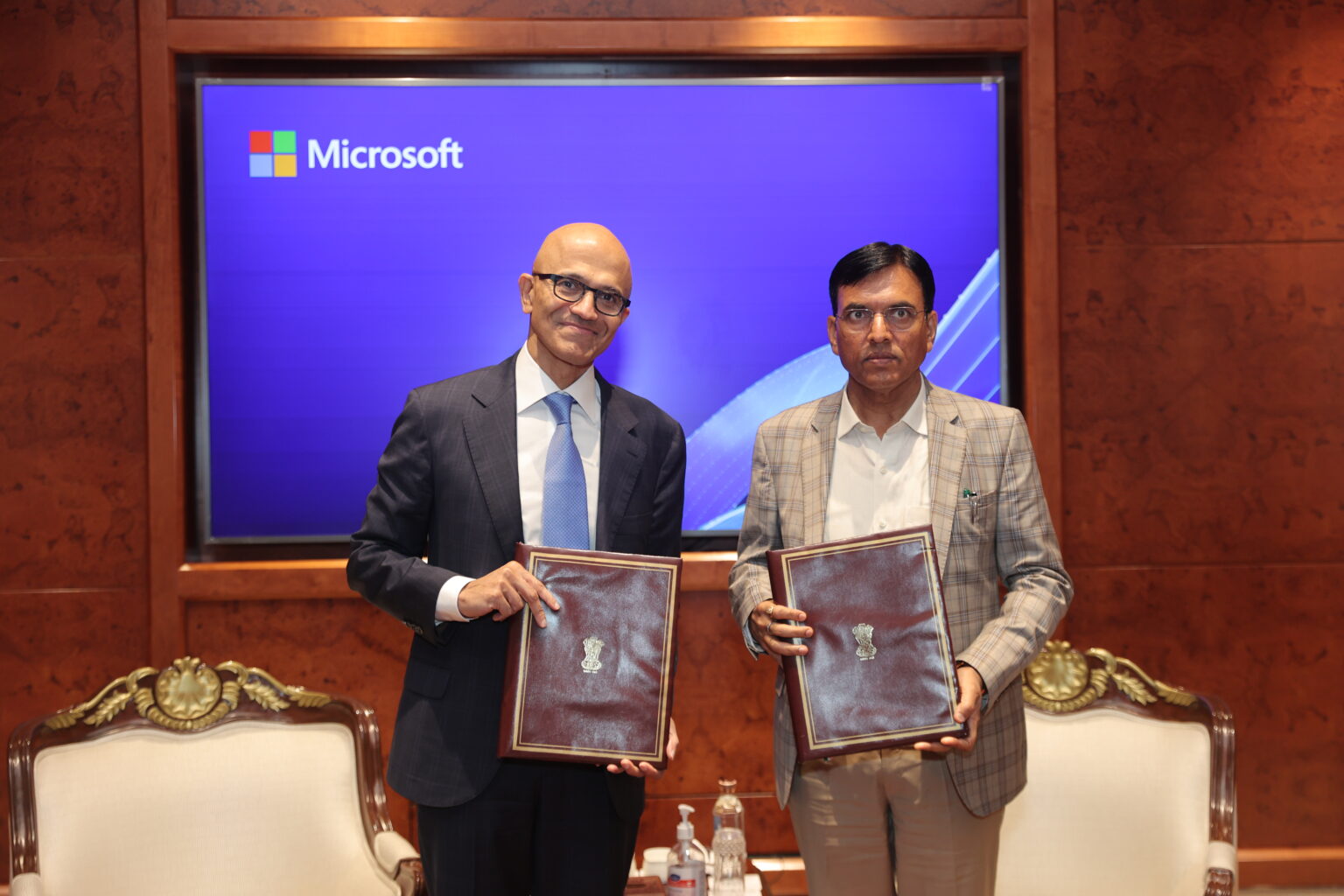
Amazon and Microsoft pour $52B into India as AI battleground intensifies
International Business Times reports that Amazon and Microsoft have together committed more than $52 billion in fresh investment to India, positioning the country as a key front in the global race to build AI infrastructure and ecosystems. Amazon plans to invest over $35 billion in India by 2030, focusing on AI-powered tools for 15 million small businesses and a major expansion of its marketplace and export capacity, while Microsoft is deploying $17.5 billion over four years into cloud data centers and programs to train 310 million informal workers via government employment platforms. The story frames India as both a massive consumer base and a strategic location for AI data centers, with companies emphasizing data sovereignty by keeping Indian customer data within the country. It also notes that Google has pledged $15 billion for AI data centers, underscoring how global tech giants now see India as a core theater for long‑term AI dominance rather than a peripheral growth market.

Latin America accelerates AI‑driven data‑center build‑out as 5G and cloud demand surge
The Costa Rica News reports that Brazil, Mexico, Chile, Colombia and Argentina are in the midst of a major data‑center construction wave, driven by 5G rollouts, cloud adoption and the compute‑hungry rise of AI workloads. ([thecostaricanews.com](https://thecostaricanews.com/latin-america-accelerates-data-center-construction-in-response-to-the-advance-of-5g/)) Brazil leads the region with 195 data‑center projects, backed by a mostly renewable power mix but hampered by taxes and high energy costs; the government is offering incentives tied to green energy use and R&D spending to lure more AI infrastructure. ([thecostaricanews.com](https://thecostaricanews.com/latin-america-accelerates-data-center-construction-in-response-to-the-advance-of-5g/)) The piece highlights eye‑popping commitments such as TikTok’s US$37.7 billion data‑center investment in Brazil’s Pecém complex, AWS’s more than US$5 billion "Mexico Central" region, and multi‑billion‑dollar cloud regions from Microsoft and AWS in Chile, along with an OpenAI‑linked US$25 billion project that will test the limits of local grids. ([thecostaricanews.com](https://thecostaricanews.com/latin-america-accelerates-data-center-construction-in-response-to-the-advance-of-5g/)) Environmental groups are already warning about the water and energy footprint of these hyperscale sites, and the article stresses that regulatory certainty, faster permitting and access to renewables will determine which countries capture the next wave of AI data‑center capital.

Amazon announces $35 billion India investment to expand AI-driven digitization and jobs by 2030
Amazon has pledged more than $35 billion in new investment in India through 2030, building on nearly $40 billion already invested to date. The plan centers on AI-driven digitization of small businesses, expanded data center and logistics infrastructure, and AI education programs for millions of students, aiming to make India a key global hub for Amazon’s AI and cloud growth.
Microsoft commits $17.5 billion to expand AI and cloud infrastructure in India
Microsoft CEO Satya Nadella has announced a $17.5 billion investment over four years (2026–2029) to build AI and cloud infrastructure, expand data centers and train workers in India, calling it the company’s largest-ever investment in Asia. The plan includes a new hyperscale "India South Central" cloud region in Hyderabad and extended skilling initiatives aimed at positioning India as a "frontier AI nation."
Microsoft commits $23 billion in new AI infrastructure investments focused on India and Canada
Microsoft announced $23 billion in new AI-related investments, including $17.5 billion over four years to expand cloud and AI infrastructure, skilling and operations in India and more than $5.4 billion to grow datacenter capacity and AI partnerships in Canada. The India plan includes a new hyperscale region in Hyderabad, expansion of existing regions, integration of Azure OpenAI services into national labour platforms and a pledge to train 20 million Indians in AI skills by 2030.

Microsoft commits US$17.5 billion to expand AI and cloud infrastructure in India
Microsoft announced its largest-ever investment in Asia, pledging US$17.5 billion over 2026–2029 to expand AI and cloud infrastructure, skilling and sovereign cloud capabilities across India. The plan includes scaling hyperscale datacenters, integrating Azure OpenAI services into public platforms like e‑Shram and the National Career Service to reach over 310 million informal workers, and doubling its AI skilling target in India to 20 million people by 2030.

AI cloud startup Fluidstack reportedly seeks $700M at $7B valuation as data center demand surges
Industry publication The MinerMag reports that AI-focused cloud-computing startup Fluidstack is in talks to raise around $700 million at a valuation of roughly $7 billion, reflecting investor appetite for infrastructure that can serve AI workloads. The article situates Fluidstack’s ambitions within a broader boom in AI-optimized data centers, including partnerships and capacity expansions with mining and energy firms like TeraWulf and Cipher Mining, as capital flows into power- and GPU-intensive facilities.
Australia’s NEXTDC signs deal with OpenAI to build hyperscale AI campus and GPU supercluster in Sydney
Australian data center operator NEXTDC has signed a deal with OpenAI to co-develop and operate a hyperscale AI campus and GPU supercluster at its planned S7 site in Eastern Creek, Sydney. The project will make OpenAI an anchor tenant in what is expected to be the largest data center in the Southern Hemisphere, underscoring the escalating global race to secure AI compute capacity and positioning Australia as a significant regional hub for advanced AI workloads. ([reuters.com](https://www.reuters.com/world/asia-pacific/australias-nextdc-signs-deal-with-openai-build-hyperscale-ai-campus-gpu-2025-12-04/))

Amazon outlines $12.7 billion AI and cloud infrastructure push in India to reach 15 million SMBs and 4 million students
Amazon reaffirmed plans to invest $12.7 billion in local cloud and AI infrastructure in India by 2030, aiming to bring agentic and generative AI tools to 15 million small businesses and AI literacy programs to 4 million government‑school students. The initiative expands AWS data‑center capacity in Telangana and Maharashtra and rolls out AI‑powered seller tools, shopping assistants like Rufus and Lens AI, and large‑scale education programmes aligned with India’s national AI and education strategies.

Nexus Venture Partners keeps new $700M fund balanced between AI and India-focused startups
Nexus Venture Partners has closed a new $700 million fund and says it will allocate roughly half to AI companies and half to India-focused startups in sectors like consumer, fintech and digital infrastructure. The U.S.–India firm argues that concentrating solely on AI would be risky despite the current boom, and sees an opportunity to back AI-native Indian startups and infrastructure players such as cloud and sovereign AI providers while continuing its cross-border software investing strategy.

Haptik co-founder and Together Fund veteran launch $75 million Activate fund for Indian AI startups
Aakrit Vaish, co‑founder of conversational AI firm Haptik, and former Together Fund investor Pratyush Choudhury have launched Activate, a new fund targeting $75 million to back early‑stage Indian AI founders. The fund will invest $500,000 to $3 million in deep technical teams at or before company formation, with LPs including Vinod Khosla, Perplexity CEO Aravind Srinivas, Essential AI’s Ashish Vaswani, Tesla AI leaders, Meta AI executives, OpenAI staff and prominent Indian investors.

OpenAI–TCS talks advance on HyperVault AI data centre partnership in India
OpenAI is in advanced discussions with Tata Consultancy Services (TCS) to lease at least 500 MW of capacity in HyperVault, TCS’s new AI-ready data centre subsidiary, according to Indian media reports. The proposed arrangement would make OpenAI the first anchor tenant in HyperVault’s planned gigawatt-scale facilities in India and support joint development of agentic AI solutions for enterprise customers, although no equity investment by OpenAI is planned at this stage.
Indian data center operator Sify Infinit Spaces bets on AI boom but wary of bubble
Sify Infinit Spaces, which is set to become India’s first listed pure-play data center operator, says generative AI workloads are a major driver of demand but warns of potential overbuilding if the hype outpaces sustainable usage. The company, backed by Kotak Private Equity and spun out of early Indian ISP Sify Technologies, operates 14 data centers with 11 more under development and plans a roughly 37 billion rupee IPO, while still relying heavily on hyperscale clients such as Alphabet, Amazon and Microsoft for capacity growth.

Adani eyes up to $5B investment in Google’s India AI data center project
Adani Group said it could invest as much as $5 billion via Adani Connex in Google’s planned AI data center campus in Visakhapatnam, Andhra Pradesh. The project—part of Google’s previously announced $15 billion India AI buildout—would start at 1GW of power, reflecting the surge in compute needs for AI workloads and India’s push to scale domestic data infrastructure.
Discussion
Key Players
Advances AGI Timeline
This trend may accelerate progress toward AGI
India is emerging as a critical battleground for AI infrastructure. Major investments from Amazon, Microsoft, and others highlight its potential as a strategic hub for AI development and deployment. This reinforces the trend of tech giants prioritizing data sovereignty and local ecosystems, aiming to capture market share in a burgeoning AI landscape.
Timeline
7 events$52B investment by Amazon and Microsoft in India for AI infrastructure
Amazon and Microsoft committed over $52 billion to AI infrastructure in India, marking a significant investment.
Amazon announces $35 billion investment in India
This significant investment will enhance AI-driven digitization and create jobs in India.
Microsoft commits $17.5 billion to AI and cloud in India
This is Microsoft's largest investment in Asia, aimed at expanding AI and cloud infrastructure.
Microsoft announces $23 billion in AI infrastructure investments
The investment focuses on expanding AI infrastructure in India and Canada, marking a significant commitment.
NEXTDC signs deal with OpenAI for AI campus in Sydney
The partnership aims to build a major AI campus and GPU supercluster, enhancing AI infrastructure in Australia.