This trend is no longer active
This trend was archived on Dec 30, 2025 as it is no longer seeing new developments.
Trump's National AI Regulation Strategy Unfolds
Main Take
Trump's push for a federal AI regulation is a response to growing concerns over state-level discrepancies. By centralizing control, he aims to streamline innovation while facing backlash from states worried about losing local oversight. This reflects broader tensions between national security and technological advancement in AI policy.
Who Should Care
Watch for volatility in tech stocks as regulatory clarity evolves.
Prepare for shifts in project compliance as federal guidelines emerge.

Related Articles (22)
Google and DeepMind pledge $13M to turbocharge India’s AI
At an event in New Delhi, Google DeepMind senior director Manish Gupta called artificial intelligence humanity’s “most powerful force for progress” and argued that India is already at the forefront of applying it to real‑world problems. As part of a broader AI push, Google announced USD 8 million in funding for India’s AI Centers of Excellence focused on health, agriculture, education and sustainable cities, plus a further USD 400,000 to support development of an Indian health foundation model built on MedGemma. Additional grants include USD 4.5 million for Wadhwani AI to expand multilingual AI tools in health and agriculture, and USD 50,000 each for startups Gnani.AI, CoRover.AI and BharatGen to build Indic‑language models and assistants. The package reflects a strategy of seeding both top‑down research capacity and bottom‑up startup innovation, rather than betting on a single national model. For India’s AI ecosystem, it’s a notable vote of confidence from one of the world’s main model builders and comes as the country races to convert its data and developer base into durable AI products.

Google backs India’s AI CoEs with $8M and new health, language grants
Google has unveiled a major AI push in India, committing $8 million via Google.org to four government-backed AI Centres of Excellence focused on health, urban governance, education and agriculture. The company is also funding health-specific foundation models using its MedGemma model, working with Ajna Lens, AIIMS and IISc to convert unstructured clinical notes into FHIR-standard health records and integrate AI into India’s digital public infrastructure. In parallel, Google is putting $2 million into a new Indic Language Technologies Research Hub at IIT Bombay and providing $50,000 grants to startups Gnani.AI and CoRover.AI, plus an IIT Bombay project, to build Indic-language models on Google’s Gemma family. Additional grants totalling $4.5 million will support Wadhwani AI’s HealthVaani assistant for frontline health workers and a new Garuda agriculture language model powering the AgriVaani app. Taken together, the package signals Google’s intention to anchor India’s AI ecosystem around its models and tooling, while aligning with the national slogan “Make AI in India and Make AI work for India.”
Broadcom forecasts upbeat quarterly revenue on strong demand for AI chips and networking
Broadcom projected first-quarter revenue above Wall Street estimates, attributing the outlook to sustained demand for AI silicon and data-center networking. The company said its AI semiconductor revenue (including custom accelerators and networking chips used in AI data centers) is expected to double to about $8.2B in the fiscal first quarter. The update reinforces that spending on AI infrastructure is still accelerating, especially in high-bandwidth interconnects and custom silicon programs. For the competitive landscape, it signals continued diversification beyond GPUs toward specialized accelerators and the networking stack that makes large-scale training and inference viable.

UK government and Google DeepMind launch partnership to apply AI to science, clean energy and public services
The UK government has announced a wide‑ranging partnership with Google DeepMind that includes establishing the company’s first automated AI research lab in the UK, focusing initially on new superconducting materials to support cheaper medical imaging and more efficient chips. The agreement will give British scientists priority access to advanced DeepMind tools, explore a "Gemini for Government" system to cut bureaucracy, and deepen collaboration with the UK’s AI Security Institute to ensure AI is developed and deployed safely across critical sectors.
ByteDance and Alibaba line up orders for Nvidia's H200 AI chips after U.S. export shift
Chinese tech giants ByteDance and Alibaba have approached Nvidia about purchasing its powerful H200 AI accelerators after U.S. President Donald Trump said the Taiwan-made chips could be exported to China, potentially giving Chinese firms access to hardware nearly six times as powerful as the previously allowed H20. Beijing has yet to clarify how widely it will permit imports of H200, and officials may require case-by-case reviews, leaving ByteDance, Alibaba and other Chinese AI players balancing their dependence on Nvidia hardware against domestic pressure to adopt homegrown chips from Huawei and Cambricon.([reuters.com](https://www.reuters.com/business/autos-transportation/bytedance-alibaba-keen-order-nvidia-h200-chips-after-trump-green-light-sources-2025-12-10/))

Alibaba creates new Qianwen consumer business unit to unify AI apps and hardware
Chinese media report that Alibaba has formed a dedicated Qianwen C-end business unit, led by group vice president Wu Jia, by merging its Intelligent Information and Intelligent Connectivity divisions. The new unit will consolidate consumer-facing products—including the Qianwen AI app, Quark search, Alibaba’s AI hardware efforts, UC browser and Shuqi reading—signaling a push to build a coherent ecosystem around Alibaba’s large language model and AI services for end users.
U.S. to subject Nvidia’s China‑bound AI chips to special national‑security review, complicating H200 exports
According to reporting based on the Wall Street Journal, U.S. officials will require Nvidia’s advanced H200 AI accelerators destined for China to undergo an unusual national‑security review in the United States before re‑export. The move, which follows the Trump administration’s decision to allow limited H200 sales to approved Chinese customers, underscores Washington’s concern that cutting‑edge AI hardware could bolster adversaries’ military or surveillance capabilities. The extra review step adds compliance friction and could reshape Nvidia’s China revenue prospects while signaling a tighter, more bespoke export‑control regime for frontier AI chips.

Pentagon selects Google Cloud’s Gemini for Government to power new GenAI.mil platform
The U.S. Department of War launched GenAI.mil, a department‑wide generative AI platform that will use Google Cloud’s Gemini for Government as its first enterprise AI system. The IL5‑authorized service will give roughly 3 million civilian and military personnel access to tools for summarizing policy handbooks, generating compliance checklists, drafting risk assessments and analyzing imagery and video, with the Pentagon emphasizing data sovereignty and that its data will not be used to train Google’s public models.
Trump’s approval of Nvidia H200 chip exports to China raises U.S. security concerns
The Trump administration’s decision to allow Nvidia’s H200 AI accelerators to be sold to China, with a 25% export fee on such sales and similar approvals expected for AMD and Intel, has drawn criticism from national security officials and China hawks. Critics warn that granting China access to advanced U.S. AI chips could bolster its military capabilities and undercut the rationale for previous export controls, while the White House argues that controlled sales will slow Chinese efforts to build domestic alternatives.
US will allow Nvidia’s H200 AI chips to be exported to China with 25% fee
The US government has decided to allow Nvidia’s H200 artificial-intelligence accelerators to be exported to approved commercial customers in China, while collecting a 25% fee on such sales. The move, announced by President Donald Trump and detailed in multiple reports, partially reverses earlier export controls and is framed as a way to preserve US AI leadership, but has drawn sharp criticism from lawmakers and national-security experts who warn it could strengthen China’s military and AI capabilities.([reuters.com](https://www.reuters.com/world/china/us-open-up-exports-nvidia-h200-chips-china-semafor-reports-2025-12-08/))
US charges two men over alleged smuggling of Nvidia H100 and H200 AI chips to China
The US Justice Department has charged two Chinese-linked defendants with conspiring to smuggle at least $160 million worth of Nvidia H100 and H200 GPUs to China via straw purchasers, fake labeling and intermediary warehouses. Prosecutors say the long-running scheme sought to circumvent US export controls on advanced AI chips, underscoring growing enforcement around hardware seen as critical to training frontier AI models.([reuters.com](https://www.reuters.com/world/china/us-justice-department-accuses-two-chinese-men-trying-smuggle-nvidia-chips-2025-12-09/))
Trump to issue order creating national AI rule
U.S. President Donald Trump said he will sign an executive order this week to create a single federal "One Rule" framework for artificial intelligence, aiming to preempt a growing patchwork of state-level AI regulations. The move is backed by major tech and AI firms that argue divergent state rules would stifle innovation, but is drawing bipartisan concern from states and lawmakers who see it as an overreach that weakens local protections and oversight.

Trump says he will sign 'ONE RULE' executive order to block state-level AI regulations
President Donald Trump said he will sign a 'ONE RULE' executive order this week to establish a single federal approval framework for artificial intelligence, preempting individual U.S. state AI laws that he argues threaten innovation. The move, backed by major AI firms and investors, would bar states from enforcing their own AI safeguards and is already drawing sharp criticism from state officials and lawmakers who warn it could undercut consumer protections and invite legal challenges.

Anthropic’s Interviewer study reveals stigma and anxiety around AI use among creative workers
Anthropic used its new Claude‑based "Interviewer" tool to conduct 1,250 in‑depth interviews with professionals, finding that while AI boosts productivity, many workers—especially creatives—hide their AI use due to stigma and fear of job loss. Among creative professionals, 97% said AI saves time and 68% said it improves work quality, yet 70% reported discrimination or negative judgment for relying on AI tools.
OpenAI loses its market halo as Alphabet emerges as Wall Street’s preferred AI bet
Bloomberg reporting carried by The Straits Times and The Business Times says investor sentiment has shifted sharply away from OpenAI-linked stocks toward Alphabet, as concerns mount over OpenAI’s heavy spending, complex financing and mixed reception for GPT‑5, while Alphabet’s Gemini models, cash reserves and broader business lines look more durable. The report notes that a basket of OpenAI‑exposed companies such as Oracle, CoreWeave, AMD, Microsoft and Nvidia has risen 74% in 2025, but still badly lags the 146% jump in Alphabet‑exposed names like Broadcom, Lumentum, Celestica and TTM Technologies, prompting questions over whether OpenAI can fund its ambitions and remain the clear AI leader. ([straitstimes.com](https://www.straitstimes.com/business/companies-markets/openai-goes-from-stock-market-saviour-to-burden-as-ai-risks-mount))
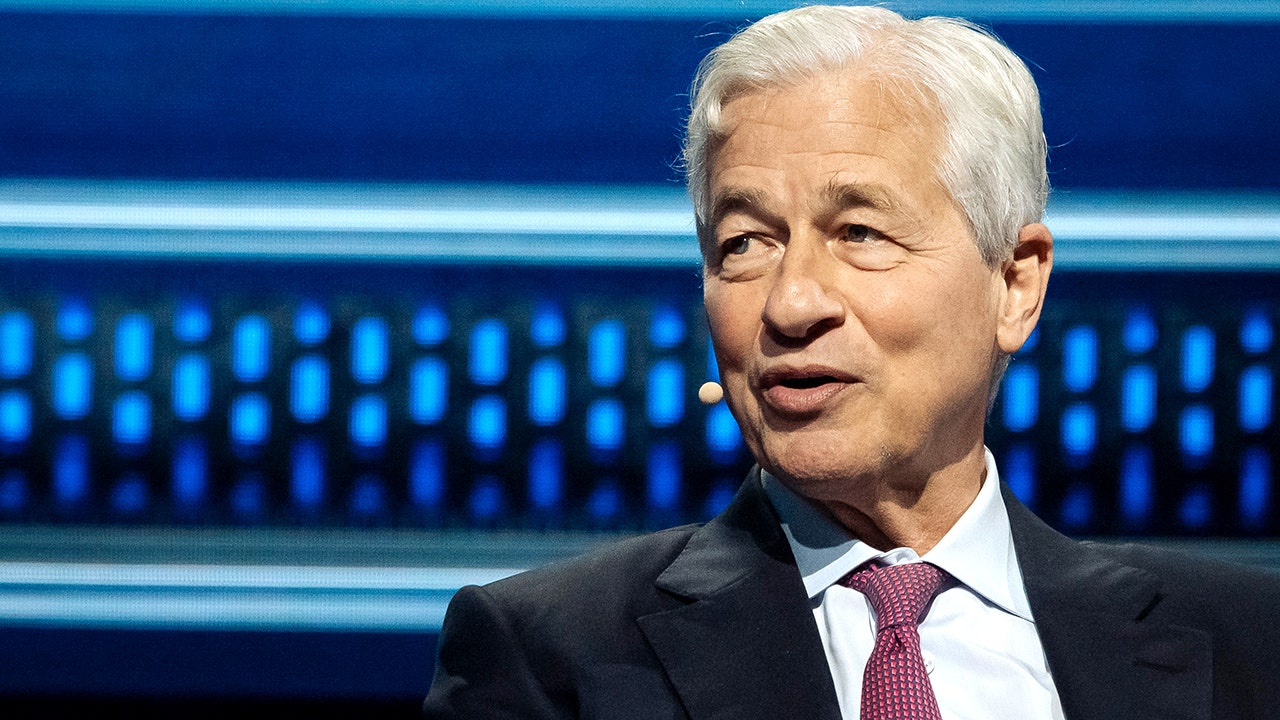
Jamie Dimon says AI won’t ‘dramatically reduce’ jobs in the next year if it’s properly regulated
JPMorgan Chase CEO Jamie Dimon told Fox Business that artificial intelligence is unlikely to cause dramatic job losses over the next year, arguing that AI will initially create more work and productivity gains if governments put proper guardrails in place. Dimon advised workers to focus on critical thinking and interpersonal skills and said it’s up to governments and large corporations to phase in AI in ways that avoid widespread disruption, underscoring how major financial institutions now frame AI as both an economic opportunity and a regulatory responsibility.

Geoffrey Hinton says Google is set to overtake OpenAI in AI race
Geoffrey Hinton, often called the 'godfather of AI', told Business Insider that Google is now beginning to overtake OpenAI, citing the launch of its Gemini 3 model and Nano Banana Pro image generator alongside Google's custom AI chips and deep research bench. The Daily Star highlights Hinton's view that Google's scale, data and hardware stack now give it the edge, suggesting a potential shift in perceived leadership of the frontier-model race away from OpenAI toward Google and Google DeepMind.
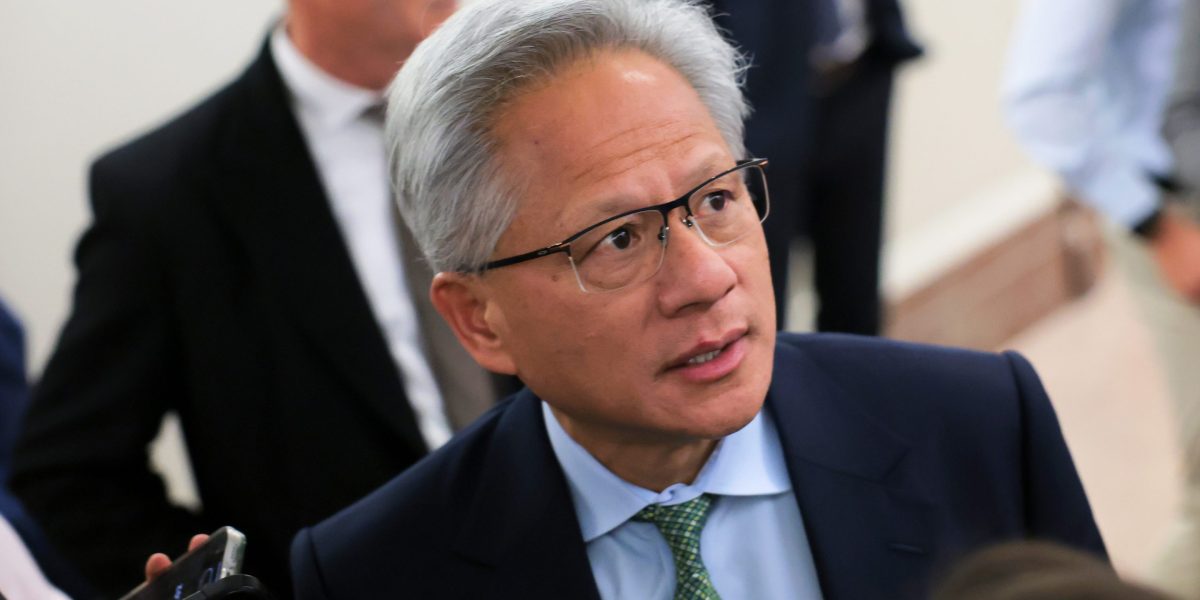
Nvidia CEO Jensen Huang says AI job disruption will be gradual and may spawn ‘robot clothing’ industry
In an interview with Joe Rogan, Nvidia CEO Jensen Huang said he does not expect a sudden wave of AI‑driven layoffs, arguing that jobs built entirely around routine tasks are most at risk while complex roles such as radiology remain more resilient. He predicted AI will also create new lines of work—including technicians who build and maintain AI assistants and even a future “robot apparel” industry—as humanoid robots become more widespread.

Baidu’s Kunlun AI chip unit plans Hong Kong IPO after new funding round
Sources cited by Chinese tech outlet MyDrivers say Baidu’s AI chip subsidiary Kunlunxin has shifted its listing plan from Shanghai’s STAR Market to a Hong Kong IPO, aiming to file as early as Q1 2026 and list in early 2027. The report adds that Kunlunxin recently completed a new funding round valuing the company at about 21 billion yuan (roughly $3 billion) and that its 2024 revenue exceeded 1 billion yuan, surpassing domestic AI chip peers such as Cambricon and Moore Threads, underscoring Baidu’s growing in-house AI hardware capabilities.
Cambricon plans to triple AI chip output to fill Nvidia’s gap in China
Beijing-based Cambricon Technologies is preparing to more than triple production of its AI accelerator chips in 2026, targeting around 500,000 units—including up to 300,000 of its latest Siyuan 590 and 690 processors—in an effort to capture market share left open by U.S. sanctions on Nvidia. The company intends to rely largely on Semiconductor Manufacturing International Corporation’s 7‑nanometre ‘N+2’ process, underscoring how China’s domestic chip ecosystem is scaling to support large‑model training despite export controls.
Trump praises Nvidia CEO Jensen Huang after talks on AI export controls
U.S. President Donald Trump met Nvidia CEO Jensen Huang in Washington to discuss export controls on advanced AI chips and afterwards publicly praised Huang, calling him a "great leader" in technology. The meeting underscores Nvidia’s central role in U.S.–China tech tensions and suggests the company is directly lobbying on how restrictive future AI hardware controls should be.
Nvidia’s Jensen Huang meets Trump on AI chip controls and attacks state-level AI rules
Nvidia CEO Jensen Huang met with President Trump and Republican senators on Capitol Hill to discuss export controls on advanced AI chips, saying he supports federal export control policy but warning against state-by-state AI regulation, which he called a national security risk. Coverage in U.S. and Indian outlets highlights Huang’s push for a single federal AI standard that preserves U.S. competitiveness while allowing Nvidia to continue selling powerful AI processors globally, including to China, under controlled conditions.
Discussion
Key Players
Neutral Impact
This trend has minimal direct impact on AGI timeline
Trump's push for a federal AI regulation is a response to growing concerns over state-level discrepancies. By centralizing control, he aims to streamline innovation while facing backlash from states worried about losing local oversight. This reflects broader tensions between national security and technological advancement in AI policy.
Timeline
13 eventsGoogle commits $8M to AI Centres of Excellence in India
This funding supports multiple AI initiatives in India, indicating a strong commitment to advancing AI in various sectors.
UK government and Google DeepMind launch partnership for AI research
This partnership establishes a significant collaboration between the UK government and Google DeepMind, focusing on advanced AI applications in critical areas.
ByteDance and Alibaba order Nvidia's H200 AI chips
The order for powerful AI chips indicates a significant partnership and demand for advanced technology.
Alibaba creates Qianwen consumer business unit
The formation of a dedicated business unit consolidates AI applications, impacting Alibaba's market strategy.
U.S. to review Nvidia’s H200 AI chips for China
The national-security review complicates exports and reflects significant regulatory action.