This trend is no longer active
This trend was archived on Aug 10, 2026 as it is no longer seeing new developments.
China's AI Ecosystem Embraces Sustainable Integration
Main Take
China is asserting its influence in global AI governance through the establishment of WAICO, which aims to set international standards for AI safety and ethics. This initiative comes amid rising tensions with the U.S. over technology controls, showcasing China's desire to lead the narrative on AI development. The broader implication is a shift in the global AI landscape, where China seeks to align developing nations under its governance framework.
The Story So Far
China is making a bold move in the global AI landscape with the launch of the World Artificial Intelligence Cooperation Organization (WAICO) at the 2026 World AI Conference (WAIC) in Shanghai. This initiative aims to redefine AI governance and promote ethical standards in technology, positioning China as a key player in shaping international norms.
The backdrop to this development includes rising tensions between China and the U.S. over technology controls and AI ethics. President Xi Jinping's call for a 'just and equitable' AI governance system reflects China's desire to counteract what it views as Western overreach in technology regulations. WAICO, with 29 founding nations, is framed as a platform for open-source AI and training opportunities for developing countries, emphasizing collaboration over competition.
Key developments include Xi's announcement of 5,000 AI training slots for developing nations, new application centers, and the deployment of China's MAZU AI weather-warning system to 30 countries. These initiatives signal China's commitment to sharing its AI advancements while also asserting its influence on global governance. Recent regulatory changes, such as tighter rules on anthropomorphic AI and restrictions on overseas access to advanced models, highlight China's dual strategy of promoting AI integration while safeguarding its technological assets.
The stakes are high. China aims to lead in AI governance, which could shift the balance of power in technology. Countries aligning with WAICO may gain access to advanced AI resources, while those outside may struggle to keep pace. As China tightens its grip on AI regulations, the global landscape will likely see increased fragmentation, with nations choosing sides in the emerging tech rivalry.
What to watch next: Monitor how WAICO evolves and whether it attracts more nations, as well as the impact of China's regulatory framework on global AI development.
Who Should Care
Investors should monitor China's AI initiatives as they may open new markets and partnerships.
Research opportunities will expand as WAICO promotes open-source AI and collaborative projects.
Engineers may face new compliance challenges as global AI standards evolve under WAICO's framework.

Related Articles (37)
Shanghai WAIC 2026 reports 203.6B yuan AI procurement
On July 28, 2026, Japan’s JETRO reported that the 2026 World Artificial Intelligence Conference and AI Global Governance High Level Meeting in Shanghai concluded on July 20 with expected procurement deals of about 203.6 billion yuan. Shanghai also announced 32 priority AI projects with total investment exceeding 409 billion yuan and launched China Unicom Shanghai’s UniAI project, which plans to invest more than 25 billion yuan in AI compute infrastructure.

Brazil joins China’s WAICO AI governance bloc as founder
On July 26, 2026, Opera Mundi reported that Brazil has signed on as a founding member of China’s new World Artificial Intelligence Cooperation Organization (WAICO), launched at the WAIC conference in Shanghai. Itamaraty said WAICO, now with 29 member countries, will promote international cooperation on AI development, deployment and risk management from a human‑centric perspective.
WAIC 2026 secures $6B in AI deals and launches global WAICO body
On July 21, 2026, Shanghai’s official portal reported that the 2026 World Artificial Intelligence Conference closed with agreements for 32 AI projects worth over 40.9 billion yuan (about $6.05 billion). The conference also saw the formal establishment of the World Artificial Intelligence Cooperation Organization (WAICO), headquartered in Shanghai.

WAIC 2026 showcases China’s agentic AI phones, robots and edge compute
On July 22, 2026, Xinhua‑sourced coverage of the World Artificial Intelligence Conference (WAIC) described how over 1,100 companies and 300‑plus new products are pushing AI from “talking smart” to “doing real work” across China’s industries. Highlights included agentic AI smartphones, humanoid and logistics robots on factory floors, and large domestic compute clusters and super‑nodes showcased in Shanghai. ([finance.sina.com.cn](https://finance.sina.com.cn/roll/2026-07-22/doc-iniirfss8071449.shtml))
WAIC 2026 unveils global AI agent safety standards and new cooperation bloc
A July 22, 2026 Sina report summarizing the World Artificial Intelligence Conference’s safety forum says organizers unveiled five flagship outputs on AI‑agent risk, including a “Ten Legal Principles for Healthy Agent Services,” the first global operational safety standard for AI agents, and multiple governance blueprints. The article also notes that 29 countries signed an agreement in Shanghai to launch the World Artificial Intelligence Cooperation Organization and adopt joint action plans on AI ethics, interoperability and emergency response. ([k.sina.com.cn](https://k.sina.com.cn/article_7879996427_1d5af340b06801kbf0.html))

WAIC 2026 spotlights embodied AI and industrial world models
Qingdao Daily’s July 20 WAIC 2026 dispatch describes Chinese firms showcasing embodied AI robots and industrial "world models" as AI moves from demos to deployment. Local leaders like Kaos and Extreme Vision unveiled an industrial world model and a 35B-parameter multimodal vision-language model, while robotics and components companies demonstrated long‑duration factory and logistics operations.([dailyqd.com](https://www.dailyqd.com/guanhai/463520_1.html))
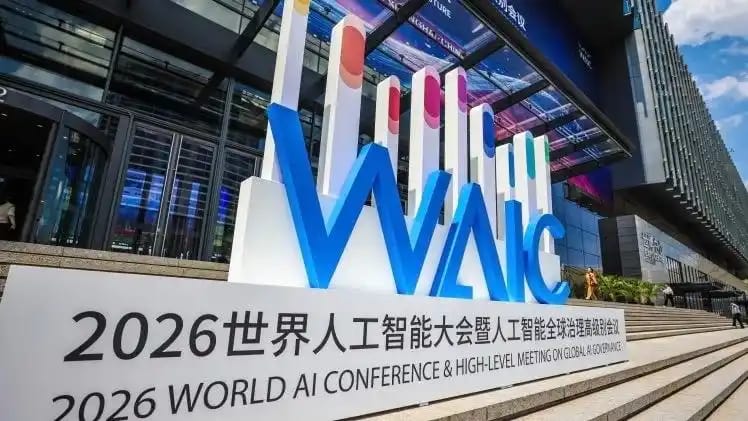
WAIC 2026 showcases China pivot from model race to AI deployment
Momenta Media reports that WAIC 2026 in Shanghai, running July 17–20, has shifted focus from ever-larger models to commercial deployment of AI agents, humanoid robots and domestic compute systems. Exhibits from Alibaba Cloud, Tencent, Baidu, Huawei and others emphasized real-world workflows, supernode clusters and AI-native devices like agentic smartphones and glasses. ([momenta.media](https://www.momenta.media/article/waic-2026-signals-china-s-ai-industry-is-shifting-from-model-race-to-commercial-deployment))

WAIC 2026 forum launches China-wide standards for AI agents
At WAIC 2026 in Shanghai, China’s Ministry of Industry and Information Technology and the China Academy of Information and Communications Technology hosted a forum on moving from large models to AI agents on July 18, reported July 19 local time. The event announced five major initiatives, including an interconnection and governance manifesto for AI agents, a safety protocol (ASL), and a terminal agent evaluation platform co-developed with firms such as Huawei, Alibaba, Ant Group and China’s big telecom operators. ([ex.chinadaily.com.cn](https://ex.chinadaily.com.cn/exchange/partners/82/rss/channel/cn/columns/h72une/stories/WS6a5cb114a310d709c2fbe529.html))

WAIC and WAICO put China at center of global AI governance push
A July 20 Xinhua/People’s Daily report highlights global experts praising Shanghai’s 2026 World AI Conference and the launch of the World Artificial Intelligence Cooperation Organization (WAICO) as a platform for inclusive AI governance. Pakistani newspaper Dawn, in an op‑ed the same day, frames WAICO as China’s bid to shape AI standards for the Global South and notes Pakistan joined 29 founding states.([en.people.cn](https://en.people.cn/n3/2026/0720/c90000-20479409.html))

Xi Jinping pushes global AI governance and launches WAICO bloc
An Associated Press story carried by News.net on July 18, 2026 reports that Chinese President Xi Jinping used the World Artificial Intelligence Conference in Shanghai to call for “global cooperation” on AI and criticize US technology controls. The article notes that 29 countries have signed an agreement with China to create the World Artificial Intelligence Cooperation Organization (WAICO) as a new AI governance body.
China’s WAICO bid to redefine global AI governance and open‑source norms
At the World Artificial Intelligence Conference in Shanghai on July 17, 2026, Xi Jinping announced the formal launch of the World Artificial Intelligence Cooperation Organization (WAICO), an intergovernmental AI body headquartered in Shanghai with 29 founding nations. China and partner governments framed WAICO as a platform to promote open‑source AI, provide 5,000 training slots and new AI application centers for developing countries, and counter what Beijing calls US ‘overstretching’ of national‑security‑based tech restrictions.([en.people.cn](https://en.people.cn/n3/2026/0717/c90000-20478940.html?utm_source=openai))

Xi Jinping stakes China’s claim on global AI governance at WAIC
On July 17, 2026, President Xi Jinping used his keynote at the World AI Conference in Shanghai to call for a “just and equitable” global AI governance system and oppose the overuse of national security claims in AI. He announced the formation of the World AI Cooperation Organization (WAICO), 5,000 AI training slots for developing countries over five years, new international AI application centers and wider deployment of China’s MAZU AI weather-warning system to 30 countries.
Xi launches World AI Cooperation Organization at Shanghai WAIC 2026
On July 17, 2026 in Shanghai, President Xi Jinping opened the 2026 World AI Conference and announced the creation of the World Artificial Intelligence Cooperation Organization. In his keynote, he outlined four principles for AI development and pledged 5,000 AI training and seminar opportunities for developing countries over the next five years.
China’s WAIC 2026 puts ‘AI for good’ and global governance at center stage
On July 16, 2026, Xinhua published an official commentary ahead of the 2026 World AI Conference in Shanghai, where President Xi Jinping will give a keynote on China’s AI policies and global governance vision. The piece frames AI as a strategic technology and calls for people‑centric, globally coordinated rules that ensure AI is 'beneficial, safe and fair.'

China sets WAIC 2026 AI summit with global governance focus
On July 13, 2026, China’s Ministry of Foreign Affairs announced that the 2026 World Artificial Intelligence Conference and a high‑level meeting on global AI governance will be held in Shanghai from July 17–20. The notice highlights diplomatic engagement around AI standards and governance ahead of the event.

China spotlights ‘AI for good’ and WAIC 2026 as it courts global AI leadership
On July 13, 2026, Sina Finance highlighted five themes for the World Artificial Intelligence Conference (WAIC) 2026, opening July 17–20 in Shanghai, emphasizing “intelligence, hard tech, experience, youth and governance” and positioning the city as China’s AI hub. The same Sina digest summarized recent UN AI governance meetings in Geneva, where Chinese delegations showcased AI robots, the PixVerse video model and the “Three‑Body Constellation” space computing infrastructure, framing China’s approach as promoting beneficial and inclusive AI.

China tightens AI rules on ethics, agents and anthropomorphic chatbots
On July 8, 2026, the IAPP highlighted three recent Chinese regulatory moves: binding 'Interim Measures' for anthropomorphic AI services taking effect July 15, new national standards for AI agents, and updated ethics guidance. The rules target emotionally humanlike AI companions and autonomous agents, imposing identity labelling, content limits, and stricter security and governance obligations.

Alibaba and Anthropic clash over Claude Code China backdoor
On July 9, 2026 at 01:32 AM IST, AI FrontPage reported that Alibaba has internally banned Anthropic’s Claude Code tool for work use from July 10, classifying it as high‑risk software after alleged backdoor behavior. China’s MIIT NVDB platform issued a July 8 risk advisory stating that Claude Code versions 2.1.91–2.1.196 could send user location and identity information to remote servers without consent. Anthropic acknowledged the telemetry logic as an anti‑abuse experiment and said it had been removed in early July. ([aifront-page.com](https://aifront-page.com/inside-claude-code-dispute-alibaba-anthropic/))
China outlines ‘AI + human resources’ plan with 2030 adoption goals
On July 8, 2026, Yahoo Finance Hong Kong reported new mainland guidelines to accelerate 'AI + human resources and social security' applications. The plan targets AI infrastructure and 20 model‑based use cases by 2026, around 50 high‑value scenarios by 2027, and widespread AI use in the sector by 2030.

China weighs limits on overseas access to advanced AI models
Chinese authorities have held meetings with firms including Alibaba, ByteDance and startup Z.ai about potentially restricting overseas access to China’s most advanced AI models, according to people briefed on the talks. Proposals reportedly include treating leaks of AI technology as national security offences and limiting who can fund Chinese AI startups.

Beijing weighs curbs on overseas access to leading Chinese AI models
Reuters reports that China’s commerce ministry has held recent meetings with firms including Alibaba, ByteDance and startup Z.ai about limiting overseas access to their most advanced AI models. Proposals discussed include treating leaks or theft of AI technology as national security offenses and tightening rules on foreign funding of Chinese AI startups.

China tightens rules on AI companions and bans youth ‘AI girlfriends’
Indian Express reports that major Chinese platforms will disable customizable persona features in chatbots by July 15, 2026 to comply with new anthropomorphic AI rules. The crackdown targets AI companion apps and imposes stricter protections for minors using virtual romantic or family relationships.

China’s ‘AI+’ push touts AI as new growth engine across real economy
On July 6, 2026, China Securities Journal, via Xinhua, reported that central and local authorities are intensifying ‘AI+’ policies to weave AI into consumer services, transport and manufacturing, portraying it as a new growth driver. The article cites booming demand for AI‑enabled electronics, rapid uptake of AI travel and e‑commerce assistants, and policy moves to support ‘one‑person companies’ powered by AI tools.

China tightens child AI safety as avatar rules near
On July 6, 2026, China’s Economic Daily argued that AI safety for children has become urgent, citing UNICEF data that at least 20 million children worldwide already use AI and that teens are adopting it three times faster than adults. The column highlights China’s new Interim Measures on AI Anthropomorphic Interaction Services, which take effect on July 15 and will ban virtual relatives or companions for minors and require youth modes and time limits.
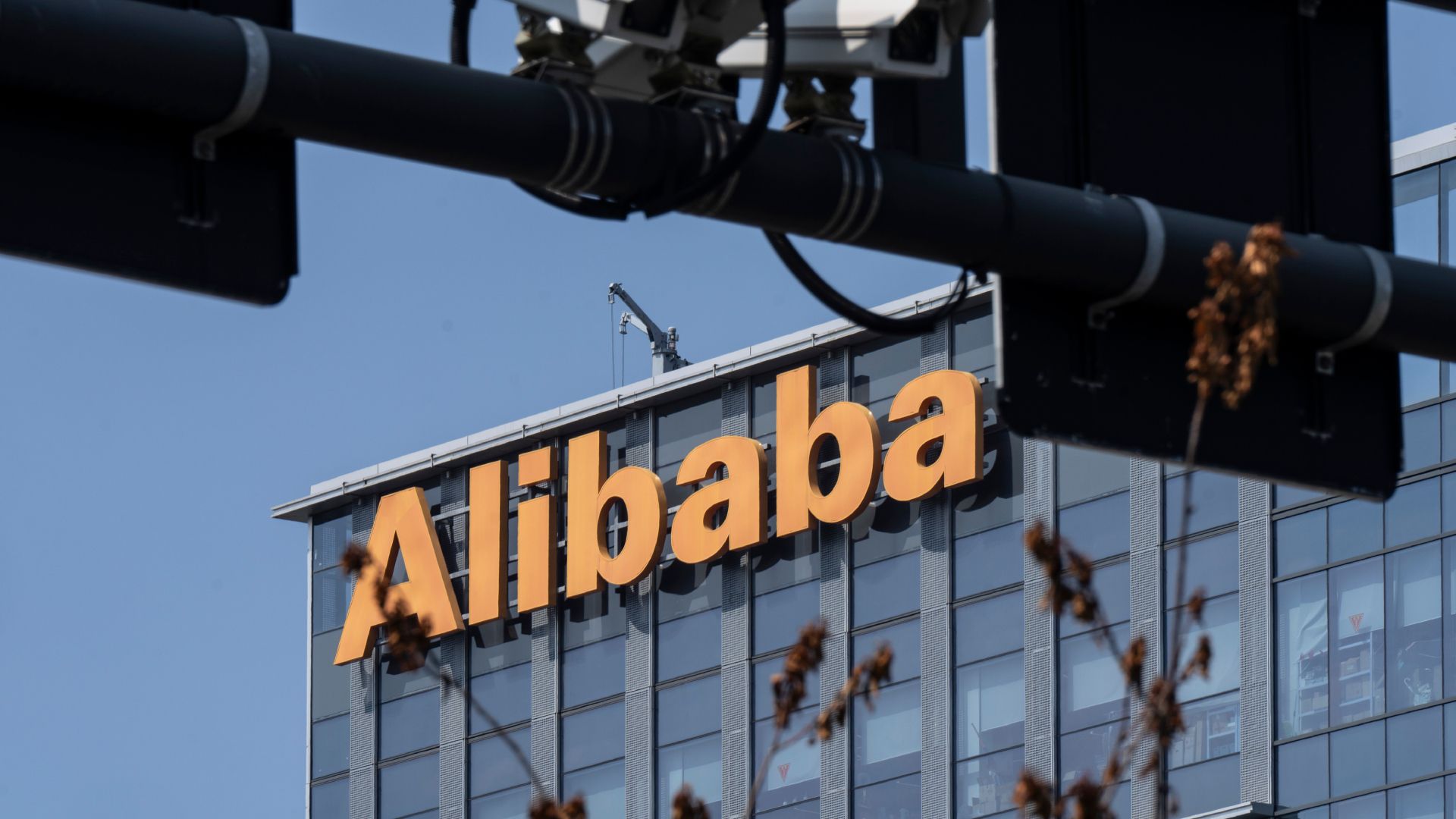
Alibaba bans Claude Code over AI backdoor and China tracking fears
Alibaba is banning employees from using Anthropic’s Claude Code coding agent from July 10, classifying it as high‑risk software. The move follows reports that Claude Code contained hidden logic to detect China‑linked users, which Anthropic says was an anti‑abuse experiment it is now removing.

China’s AI agent rules force Doubao and Qianwen to axe smart personas
Taiwan’s United Daily News reports that ByteDance’s Doubao and Alibaba’s Qianwen AI assistants will shut down their user‑configured agent features on July 15, 2026. The move comes ahead of China’s new “interim measures” on AI anthropomorphic interaction services, which tightly restrict emotionally engaging, human‑like AI companions.
China forum urges tighter AI risk controls in digital finance boom
Economic Daily, via Sina Finance, reports from the 2026 Global Digital Economy Conference’s digital finance forum that Chinese bankers and regulators see AI agents rapidly reshaping core financial workflows. Speakers warned of algorithmic hallucinations, discrimination, data leaks and systemic risk, and pointed to new guidance from the National Financial Supervision Administration on safe AI development in banking and insurance.
China elevates AI to core national strategy in post‑market policy note
On June 30, 2026, a commentary on Eastmoney reported that China’s State Council had held a special executive meeting on June 29 focused on AI development, framing AI as a key national strategic sector. The article highlights directives to accelerate breakthroughs in AI chips and other “chokepoint” technologies, build ultra‑large compute clusters, and expand “AI+” applications across industries.
China outlines the next decade of AI: from AGI to embodied robots and industrial deployment
A feature in Sina Finance, sourced from China Youth Daily, sketches China’s AI roadmap for the next 10 years, emphasizing the push toward artificial general intelligence (AGI), embodied intelligence in humanoid robots, and large-scale deployment of AI agents across industries. Turing Award winner Andrew Yao (Yao Qizhi) and other experts argue that progress in embodied robots, scientific AI and safety governance will be key to reaching AGI, while industry voices from firms like Unitree and Alibaba Cloud stress that better data infrastructure, intelligent terminals and repeatable deployment patterns are needed for AI to truly scale in manufacturing and services. ([finance.sina.cn](https://finance.sina.cn/2025-12-08/detail-infzzuit2029380.d.html))

Chinese cybersecurity symposium spotlights generative AI safety and data‑driven policing
The Fourth Cybersecurity Research and Development Symposium, held at Jiangxi Police College, focused heavily on generative AI safety, protection of critical information infrastructure and training specialized data‑policing talent. Speakers from police, academia and research institutes described how generative AI can both strengthen capabilities—such as encrypted traffic detection, malware analysis, vulnerability management and threat intelligence—and introduce new risks that require integrated 'professional + mechanism + big data' approaches, underscoring China’s effort to embed AI governance and security into law‑enforcement practice.

China opens 2025 Tengchong Scientist Forum on ‘Science and AI Changing the World’
The 2025 Tengchong Scientist Forum opened in Yunnan with the theme “Science · AI Changing the World”, gathering hundreds of leading scientists, university heads and entrepreneurs to discuss AI’s role in reshaping research and industry. At the event, China released its first systematic "Technology Foresight and Future Vision 2049" report, which identifies areas including artificial intelligence and general-purpose robots as among ten key technology visions for a 2049 human–machine coexisting smart society.

Greater Bay Area bets on AI ‘alchemy’ with dense supply chain and aggressive policy support
An in-depth feature from 21st Century Business Herald describes how the Guangdong–Hong Kong–Macao Greater Bay Area, especially Shenzhen, is cultivating an AI and robotics cluster via fast government decision-making, open real-world deployment scenarios and a highly concentrated hardware supply chain. Local AI firms in chips, robots, lidar and enterprise AI say policies such as "compute vouchers", data subsidies and full-city scenario openness are helping them iterate quickly and expand globally, positioning the Bay Area as a leading testbed for applied AI rather than just model development.

China’s Boao conference promotes ‘AI+’ integration with the real economy
At the 2025 Digital-Intelligence Technology Innovation Development Conference in Boao, Hainan, Chinese officials, academics and industry leaders discussed how “AI+” applications can drive industrial upgrading, with sessions on AI policy, technical trends and large-scale deployment across manufacturing, transportation and services. The event, organized by Xinhua and partners, highlighted the need to combine AI with 5G/6G, industrial IoT and robotics while building governance and security frameworks to manage risks from deep integration of AI into the real economy. ([wxb.xzdw.gov.cn](https://wxb.xzdw.gov.cn/xxh/xxhgzdt/202512/t20251205_629870.html))
Boao conference promotes 'AI+' integration across Chinese industries
Xinhua reports that the 2025 Digital Intelligence Technology Innovation Development Conference opened in Boao, Hainan, under the theme “AI empowers, leading new quality,” with a focus on integrating artificial intelligence into traditional and emerging industries. The state-backed event, part of a broader enterprise forum series, brought together policymakers, researchers and companies to discuss AI policy direction, technology iteration, application scenarios and ecosystem building as China seeks to use "AI+" to upgrade its industrial base.
People’s Daily urges 'long-termist spirit' in China’s AI development
An opinion piece in China’s People’s Daily argues that developing artificial intelligence requires a “long-termist spirit,” urging Chinese entrepreneurs to focus on foundational research, talent cultivation, and resilient industrial chains rather than short-term hype. The article frames AI as a strategic technology for national rejuvenation and calls for coordinated efforts across government, academia and industry to build sustainable advantages.
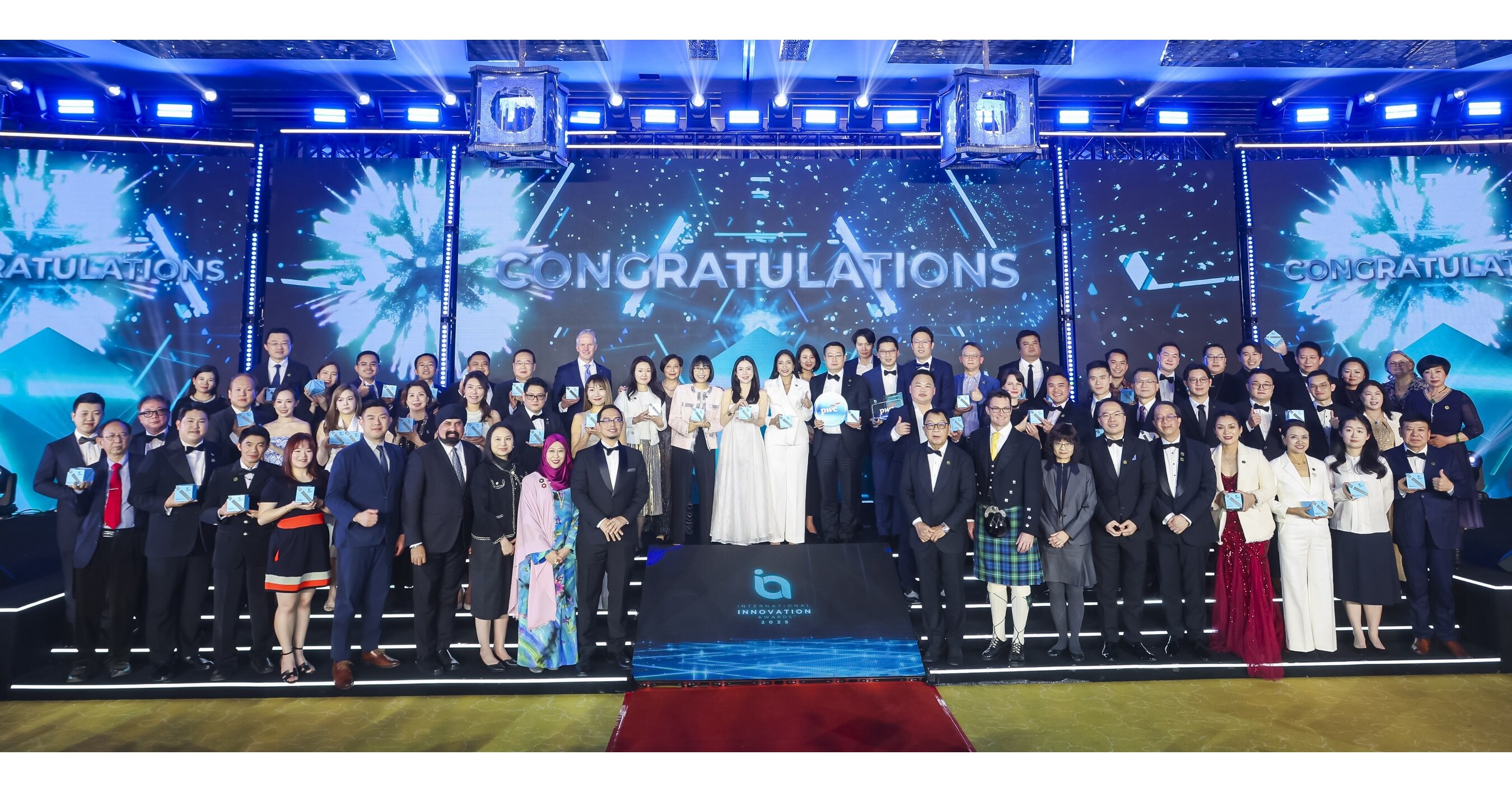
International Innovation Awards 2025 spotlight AI and sustainability breakthroughs
Enterprise Asia’s International Innovation Awards 2025 in Shanghai honored products and services that blend advanced technology, including AI, with sustainability and long-term transformation goals. Winners included AI- and automation-heavy initiatives such as ABB’s Accelerator program and PwC’s “agentic-native” audit ecosystem, reflecting how large incumbents are embedding AI into industrial, financial and smart city applications across more than 20 countries.
China’s 2025 Sensor Conference showcases AI applications built on smart sensing
At the 2025 Sensor Conference in Zhengzhou, Chinese firms demonstrated AI products built on advanced sensor components, including intelligent robots using locally produced sensors. Exhibitors such as Hanwei Technology highlighted how domestic sensor ecosystems are enabling new AI applications across industrial and consumer scenarios, reflecting China’s push to strengthen hardware foundations for AI.
Discussion
Key Players
Advances AGI Timeline
This trend may accelerate progress toward AGI
China is asserting its influence in global AI governance through the establishment of WAICO, which aims to set international standards for AI safety and ethics. This initiative comes amid rising tensions with the U.S. over technology controls, showcasing China's desire to lead the narrative on AI development. The broader implication is a shift in the global AI landscape, where China seeks to align developing nations under its governance framework.
Timeline
21 eventsShanghai WAIC 2026 reports 203.6B yuan AI procurement
The reported procurement deals of about 203.6 billion yuan indicate a significant milestone in AI investment.
Brazil joins China’s WAICO AI governance bloc as founder
Brazil's founding membership in WAICO represents a significant partnership in international AI governance.
WAIC 2026 secures $6B in AI deals and launches global WAICO body
The securing of $6 billion in AI deals at the conference is a major financial milestone.
WAIC 2026 unveils global AI agent safety standards and new cooperation bloc
The introduction of global safety standards for AI agents is a significant milestone in AI governance.
WAIC 2026 showcases new AI products and technologies
The unveiling of over 300 new AI products at WAIC 2026 marks a notable product launch event.