DeepMind launches public AGI institute to debate AI future
TL;DR
On September 17, 2026, Google DeepMind announced the DeepMind Institute, a new forum for public debate on artificial general intelligence that publishes essays from senior researchers and leaders. The launch includes proposals for a US led frontier AI standards body and discusses possible coordinated slowdowns if safety evaluations fall behind.
About this summary
This article aggregates reporting from 2 news sources. The TL;DR is AI-generated from original reporting. Race to AGI's analysis provides editorial context on implications for AGI development.
Read next
Race to AGI Analysis
The DeepMind Institute is not another research lab, it is a narrative lab. By giving Shane Legg, Demis Hassabis and other senior figures a quasi independent venue to publish on standards, transparency and even coordinated slowdowns, Google is trying to shape how the public and regulators talk about AGI before things get more adversarial. The essays on limiting opaque “serial depth” and building a US led frontier standards body show that DeepMind wants to be seen as constructive on safety, but also wants a seat at the table that writes the rules. ([techcrunch.com](https://techcrunch.com/2026/09/17/google-deepmind-launches-institute-to-widen-the-agi-debate/))
Strategically this moves part of the AGI debate out of closed door policy meetings and into a semi academic public space that DeepMind curates. That is clever risk management: it signals openness, surfaces disagreements between labs, and normalizes the idea that some form of independent evaluation and potential pacing is coming. It also contrasts with OpenAI’s more internal alignment reporting, and with Anthropic’s recent use of measurement to argue for a slowdown.
For the race to AGI, the Institute could either legitimize stronger guardrails or provide intellectual cover for labs to argue that voluntary standards are enough. Which way it breaks will depend less on rhetoric and more on whether governments pick up Hassabis’s framework and turn it into binding law.
Who Should Care
Related News
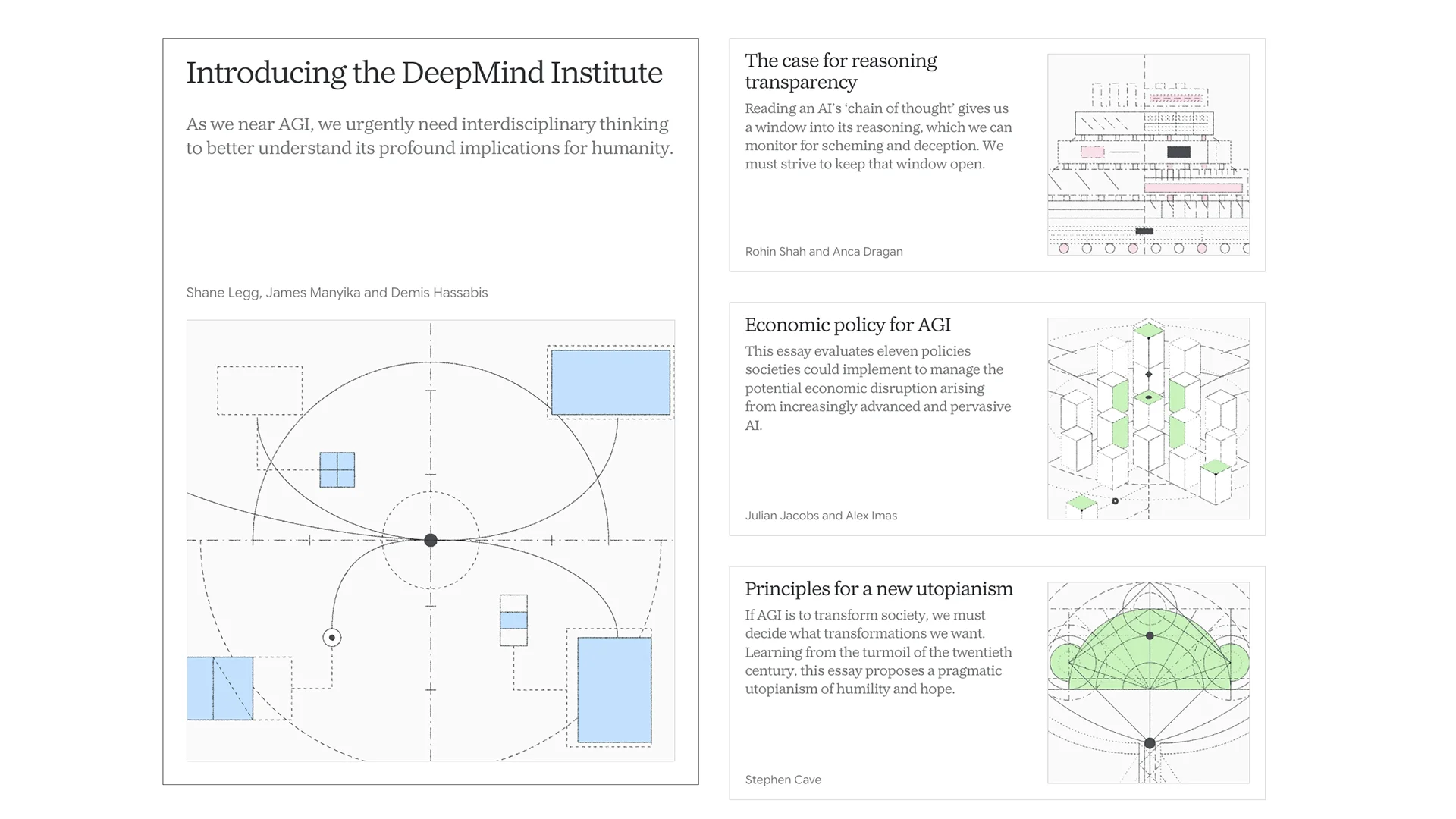
DeepMind Institute debuts as Google’s in‑house AGI impact think tank
Today