Fourier GR Nano robot debuts as emotional AI desktop companion
TL;DR
Fourier Intelligence unveiled its GR Nano desktop social robot at WAIC 2026 in Shanghai on July 19, 2026, positioning it as a personal emotional companion device for consumers. The GR Nano made its global debut alongside the company’s GR Mini humanoid robot and GRW dual‑arm wheeled robot, expanding Fourier’s portfolio from industrial and service robots into everyday personal use.
About this summary
This article aggregates reporting from 1 news source. The TL;DR is AI-generated from original reporting. Race to AGI's analysis provides editorial context on implications for AGI development.
Read next
Race to AGI Analysis
Fourier’s GR Nano marks a notable shift in embodied AI from factory floors and showrooms onto ordinary desks. By explicitly framing the device as a “personal emotional companion” rather than a productivity tool, the company is betting that mainstream adoption of embodied AI will begin with affective use‑cases: companionship, micro‑interactions and low‑stakes social presence. That’s strategically important, because emotional engagement yields dense, longitudinal interaction data—exactly the kind of signal future agentic systems can learn from.([xhby.net](https://www.xhby.net/content/s6a5c5da4e4b0b0018d773a10.html))
The launch also shows how Chinese robotics firms are building full product stacks across industrial, commercial and consumer tiers. GR Nano sits at the lightest end of a portfolio that includes GR Mini for public spaces and GRW for logistics and care environments, hinting at a unified software and model layer spanning all three. If Fourier can reuse perception, control and interaction models across this fleet, it gains a powerful flywheel: every interaction in a mall or warehouse can help inform better behaviour in a living room, and vice versa. For the broader race to AGI, this is another data point that “general intelligence” may arrive not just in cloud agents, but in networks of increasingly capable, emotionally aware embodied systems.
Who Should Care
Related News

WAIC AI Journey session spotlights next-gen agent architectures
Today
WAIC 2026 showcases China pivot from model race to AI deployment
Today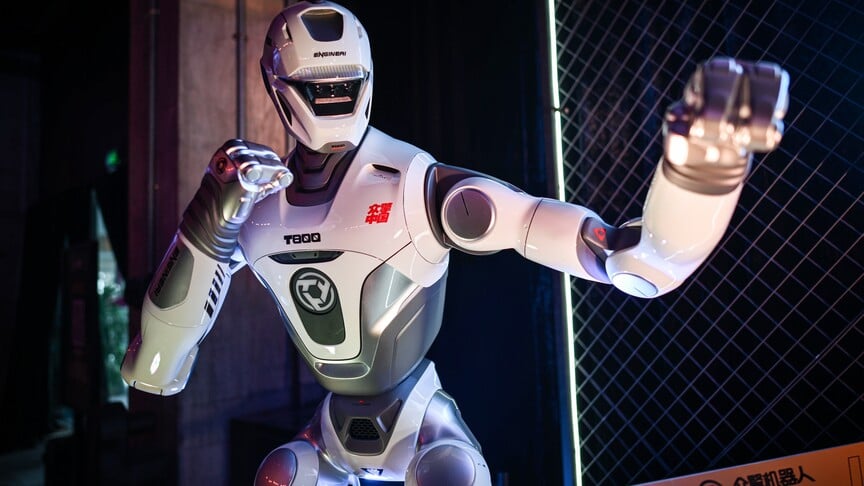
China doubles humanoid robot output to 40,000 in H1 2026
Today