Nvidia’s Jensen Huang: agentic AI will reshape all computing platforms
TL;DR
On June 2, 2026, Nvidia CEO Jensen Huang told reporters in Taipei that the rise of agentic AI—systems that can reason, use tools and act autonomously—is forcing a redesign of everything from PCs and robots to data centers. His comments followed Nvidia’s Computex keynotes unveiling new agentic‑focused chips and platforms.
About this summary
This article aggregates reporting from 1 news source. The TL;DR is AI-generated from original reporting. Race to AGI's analysis provides editorial context on implications for AGI development.
Race to AGI Analysis
Huang’s framing of “agentic AI” as a driver of platform redesign is more than marketing. Nvidia is explicitly betting that future workloads will be long‑running, tool‑using agents that live across cloud, edge, and client devices. That vision justifies everything from RTX Spark PCs to data center systems optimized for massive context windows and continuous inference rather than just one‑off responses. In other words, Nvidia sees the next decade less as a chatbot boom and more as an OS‑level shift toward machines that can coordinate tasks on our behalf.
This matters for AGI because it moves the frontier conversation from static benchmarks to embedded behavior: how do complex, partly autonomous systems behave when they are constantly acting in the world, touching file systems, APIs, and robots? Architectures built for that world will privilege memory bandwidth, fast local storage, and heterogeneous compute over raw FLOPs alone. Huang’s remarks signal that Nvidia intends to be the reference platform for that shift, tightening the feedback loop between model developers and hardware features.
For competitors—whether chipmakers, cloud providers, or labs—the message is clear: staying relevant in the AGI race will require thinking in full‑stack, agent‑centric terms, not just shipping isolated models.
Who Should Care
Companies Mentioned
Related News

China’s Tianjin expo spotlights embodied intelligence and exascale AI
Today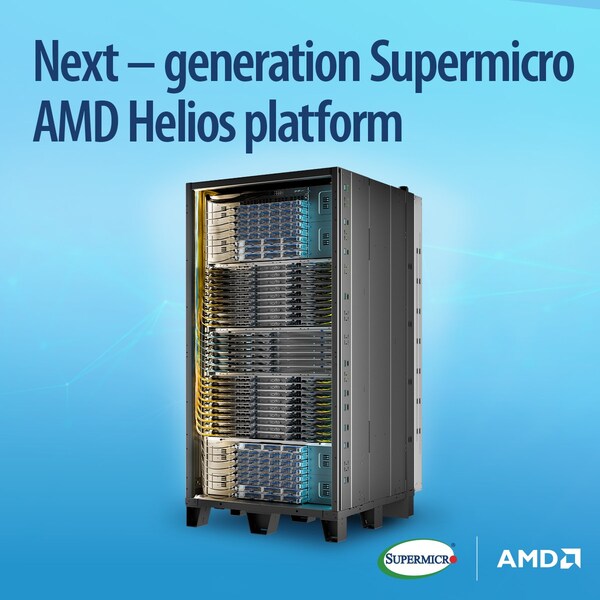
Supermicro and AMD unveil Helios rack-scale platform for agentic AI
Today
Qwen3.7-Plus powers Alibaba multimodal agentic AI model
Today