Google A2UI open protocol lets AI agents generate native interfaces
TL;DR
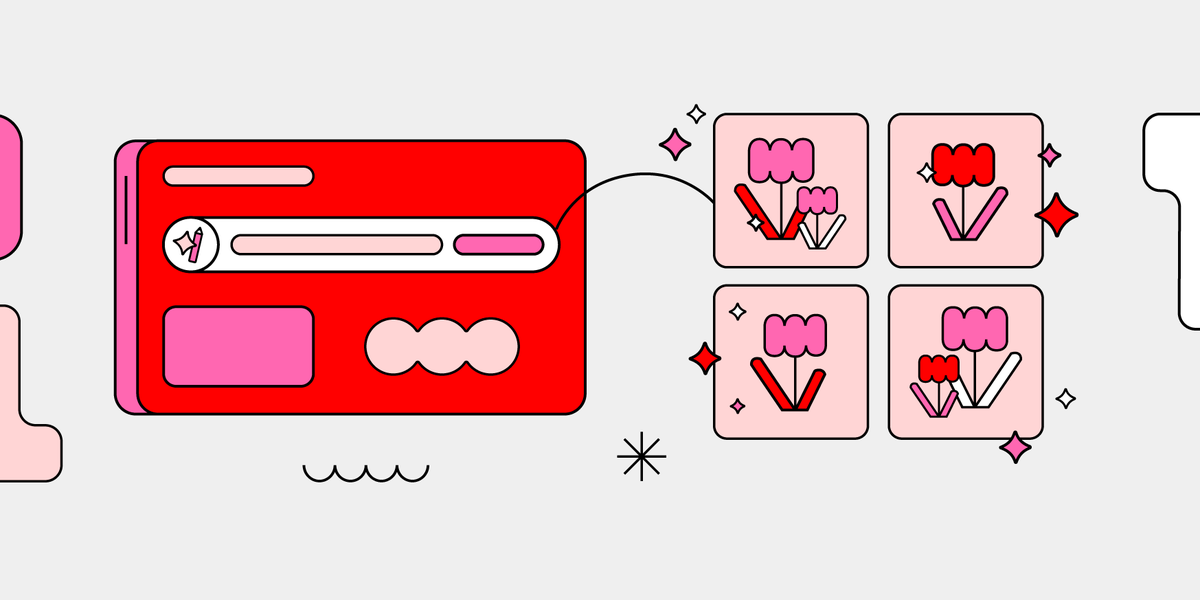
Google’s developer blog introduced A2UI on December 15, 2025 as an open-source specification and libraries allowing AI agents to describe user interfaces in a declarative JSON format. On December 22, MarkTechPost highlighted A2UI’s public release and early integrations in products like Opal, Gemini Enterprise and Flutter’s GenUI SDK.
About this summary
This article aggregates reporting from 2 news sources. The TL;DR is AI-generated from original reporting. Race to AGI's analysis provides editorial context on implications for AGI development.
Race to AGI Analysis
A2UI looks mundane—a JSON spec for user interfaces—but it quietly tackles one of the core bottlenecks in agentic AI: how agents safely and flexibly control rich UIs across platforms. Instead of emitting HTML or code, an agent emits an A2UI description, and the host client renders it with native components. That’s a big deal because serious agents will increasingly need to guide users through complex workflows, not just chat back text.
Strategically, Google is trying to own the “UI layer” of the agent ecosystem in the same way HTTP and HTML defined the web. By donating A2UI as an open standard and wiring it into Gemini Enterprise, Opal, and Flutter’s GenUI SDK, Google is seeding a virtuous cycle: more agents speak A2UI, more client frameworks support it, and it becomes harder for competing proprietary UI protocols to gain traction. For the race to AGI, richer, standardized agent UIs mean faster iteration on complex, multi-step tasks—everything from enterprise workflows to consumer “mini-apps.” That can accelerate real-world deployment and data collection, which in turn feeds back into model training and capability growth. The risk is fragmentation with other emerging UI standards like MCP Apps; whether A2UI wins, coexists, or is subsumed will shape how interoperable the agentic era really becomes.
Who Should Care
Companies Mentioned
Related Deals
DOE signed nonbinding MOUs with 24 AI and compute organizations to apply advanced AI and high-performance computing to Genesis Mission scientific and energy projects.
Google Public Sector and Google DeepMind will provide Gemini-based AI platforms and tools to DOE’s Genesis Mission, giving all 17 U.S. national laboratories secure access to frontier models such as Gemini for Government and the AI co-scientist system.
Waymo is reportedly negotiating a funding round exceeding $15 billion at around a $100 billion valuation to expand its robotaxi operations.
Google and Google DeepMind committed roughly $13.05 million in grants to India’s AI centers of excellence, Wadhwani AI and several Indic‑language AI startups to accelerate AI deployment in health, agriculture, education and smart cities.
OpenAI, Anthropic, Block and major cloud providers are co-founding the Agentic AI Foundation under the Linux Foundation to steward open, interoperable standards for AI agents.
Related News

Google Gemini adds Kazakh language support via local rollout
Today
Tether’s QVAC Genesis II releases 148B-token AI education dataset
TodayHTC bets on open AI smartglasses with multi-model VIVE Eagle
Today