Bioptimus unveils M-Optimus multimodal world model for biology
TL;DR
On December 17, 2025, French startup Bioptimus announced M‑Optimus, a multimodal foundation model trained on millions of patients’ data across more than 50 organ types and hundreds of medical centers. The model unifies histology images, bulk and spatial transcriptomics and clinical data to power digital twins, in‑silico trials and predictive tools for drug discovery and diagnostics.
About this summary
This article aggregates reporting from 3 news sources. The TL;DR is AI-generated from original reporting. Race to AGI's analysis provides editorial context on implications for AGI development.
Race to AGI Analysis
M‑Optimus is a strong example of how “world models” are moving beyond robotics into scientific domains. By jointly modeling histology images, multiple flavors of transcriptomics and clinical records, Bioptimus is trying to build a single representation space that captures how biology behaves across scales—from cells to tissues to whole patients. That’s a very different challenge than predicting the next token in text, and it pushes AI toward more mechanistic, causal understanding of complex systems.
For the broader AGI race, this matters in two ways. First, the techniques required to align and reason over such diverse, noisy biomedical data are directly relevant to building more general multimodal systems. Second, if M‑Optimus delivers, it could compress years of wet‑lab experimentation into faster in‑silico loops, accelerating everything from target discovery to trial design. That shortens the feedback cycles between hypothesis, simulation, intervention and outcome—the same loop that ultimately drives intelligence improvement.
It also shows how frontier models are increasingly being wrapped in domain‑specific platforms and early‑access programs with pharma giants and cloud providers like AWS. That combination of proprietary data, specialist expertise and heavy compute is exactly where we should expect some of the most powerful, least visible AI systems to emerge.
Who Should Care
Companies Mentioned
Related Deals
MBZUAI and AWS entered a multi‑year collaboration to fund AI research, skills programs and startup support in the UAE and broader region.
OpenAI, Anthropic, Block and major cloud providers are co-founding the Agentic AI Foundation under the Linux Foundation to steward open, interoperable standards for AI agents.
Founding members created the Agentic AI Foundation under the Linux Foundation to fund and govern open standards like MCP, goose and AGENTS.md for interoperable agentic AI.
Mantel Group and AWS entered a three‑year strategic collaboration to co‑develop and deploy generative and agentic AI solutions across Australia and New Zealand.
RapidAI and AWS expanded their partnership at RSNA 2025 to co‑develop and scale cloud‑based clinical AI tools for imaging and stroke care.
Related News

Nvidia and SK hynix use AI physics to speed chip design
Today
Gemini 3 Flash brings frontier AI speed to Google search
Today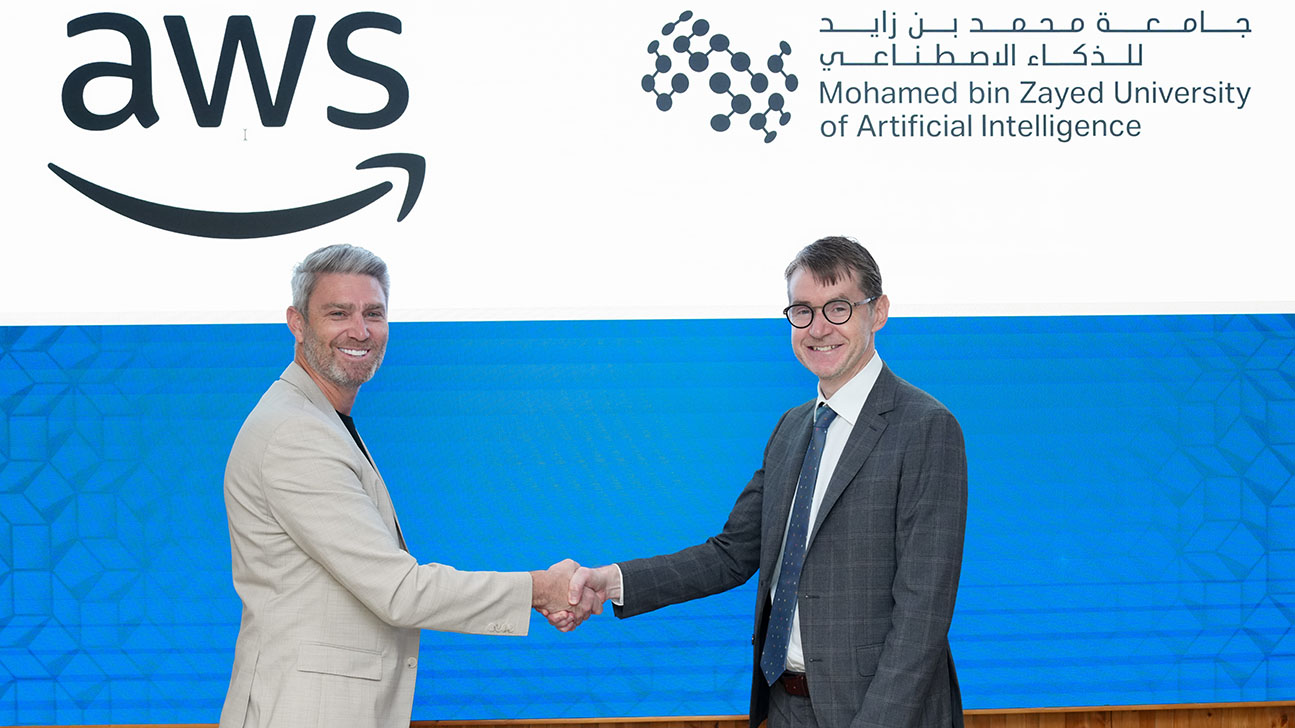
MBZUAI and AWS sign multi-year AI collaboration for research and startups
Today