Huawei HarmonyOS 7 pivots to AI agents and openPangu 2.0
TL;DR
At Huawei Developer Conference 2026, Huawei officially unveiled HarmonyOS 7, positioning it as an “Agent intelligent era” upgrade with a new AI agent framework and expanded cross‑device capabilities. The company also announced openPangu 2.0 with 512K‑token context and plans to open‑source seven components by June 30, alongside deeper integration with Ascend and Kirin hardware.
About this summary
This article aggregates reporting from 1 news source. The TL;DR is AI-generated from original reporting. Race to AGI's analysis provides editorial context on implications for AGI development.
Race to AGI Analysis
HarmonyOS 7 marks Huawei’s most explicit move to reframe its operating system around AI agents rather than just connectivity. By baking an “intelligent agent framework 2.0” into the OS and exposing 20+ AI capabilities as system‑level services, Huawei is trying to make agentic behavior a first‑class primitive for app developers. That matters because the platforms that normalize agents in mainstream consumer and IoT devices will shape how billions of people experience early proto‑AGI behavior.
Equally important is the openPangu 2.0 announcement: a high‑throughput, 512K‑context model stack that Huawei promises to open‑source in modular components tuned for Ascend and Harmony devices. If that roadmap holds, it could give Chinese ecosystem players a locally controlled alternative to Western frontier stacks, particularly for on‑device and edge inference on Kirin‑based hardware. That’s strategically aligned with Beijing’s push for AI self‑reliance and reduces dependence on US‑controlled closed APIs.
For the competitive landscape, HarmonyOS 7 + openPangu 2.0 is Huawei’s answer to Apple’s Apple Intelligence and Google’s Gemini‑integrated Android. We’re seeing a three‑way OS‑plus‑model race where each vendor tries to own both the runtime and the intelligence layer. While none of this alone delivers AGI, it does accelerate experimentation with large‑context, always‑on assistants embedded across phones, appliances, vehicles and robots.
Who Should Care
Companies Mentioned
Related News
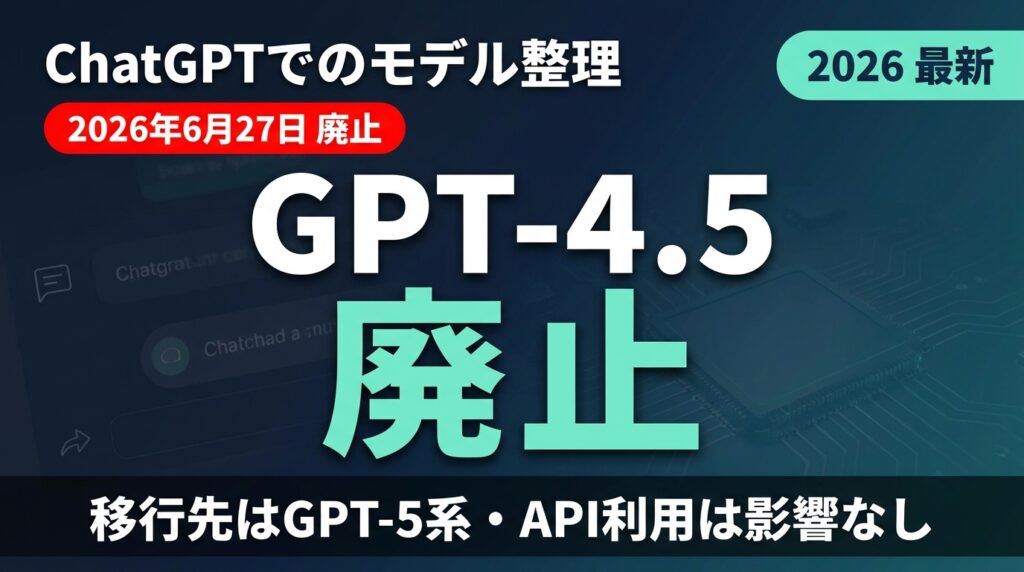
GPT‑4.5 to vanish from ChatGPT as OpenAI standardizes on GPT‑5
Today
Zhipu GLM-5.2 unlocks 1M-token open-source coding model
Today
Rextrix unveils free AI mini‑game generator at SuperAI 2026
Yesterday