Meta workers revolt as AI restructuring reshapes workforce
TL;DR
On June 13, 2026, a multi‑source brief compiled by Let's Data Science reported that Meta’s 2026 AI reorganization has triggered internal protests, after layoffs of roughly 10% of staff and reassignments of thousands of engineers into an ‘Applied AI’ unit. Reporting says employees pushed back against keystroke and screen‑tracking software used to generate training data, prompting Mark Zuckerberg to admit the company had made “mistakes” in the shift.
About this summary
This article aggregates reporting from 3 news sources. The TL;DR is AI-generated from original reporting. Race to AGI's analysis provides editorial context on implications for AGI development.
Race to AGI Analysis
Meta’s AI pivot is enormous in scale—it is effectively rewiring a quarter of one of the world’s largest tech workforces around AI—but this latest wave of internal unrest shows how messy that transition is in practice. For the AGI race, the signal is that Meta is all‑in on becoming an AI‑first company, willing to accept sustained morale damage, protests and reputational hits to feed its models with interaction traces from its own employees and products.
The frictions matter. Instrumenting every engineer’s keyboard and screen to capture data for agents might be efficient on paper, but it also creates privacy concerns, legal exposure (especially in the EU), and cultural pushback that can slow execution. If top talent perceives Meta’s AI units as punitive or extractive, the company could struggle to recruit and retain the very engineers it needs to compete with OpenAI, Anthropic and Google in frontier model development.
At the same time, the size of the Applied AI organization and the scale of its data pipelines underscore Meta’s structural advantage: billions of users, petabytes of behavioral data, and thousands of engineers now tasked with turning that into agent training fuel. If it can resolve the governance and trust issues, that machinery could drive very fast progress on socio‑technical agents—even if the current phase feels like a grinding reorg rather than a clean leap toward AGI.
Who Should Care
Companies Mentioned
Related News
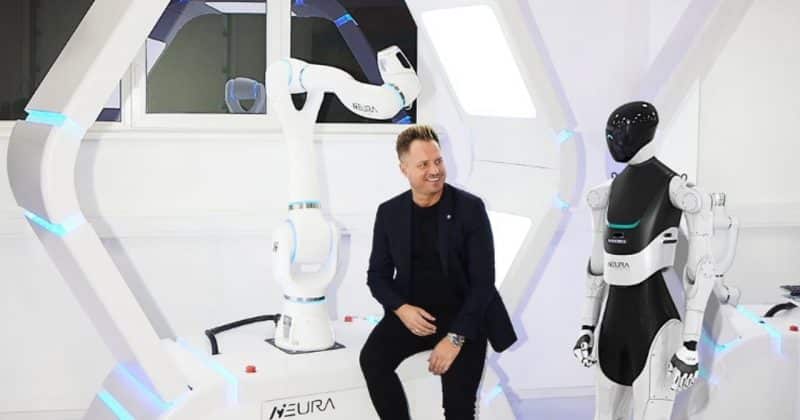
Neura Robotics raises $1.4B to scale humanoid Physical AI
Today
Cognitii founder joins Forbes 30 Under 30 with AI edtech platform
TodayTensorWave raises $350M Series B to scale AMD‑only AI cloud
Today