Samsung Galaxy S26 adds agentic AI and privacy display
TL;DR
On March 6, 2026 Nigeria’s BusinessDay reported that Samsung’s new Galaxy S26 series introduces on‑device ‘agentic AI’ features that can autonomously schedule trips, launch apps and manage reminders based on user intent. The devices also add an AI‑driven privacy display that narrows viewing angles to protect on‑screen content in public.
About this summary
This article aggregates reporting from 1 news source. The TL;DR is AI-generated from original reporting. Race to AGI's analysis provides editorial context on implications for AGI development.
Race to AGI Analysis
The Galaxy S26 coverage from Nigeria underlines how fast ‘agentic AI’ is moving from lab demos into mainstream consumer hardware. Samsung is pitching not just better autocomplete or camera modes, but phone‑resident agents that can string together actions—booking trips, launching workflows, screening calls—based on inferred intent. Paired with privacy‑preserving displays and on‑device processing, this points toward a future in which agentic behavior isn’t confined to cloud assistants but runs continuously on personal devices.([businessday.ng](https://businessday.ng/technology/article/samsung-galaxy-s26-combines-agentic-ai-privacy-technology-in-next-gen-smartphone/))
For AGI timelines, pervasive edge agents matter because they dramatically expand the surface area where semi‑autonomous systems learn from and act on human routines. A phone that constantly observes context and executes tasks gives model builders fine‑grained data about preferences, habits and local environments, even if much of the computation remains on device. That ecosystem—tens of millions of agent‑capable smartphones—could become a training ground for more general, long‑horizon agents.
Strategically, this is also a reminder that Korean and hardware‑first players will be important in the AGI race. If Samsung can successfully bundle agentic capabilities, privacy features and partnerships with model providers like Google into mass‑market devices, it can shape user expectations of what everyday AI should feel like—putting pressure on Apple and Chinese OEMs to respond.
Who Should Care
Companies Mentioned
Related News

OpenAI GPT-5.5 ‘Spud’ leaks hint at omnimodal, agentic frontier model
2 weeks agoDeepSeek V4 to run fully on Huawei Ascend AI chips
2 weeks ago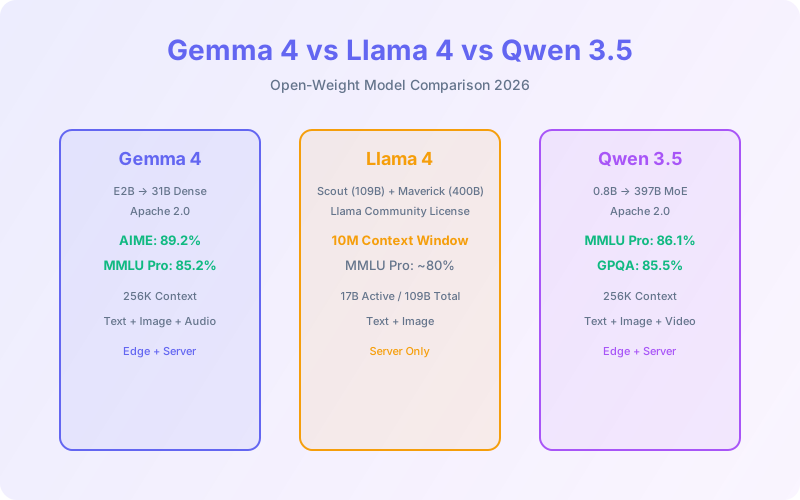
Gemma 4 vs Llama 4 vs Qwen 3.5 open-weight AI showdown
2 weeks ago