Huawei unveils AI Education Center solution at MWC 2026
TL;DR
Huawei announced its AI Education Center (AIEC) Solution for basic education on March 6, 2026 at an ‘Education + AI’ summit during MWC Barcelona 2026. The new offering combines hardware, model services and an AI teaching and lab management platform to bring general AI education into primary and secondary schools.
About this summary
This article aggregates reporting from 1 news source. The TL;DR is AI-generated from original reporting. Race to AGI's analysis provides editorial context on implications for AGI development.
Race to AGI Analysis
Huawei’s AIEC solution underscores how quickly AI literacy is being pushed into core education systems, not just elite universities or coding bootcamps. By bundling compute, model services and a managed teaching platform, Huawei is trying to become the default AI lab provider for education ministries that lack in‑house expertise but want to show progress on “AI‑ready” workforces. If it succeeds across multiple countries, that would normalize hands‑on use of generative and agentic AI from an early age.([prnewswire.com](https://www.prnewswire.com/news-releases/huawei-launches-ai-education-center-aiec-solution-302706496.html))
From an AGI perspective, the short‑term effect isn’t about new algorithms—it’s about scale and normalization. Millions of students learning to treat AI systems as everyday lab tools will increase the pool of future engineers, prompt designers and product thinkers who are comfortable orchestrating large, semi‑autonomous systems. That human capital is as important to the AGI race as GPUs. It also entrenches Huawei as a key infrastructure provider in education, deepening its relationships with governments in emerging markets and potentially shaping how those states think about AI governance and data.
In competitive terms, this is a reminder that the AI stack includes curriculum and pedagogy. US and European vendors who focus only on cloud APIs and ignore turnkey educational offerings may find themselves shut out of the next generation of AI‑native users in parts of Asia, Africa and Latin America.
Who Should Care
Companies Mentioned
Related News

OpenAI GPT-5.5 ‘Spud’ leaks hint at omnimodal, agentic frontier model
2 weeks agoDeepSeek V4 to run fully on Huawei Ascend AI chips
2 weeks ago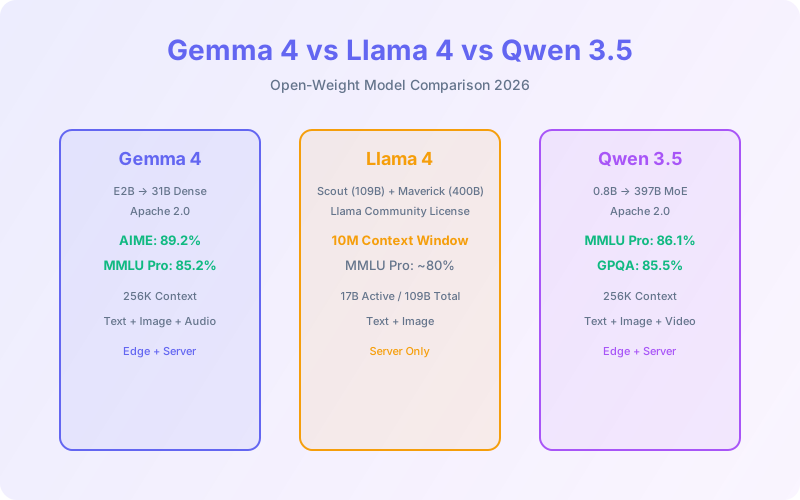
Gemma 4 vs Llama 4 vs Qwen 3.5 open-weight AI showdown
2 weeks ago