SPC unveils ZEUS HALO AI telecare platform for elderly at MWC 2026
TL;DR
On March 4, 2026, Spanish consultancy SPC presented ZEUS HALO, an AI‑based teleassistance platform for elder care, at Mobile World Congress in Barcelona. The system uses predictive AI to analyze behavior and mobility patterns via a tablet hub and generate early risk alerts and social engagement suggestions for seniors.
About this summary
This article aggregates reporting from 1 news source. The TL;DR is AI-generated from original reporting. Race to AGI's analysis provides editorial context on implications for AGI development.
Race to AGI Analysis
ZEUS HALO is a good illustration of how today’s narrow AI is being wrapped into highly specific, socially sensitive products. Elder care is one of the sectors most likely to see early, large‑scale deployment of AI agents: populations are aging fast, chronic conditions are rising, and human caregivers are scarce. By combining always‑on sensing with predictive models and voice‑based companionship, platforms like this aim to shift from reactive alarm systems to proactive risk management and social connection.
From an AGI‑race perspective, elder‑care teleassistance is less about cognitive breakthroughs and more about normalization. As seniors and their families come to accept AI as a co‑resident in the home—monitoring routines, prompting activity, even matchmaking group outings—it becomes easier to imagine richer agentic systems sharing intimate spaces with humans. That in turn fuels demand for better long‑horizon planning, value alignment and personalization in the underlying models.
Strategically, smaller European players like SPC are leveraging generic AI capabilities from big labs but differentiating on domain knowledge, UX and integration with local health and social care networks. If they can show that AI‑driven telecare improves outcomes without eroding dignity or privacy, they may define de‑facto standards for how assistive agents behave—standards that will matter if and when more general intelligences enter similar roles.
Who Should Care
Related News

OpenAI GPT-5.5 ‘Spud’ leaks hint at omnimodal, agentic frontier model
1 weeks agoDeepSeek V4 to run fully on Huawei Ascend AI chips
1 weeks ago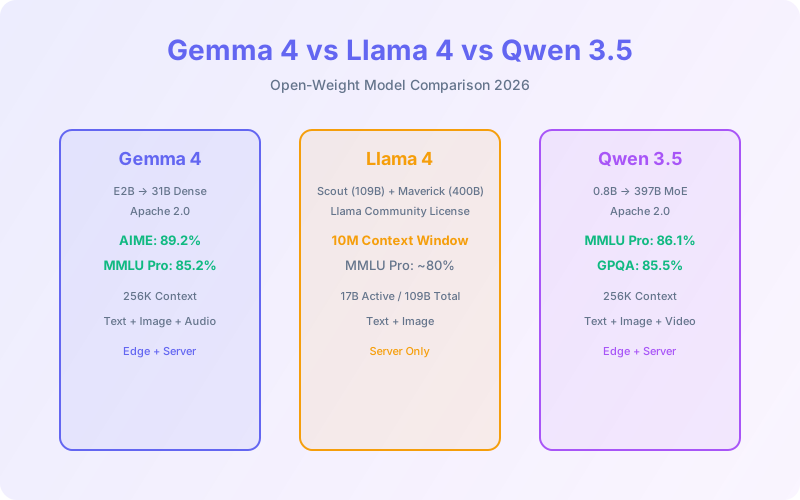
Gemma 4 vs Llama 4 vs Qwen 3.5 open-weight AI showdown
1 weeks ago