IBM unveils FlashSystem.ai to bring agentic AI into enterprise storage
TL;DR
On February 10, IBM announced a new FlashSystem portfolio and FlashSystem.ai, a suite of agentic AI data services that act as co‑administrators for storage arrays. The company says the system can automate many tuning and security tasks, cut manual storage management effort by up to 90%, and detect ransomware in under one minute using AI‑driven analytics.
About this summary
This article aggregates reporting from 1 news source. The TL;DR is AI-generated from original reporting. Race to AGI's analysis provides editorial context on implications for AGI development.
Race to AGI Analysis
IBM’s FlashSystem.ai doesn’t move the frontier of model capability, but it’s an early example of agentic AI being baked into core infrastructure rather than sitting on top of it. The pitch is that storage stops being a passive pool of bits and becomes a self‑optimizing, self‑defending substrate that continuously tunes performance, placement and security. If those claims pan out at scale, it will make it much easier for large enterprises and cloud providers to run high‑throughput AI workloads without linearly growing ops headcount.
From an AGI‑race perspective, this is another sign that the support stack—storage, networking, observability, security—is being re‑designed with AI agents in mind. The more of the infrastructure layer that can run semi‑autonomously, the lower the friction to spinning up and maintaining ever‑larger training jobs and agent fleets. That favors incumbents with integrated stacks (IBM, the hyperscalers) and could widen the gap between them and smaller players that still rely on manual tuning and fragmented tools.
Who Should Care
Companies Mentioned
Related News

Google supports SALA 2026 to grow Latin American AI talent
3 weeks ago
Nvidia healthcare survey finds 70% of providers now using AI
3 weeks ago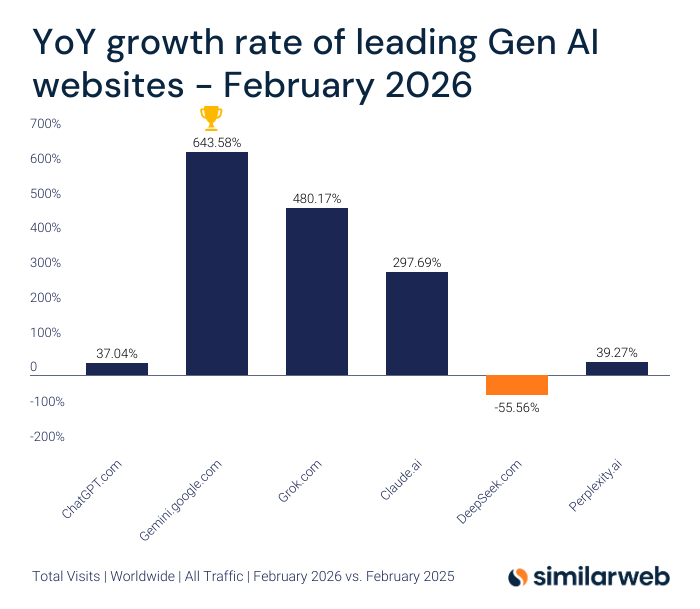
Google Gemini web traffic soars 643% as ChatGPT growth slows
3 weeks ago