Ambarella CV7 edge AI SoC powers 8K multi‑stream vision at lower wattage
TL;DR
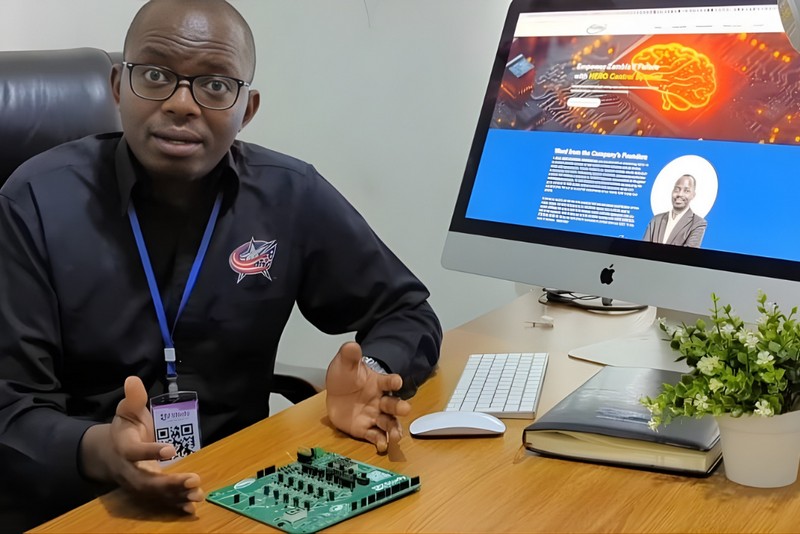
On January 18, 2026, trading outlet StocksToTrade highlighted a share price rise in Ambarella after investor enthusiasm around its new CV7 edge AI vision system‑on‑chip, showcased at CES 2026. The CV7, formally introduced on January 5, combines 8K multi‑stream video processing with a third‑generation CVflow AI accelerator delivering 2.5x the AI performance of its predecessor at around 20% lower power.
About this summary
This article aggregates reporting from 3 news sources. The TL;DR is AI-generated from original reporting. Race to AGI's analysis provides editorial context on implications for AGI development.
Race to AGI Analysis
Ambarella’s CV7 is a reminder that not all meaningful AI progress happens in hyperscale data centers. By packing 8Kp60 multi‑stream video, a 3rd‑gen CVflow accelerator, and a quad‑core Arm CPU into a 4nm SoC, Ambarella is pushing serious vision and transformer workloads onto cameras, drones, robots and automotive gateways—at much lower power than previous generations. That means more of the perception and pre‑reasoning steps in AI systems can happen at the edge, with the cloud reserved for heavier planning and learning. ([ambarella.com](https://www.ambarella.com/news/ambarella-launches-powerful-edge-ai-8k-vision-soc-with-industry-leading-ai-and-multi-sensor-perception-performance/?utm_source=openai))
Strategically, this puts Ambarella into the same conversation as Nvidia, Qualcomm and Intel in edge inference, especially for security, robotics and automotive surround‑view systems. An SoC that can simultaneously handle multiple high‑resolution streams and sophisticated CNN/transformer models is exactly what’s needed for fleets of low‑cost perception devices feeding higher‑level agents.
For the race to AGI, hardware like CV7 doesn’t move the theoretical frontier by itself, but it does broaden the substrate on which advanced models can act. The more sensors and actuators that can host reasonably capable on‑device AI, the more real‑world data and experience agentic systems can accumulate. That, in turn, can accelerate the transition from static LLMs to embodied, continuously learning systems.
Who Should Care
Companies Mentioned
Related News

Envision unveils Dubhe AI energy model and Masdar partnership
Today
OpenAI rolls out ChatGPT Go worldwide with $8 tier and ads
Today
German military tests AI speech recognition to digitise combat triage
Today