Bangladesh’s Daily Star maps global AI regulation wave
TL;DR
On January 11, 2026, The Daily Star published an overview of how major countries and blocs are regulating AI, surveying measures from the EU’s AI Act to South Korea’s AI Basic Act, the US’s evolving approach, and frameworks in countries like Singapore and China. The article emphasizes shared goals of safety and privacy but divergent regulatory styles and timelines.
About this summary
This article aggregates reporting from 1 news source. The TL;DR is AI-generated from original reporting. Race to AGI's analysis provides editorial context on implications for AGI development.
Race to AGI Analysis
This kind of comparative explainer is useful precisely because it shows that we are not heading toward a single global AI regime, but a patchwork of overlapping, sometimes conflicting rules. The EU leans toward detailed, ex ante regulation; the US toward sector‑specific and enforcement‑driven approaches; China and Singapore embed AI into broader data and cybersecurity frameworks; Korea moves fast on a dedicated AI law. For anyone building frontier‑grade systems, the practical effect is that deployment constraints will vary sharply by market even if training remains globally centralized for now.
For the AGI timeline, the impact is indirect but real. Fragmented regulation increases friction, but it also creates arbitrage opportunities: labs may train and iterate where rules are looser and then selectively harden products for stricter jurisdictions. At the same time, common themes—transparency, high‑risk categories, watermarking, human oversight—are emerging across systems. Over time, these shared expectations are likely to crystallize into de facto global standards that even non‑signatories must meet if they want to operate internationally.
Who Should Care
Related News
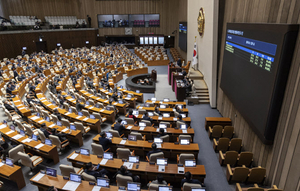
South Korea races to enforce first comprehensive AI law on Jan 22
Today
Meta–Manus probe signals China’s new AI talent and IP red lines
Today
UK threatens X ban over Grok deepfakes and encryption scanning push
Today